Scientists have discovered more than 50,000 fossils in a quarry in the Hunan province of southern China. These fossils have revealed almost 100 new ancient species previously unknown to scientists.
Han Zeng, a researcher at the Chinese Academy of Sciences, said “we collected more than 50,000 fossils in a small quarry, in an area 12 meters tall, 30 meters wide, and 8 meters long”.
From 2021 to 2024, the scientists discovered 153 different fossilized species – 91 of them were previously unknown. The species found include the ancestors to modern worms, sponges, corals, and jellyfishes – as well as the ancestors to some arthropods such as crabs and insects.
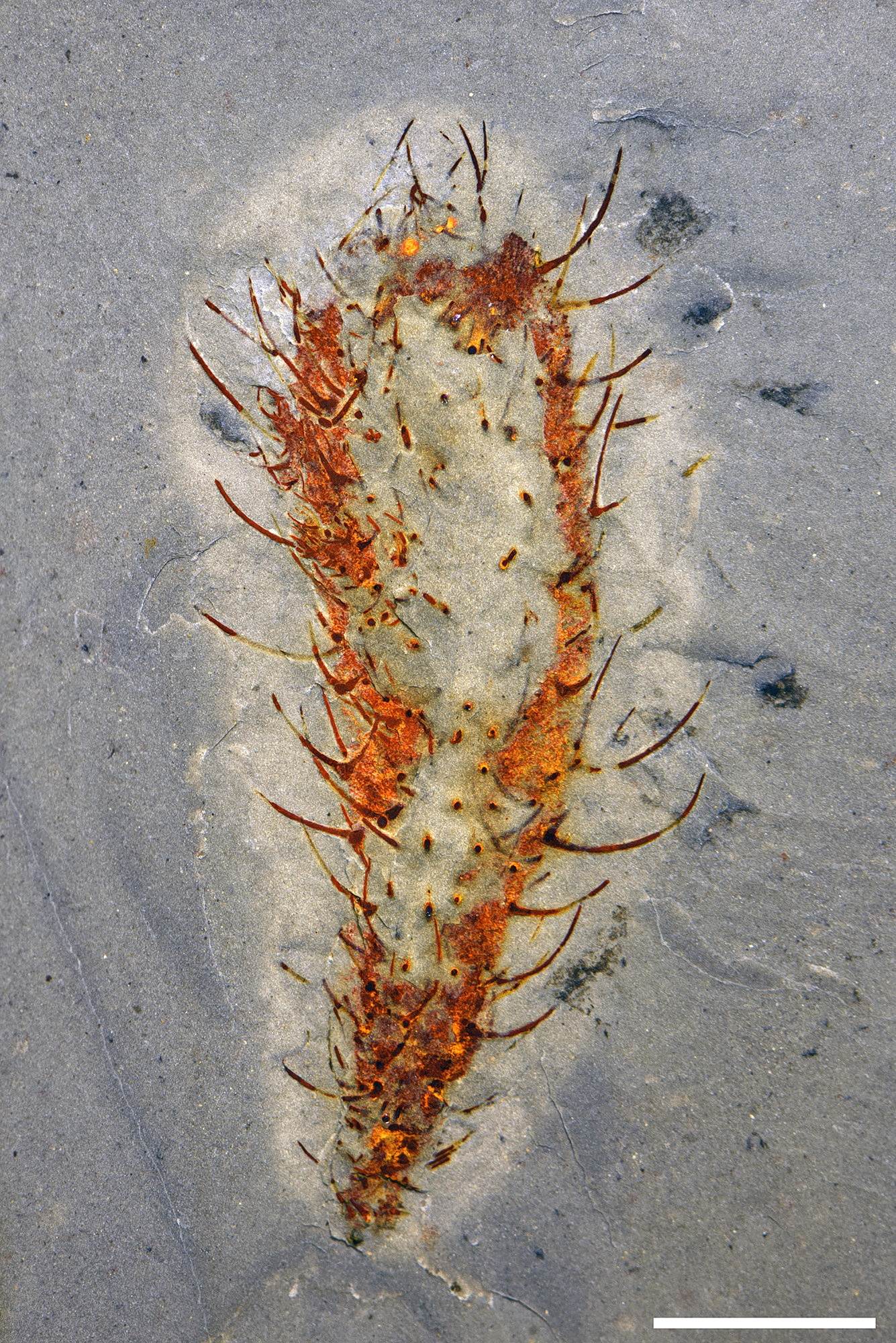
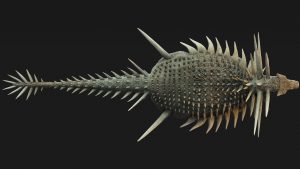
The fossil of the Cambrian Period marine animal Allonnia whose spiky body resembles a cactus, discovered in Hunan province in southern China and dating to around 512 million years, is seen in this photograph released on January 28, 2026. The scale bar is 5 mm. Han Zeng/Handout via REUTERS
The discovery, known as the Huayuan biota, includes a wide range of invertebrates preserved in extraordinary detail—sometimes down to the cellular level—showing legs, gills, digestive systems, eyes and even nerves. Among the finds are apex predators with grasping appendages and other unusual creatures, including one covered in spines resembling a cactus.
The dominant fossil groups include arthropods, cnidarians and sponges. Several top predators belonged to radiodonts, a primitive group of arthropods equipped with specialized limbs for capturing prey while swimming. While all identified animals were invertebrates, the assemblage also contains abundant members of a group considered the closest relatives of vertebrates.
What makes this discovery even more interesting is that these fossils are dated to around 512 million years ago. This is right after a mass extinction even 513 million years ago called the Sinsk event.
Around 540 million years ago, there was an explosion in complex life forms -called the Cambrian Era. This lasted until 513 million years ago when the Sinsk event occurred, where around half of lifeforms disappeared. This is believed to be due to a drop in oxygen levels in the atmosphere.
The fossils are the first major discovery of life immediately after the event. Michael Lee, an evolutionary biologist from the Museum of South Australia, highlights that this discovery shows us that the Sinsk event mainly happened in shallower waters, as these fossils are largely deep water creatures.
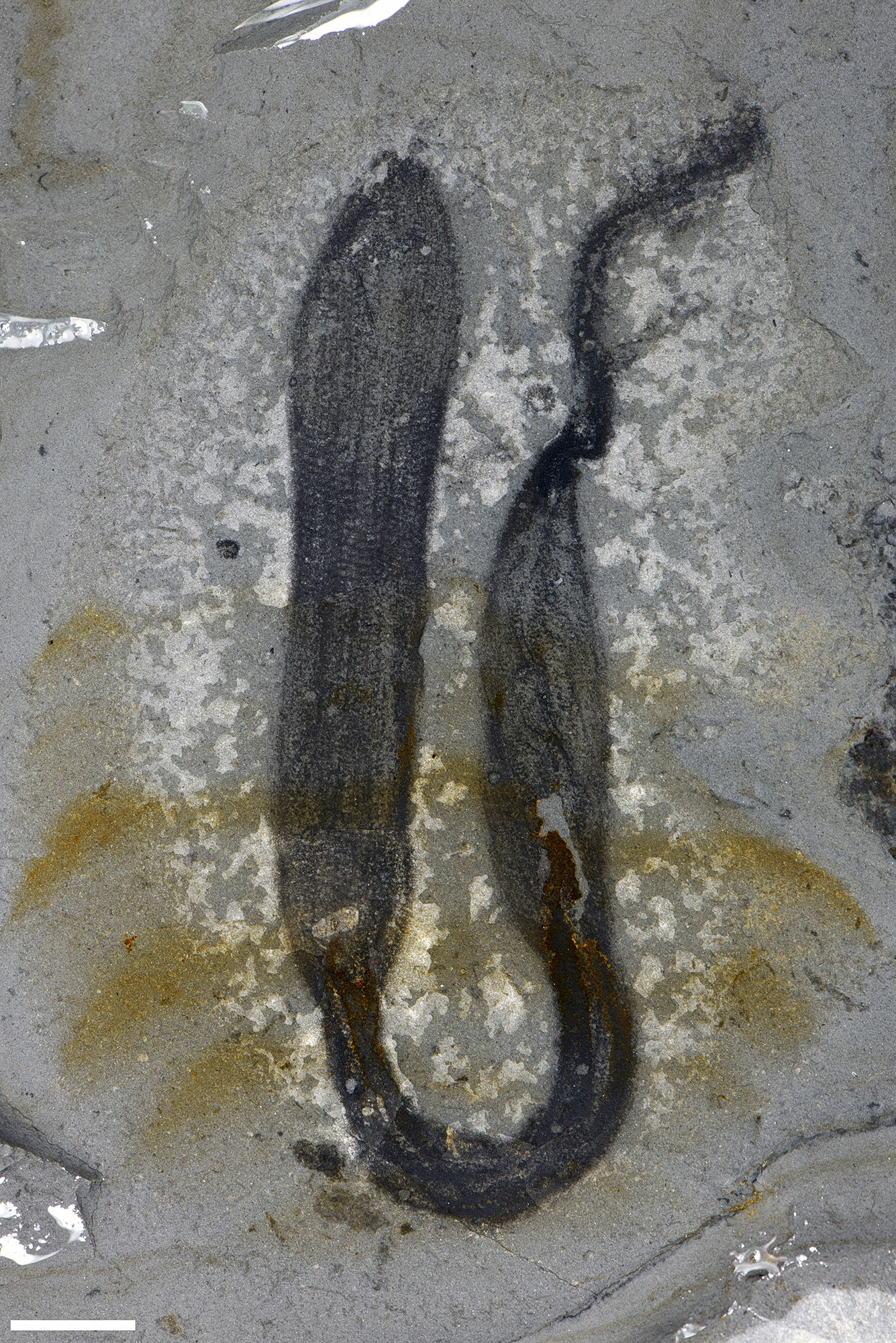
The fossil of the Cambrian Period marine sponge Leptomitus showing in-situ preservation of organic matter, discovered in Hunan province in southern China and dating to around 512 million years, is seen in this photograph released on January 28, 2026. The scale bar is 5 mm. Han Zeng/Handout via REUTERS
“The deep ocean is one of the most stable biomes, across the whole geological period, in the same way that the basement of a house is not effected as much by seasonal changes”, Lee says.
The researches also noted how these fossil samples included similar species to those found previously in Canada, on Mount Burgess. This indicates that some sea creatures may have covered enormous distances.
Although the Sinsk event is not usually included in the five major mass extinction events, Han states that there is evidence that points towards there being at least 18 such events. Scientists are now warning that we are entering another period of mass extinction, but this time humans are the culprit.
The Huayuan discovery now ranks alongside the Burgess Shale and China’s Chengjiang biota as one of the most important windows into early animal life in the Cambrian oceans.