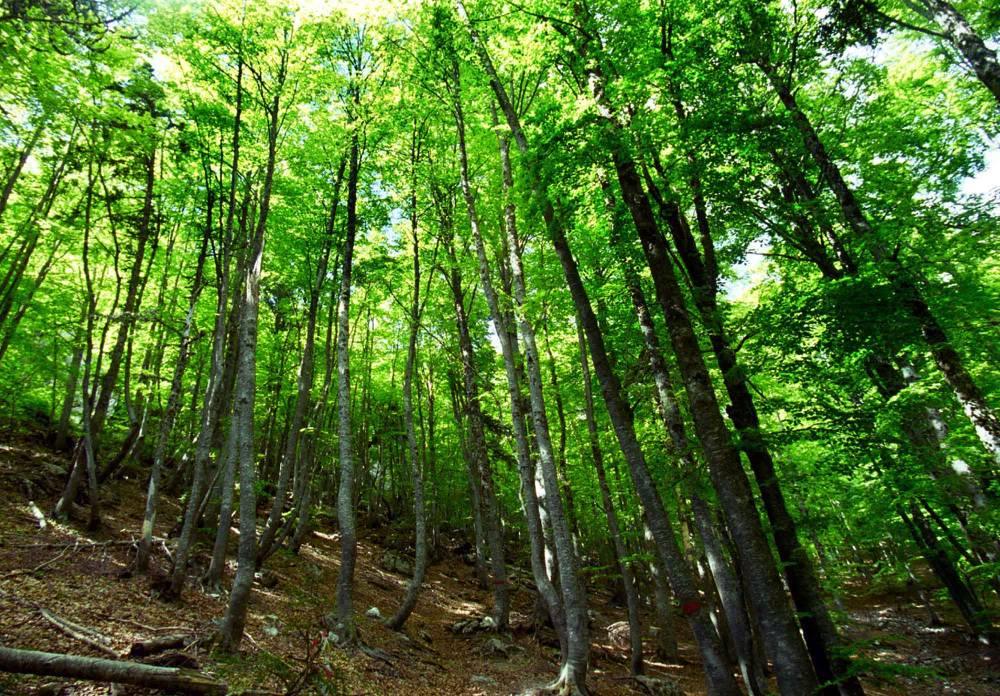
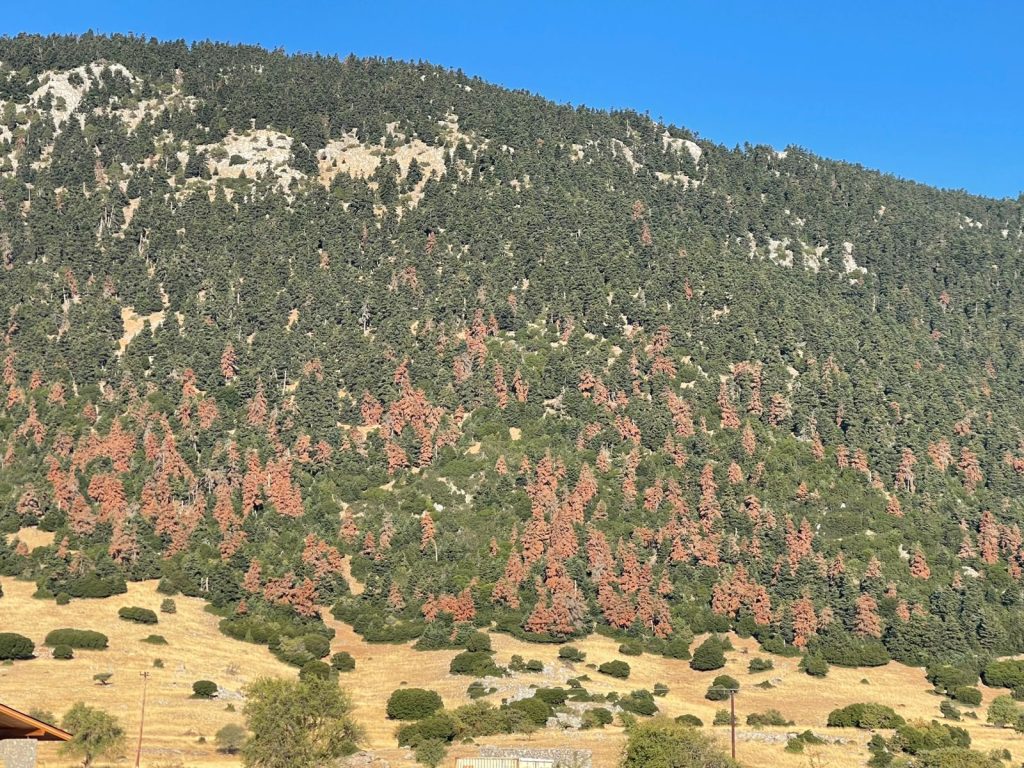
In Drama, northern Greece, a well-managed forest ecosystem generates profit, provides jobs for locals, and supplies high-quality timber to both industry and households. In Arcadia, by contrast, forests of similar richness remain nearly idle.
The result? Millions of acres of Greek woodland lie underused—exposed to wildfires, illegal logging, and land grabs.
The absence of active Forest Cooperatives in many regions—there’s only one in the entire Peloponnese and none in Crete—combined with a lack of consistent management tools, has left huge gaps in protection and productivity.
Now, a sweeping forestry reform (Law 5106/2024) is entering its implementation phase. It mobilizes both Forest Labor Cooperatives (DASE) and private initiatives on equal footing, aiming to harness forest biomass while channeling tangible returns back to local communities.
Three New Decisions Set the Framework
Next week, Environment and Energy Minister Stavros Papastavrou is expected to sign three ministerial decisions that will shape this new model:
- Registry of Hybrid Partnerships – A special registry will record hybrid cooperative schemes (YSS) where forest cooperatives and private partners collaborate on a 50/50 basis. The rules, documents, and procedures for registration are spelled out to ensure transparency.
- Clear Rules for Tenders – Criteria for public tenders will be clarified, including a participation guarantee of 4% and a three-member evaluation committee. Contracts will be awarded based on the most advantageous offer, measured by:
- 40% biomass collected,
- 40% speed of forest-cleaning operations,
- 20% share of revenue returned to the state.
Penalties will apply for poor performance, ranging from forfeited guarantees to outright exclusion.
- Subsidy Framework for Biomass – A new financial tool will subsidize biomass use, funded by revenue from Greece’s emissions trading scheme. Each forest will be assessed with a “difficulty coefficient,” and subsidy rates will vary by biomass category, finalized in a joint decision with the Finance Ministry.
Why Public–Private Hybrid Partnerships?
The state often struggles to intervene effectively in forest management. By contrast, private involvement—pioneered after the devastating Evia wildfires of 2021 through reforestation contractors—proved workable.
The new model will apply especially where the state and local cooperatives cannot keep up with the scale of necessary work. Oversight, coordination, and certification of biomass will remain firmly under the authority of Greece’s Forest Services.
The Numbers Tell the Story
The comparison between Arcadia and Drama is striking.
- Arcadia: Around 3 million acres of forest, but the state manages fewer than 30,000. Output: a mere 4,000 cubic meters of timber and firewood.
- Drama: Of its 2.6 million acres, some 465,000 acres are actively managed. This sustains 750 registered forestry workers and yields 100,000 cubic meters of timber, industrial wood, and firewood annually.
In short: equally rich forests, but one produces 25 times more.
A Patchy National Picture
Less than half of Greece’s forests are under productive management. Most active cooperatives are in Northern Greece—Central Macedonia (105 cooperatives), Eastern Macedonia and Thrace (48), and Western Macedonia (45).
Even there, though, forest products often fall short of what approved management studies allow. Meanwhile, in the Peloponnese, only one cooperative exists in Arcadia with 28 forestry workers—and Crete has none at all.
Toward a Sustainable Future
If successful, these hybrid partnerships could redefine forest management in Greece. By combining local know-how, private investment, and state oversight, the country hopes to transform neglected woodlands into engines of economic growth, fire prevention, and environmental protection.