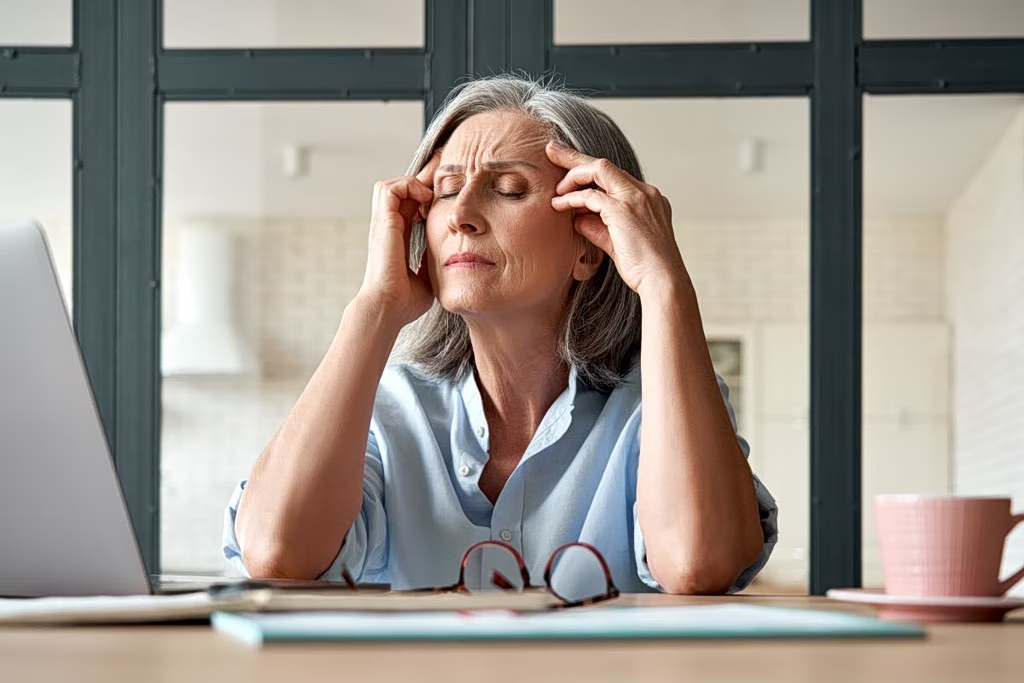
A recent European survey highlights a concerning trend in migraine care across Greece and Europe: most women suffering from migraines are underdiagnosed and lack access to personalized treatment.
The findings were presented by the European Migraine and Headache Alliance (EMHA) at the European Parliament, coinciding with International Women’s Day. The study, titled “Migraine in Women – The Invisible Hormonal Pattern”, collected 5,410 responses from 13 European countries, including 504 Greek participants, offering a detailed picture of how migraines impact women’s daily lives.
Key findings in Greece:
- Nearly 1 in 2 women that participated had never received an official migraine diagnosis.
- 43.7% had not sought medical help, despite suffering from symptoms, with 8 in 10 of these attempting self-treatment.
- 72.8% reported they had not been offered personalized treatment for migraines linked to menstruation or menopause.
The research emphasizes that migraines are serious neurological disorders, not just ordinary headaches, with significant functional, social, and psychological consequences. Many women experience migraine episodes that correlate with hormonal fluctuations, yet this link is often overlooked in clinical practice.
Hormonal impact on migraines
- 2 in 3 women reported a possible connection between migraine attacks and their menstrual cycle.
- 9 in 10 women said attacks during menstruation are more intense, last longer, and are harder to manage than at other times.
- Despite this, 7 in 10 women have never been offered a tailored treatment plan for hormone-related migraine episodes.
Migraine’s broader effects
Migraines can cause pulsing headaches, nausea, sensitivity to light and sound, and significant limitations on daily functioning. Women in reproductive age are disproportionately affected, with 3 out of 4 migraine sufferers being female, highlighting the urgent need for gender-specific healthcare strategies.
Voices from experts
Konstantinos Bilias, General Secretary of the Greek Society of Migraine and Headache Patients, stressed that migraines in women remain underrecognized and underdiagnosed, often attributed simplistically to hormonal changes. He emphasized that capturing patients’ experiences is crucial for shaping effective public health interventions.
Dr. Michail Vikelis, neurologist and scientific advisor to the association, added that hormonal factors must be systematically considered in clinical practice. Tailored care addressing menstrual cycles, pregnancy, perimenopause, and menopause is essential to reduce disability, improve quality of life, and better manage the disease.