


Adopting the so-called Planetary Health Diet (PHD) could prevent 15 million premature deaths each year while significantly reducing the environmental toll of current food systems, according to a new study published in The Lancet.
The diet emphasizes less meat, fish and dairy and more fruits, vegetables, legumes, nuts and whole grains, with a strong focus on minimally processed foods. Researchers say it not only supports human health but also lowers greenhouse gas emissions linked to agriculture.
The link between food and climate
Food production is responsible for nearly 30% of global greenhouse gas emissions, the study notes. Animal-based foods in particular have a much larger footprint than plant-based alternatives, contributing to pollution, deforestation, land degradation and biodiversity loss.
Adopting the PHD could reduce the risk of chronic diseases such as type 2 diabetes, heart disease, cancer and neurodegenerative conditions, with estimates pointing to a 27% lower risk of early death.
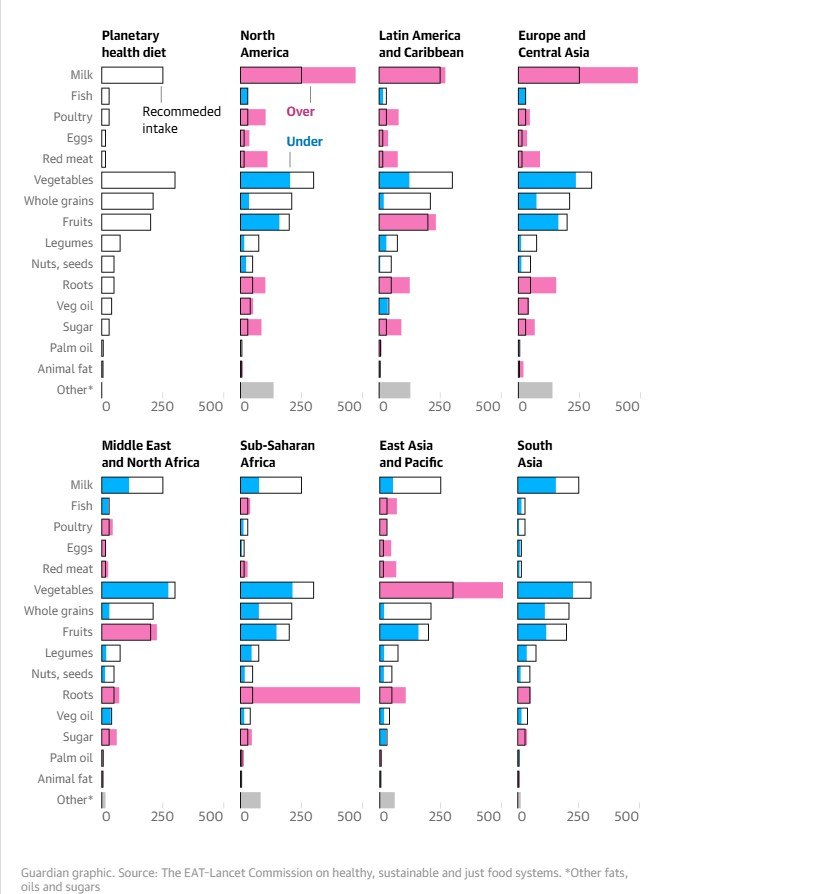
What the diet looks like
The recommended daily and weekly intake under the PHD includes:
- At least 5 servings of fruits and vegetables
- 3–4 servings of whole grains
- 1 serving of nuts and 1 serving of legumes per day
- Moderate dairy (one serving daily)
- 3–4 eggs per week
- 2 servings each of chicken and fish per week
While adaptable to local cultures, the overarching principle is a shift away from high consumption of red meat, sugar and animal fats.
Inequalities in global diets
The study highlights sharp disparities in dietary patterns worldwide. In the United States and Canada, people consume seven times more red meat than recommended, while Europeans and Latin Americans eat five times the suggested amount. By contrast, populations in sub-Saharan Africa often rely heavily on starchy foods; even a modest increase in chicken, eggs and dairy could substantially improve health outcomes there.
Researchers also noted deep inequities in the environmental impact of diets: the wealthiest 30% of the global population accounts for around 70% of the food system’s ecological pressures. Meanwhile, 3.7 billion people still lack access to affordable, nutritious diets, fair wages and safe working conditions. Women in particular face systemic pay gaps and underrepresentation in the food sector.
A call for systemic change
The report, compiled by experts across nutrition, environmental science, economics and public health, calls for policies that make healthy foods more accessible, ensure fair labor standards and empower marginalized communities.
Without such changes, scientists warn, both human health and the planet’s resilience will remain at risk.