What if the next major scientific breakthrough comes from a computer, not a laboratory? Could a single blood test soon spot dozens of cancers before symptoms appear? And why is the Moon, once again, becoming one of the busiest destinations in space? These are just some of the questions shaping the scientific conversation as 2026 approaches. According to projections and reporting by Nature, one of the world’s most authoritative and influential peer-reviewed science journals, the coming year is set to be a turning point across fields ranging from artificial intelligence and gene editing to space exploration and fundamental physics. The developments outlined below, drawn exclusively from Nature’s global science coverage, offer a glimpse into the discoveries, trials and missions that could redefine how we understand health, technology and our place in the universe in the coming year.
Smart Machines, Real Discoveries: AI moves from assistant to actor
Artificial intelligence is poised to play an even deeper role in scientific research in 2026. AI systems known as “agents” are increasingly able to carry out complex, multistep tasks some even by combining several large language models (LLMs), while others are already operating with minimal human oversight. There is even the possibility that AI could soon contribute to meaningful scientific discoveries on its own.
But the expansion comes with risks. Researchers have flagged serious errors in early versions of these systems, including the deletion of data. At the same time, scientists are exploring alternatives to massive, costly LLMs. Smaller, highly specialized AI models, trained on limited data and focused on reasoning rather than text generation, are gaining momentum. One has even manage to beat a large scale LLM in a logic-based test.
Editing Destiny: Personalized gene therapy gathers pace
Gene editing is expected to gain fresh momentum in 2026, particularly for children with rare genetic diseases. Two clinical trials could begin that aim to deliver personalized gene therapies tailored to a patient’s specific mutation. These efforts build on a landmark case involving an infant with a rare metabolic disorder who received a customized CRISPR-based treatment.
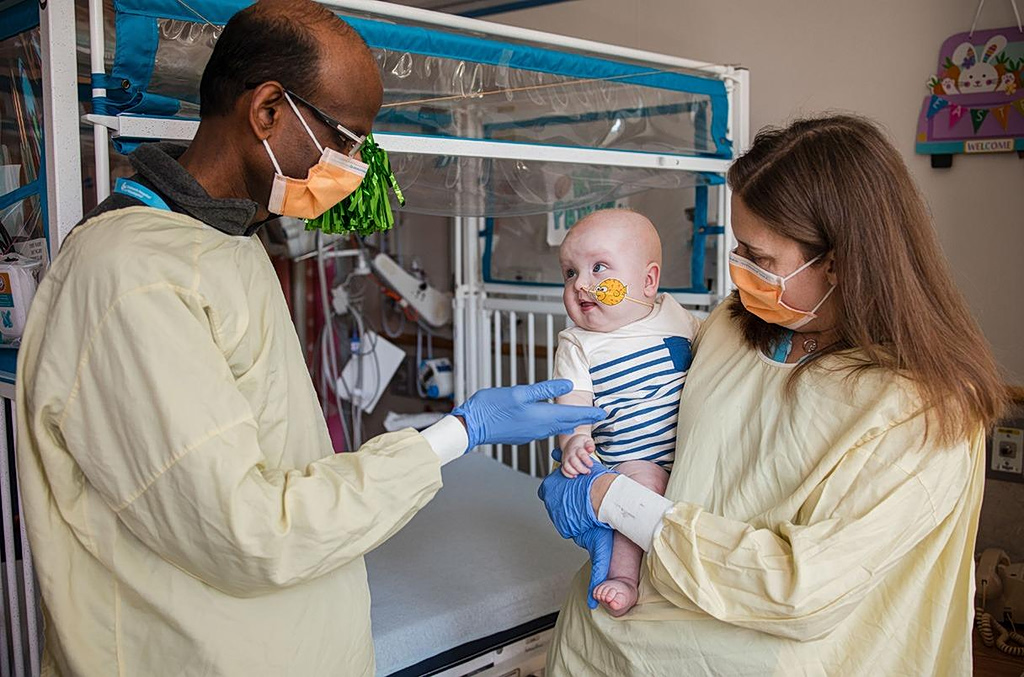
The first personalized CRISPR therapy enters clinical trials- Baby 2 Children’s Hospital of Philadelphia
These studies signal a move away from one-size-fits-all treatments toward bespoke genetic medicine, a development that could redefine care for rare diseases worldwide.
One Test, Dozens of Answers: Cancer screening on an unprecedented scale
A massive clinical trial in the United Kingdom is expected to report results in 2026 that could change how cancer is detected. The study, involving more than 140,000 participants, is testing a single blood analysis designed to identify around 50 types of cancer before symptoms appear. The test works by detecting fragments of DNA released into the bloodstream by cancer cells and tracing them back to specific organs or tissues.
If the findings are positive, British health authorities plan to introduce the test across hospitals nationwide.
To the Moon and Back: A new era of lunar exploration
The Moon is set to become busier than it has been in decades. In 2026, NASA’s Artemis II mission will send four astronauts on a 10-day journey around the Moon aboard the Orion spacecraft, the first crewed lunar mission since the 1970s. The flight is designed to pave the way for future landings.
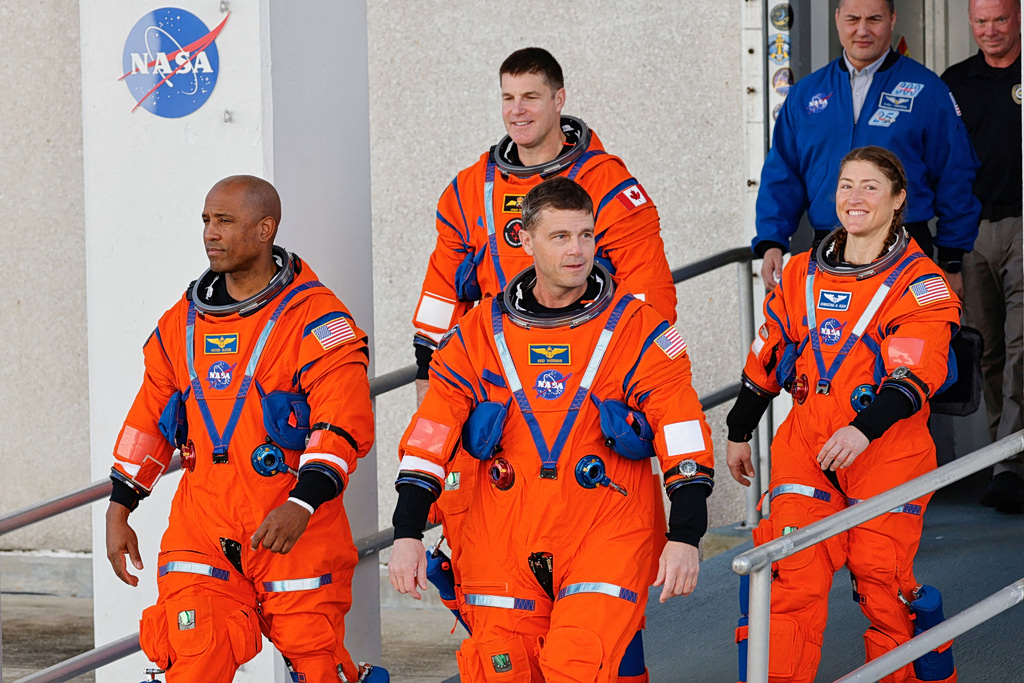
The crew of Artemis II, NASA’s next-generation moon rocket, depart their quarters to take part in a countdown demonstration test atop the Space Launch System (SLS) rocket with the Orion crew capsule at the Kennedy Space Center in Cape Canaveral, Florida, U.S. December 20, 2025. Launch around the moon and back is scheduled for February 5, 2026. REUTERS/Joe Skipper
China is also preparing a high-stakes lunar mission. Its Chang’e-7 probe aims to land near the Moon’s south pole, a rugged region known for its difficult terrain. Using a hopping spacecraft built to handle rough landings, the mission will search for water ice and study moonquakes, if it succeeds.
Mars, Stars and the Sun: Eyes on the wider cosmos
Beyond the Moon, attention is turning to Mars and distant planets. Japan plans to launch its Martian Moons eXploration mission to study Phobos and Deimos, collecting surface samples from Phobos and returning them to Earth in 2031, a first in planetary science.
Europe is preparing to send the PLATO space telescope into orbit to hunt for Earth-like planets. With 26 cameras, it will monitor more than 200,000 stars, searching for worlds with conditions that could allow liquid water.
From Earth’s Mantle to Particle Mysteries: Digging deep and smashing particles
Scientific ambition in 2026 will stretch from the depths of Earth to the smallest known particles. China’s new ocean-drilling vessel, Meng Xiang, is expected to begin its first expedition, aiming to drill up to 11 kms into the oceanic crust and reach Earth’s mantle. The samples could shed light on how the ocean floor forms and what creates tectonic activity.
Europe’s Large Hadron Collider will undergo a major shutdown ahead of a powerful upgrade, while U.S.-based researchers prepare a sensitive experiment to probe the behavior of muons, which are elusive subatomic particles. Together, these projects underline a central theme for 2026: pushing boundaries, whether beneath our feet or at the edge of the universe.
All developments referenced in this article are based on reporting by the international science journal Nature.