
The word “electricity” derives from the ancient Greek ēlektron, meaning amber, a material that when rubbed against fabric, can attract feathers and other light objects. Amber pulls electrons from the fabric, acquiring a negative charge, and thereby draws positively charged objects toward it. The phenomenon is well known and, one might assume, well understood. In reality, however, static electricity continues to crackle with mystery.
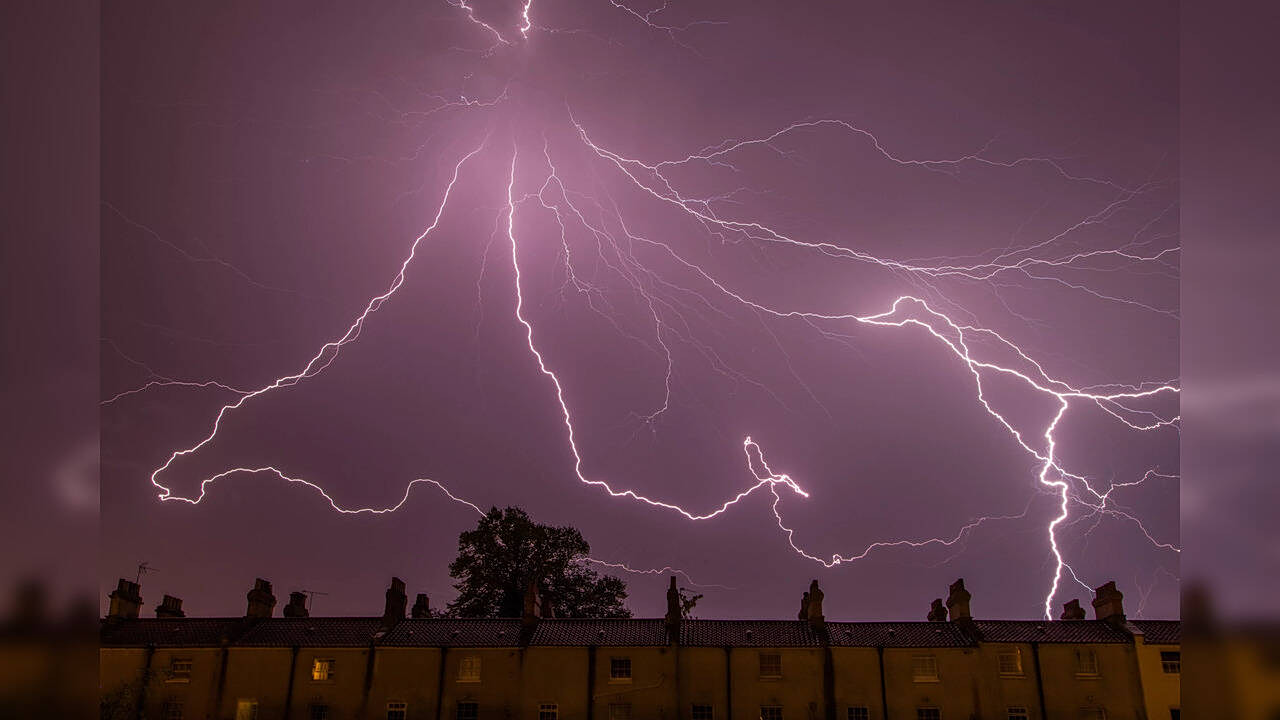
The biggest puzzle concerns the inability of physicists to explain the exchange of charges between samples of the same material, which are supposedly identical in their tendency to gain or lose electrons. For example, ash particles in volcanic eruptions somehow accumulate large enough charges to trigger lightning.
Similarly, airborne flour dust can sometimes spark on its own and explode — a rare but significant hazard in the food industry. No explanation has been found. Even within the same laboratory experiment, the same sample can acquire a positive charge one time and a negative charge the next, apparently for no reason.
The Findings
A study published in the journal Nature now claims to have found the mechanism, at least for certain materials. An ingenious, highly precise experiment showed that charge flow is influenced by microscopic traces of carbon-based compounds that settle on surfaces from the air and favor positive charges.
The international research team used glass beads that became increasingly charged through repeated contact with a glass plate on which they bounced. Even identical beads were found to charge positively in one instance and negatively in another. This changed, however, when the researchers cleaned the beads using the most rigorous methods, first baking them at 300°C, then bombarding them with ion beams.
Curiously, the cleaned samples always acquired a negative charge. The answer came through microscopic examination, which revealed that the beads had accumulated invisible deposits from the air, consisting of simple hydrocarbons such as methane.
The phenomenon appears to apply to all oxides, materials like glass, sand, and many types of rock, though the researchers admit they do not know the precise mechanism. While the study seems to explain a specific behavior of static electricity, it cannot rule out other possible mechanisms, such as the presence of moisture or other contributing factors.
Despite the unanswered questions, the findings could have practical applications, for example, in protecting astronauts from the rough, electrically charged dust on the lunar surface.