
Greek authorities have arrested 37 people in a sweeping nationwide operation targeting what investigators describe as an organized network accused of defrauding European Union and Greek funds through the country’s farm subsidy system.
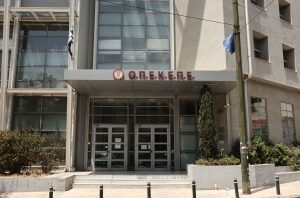
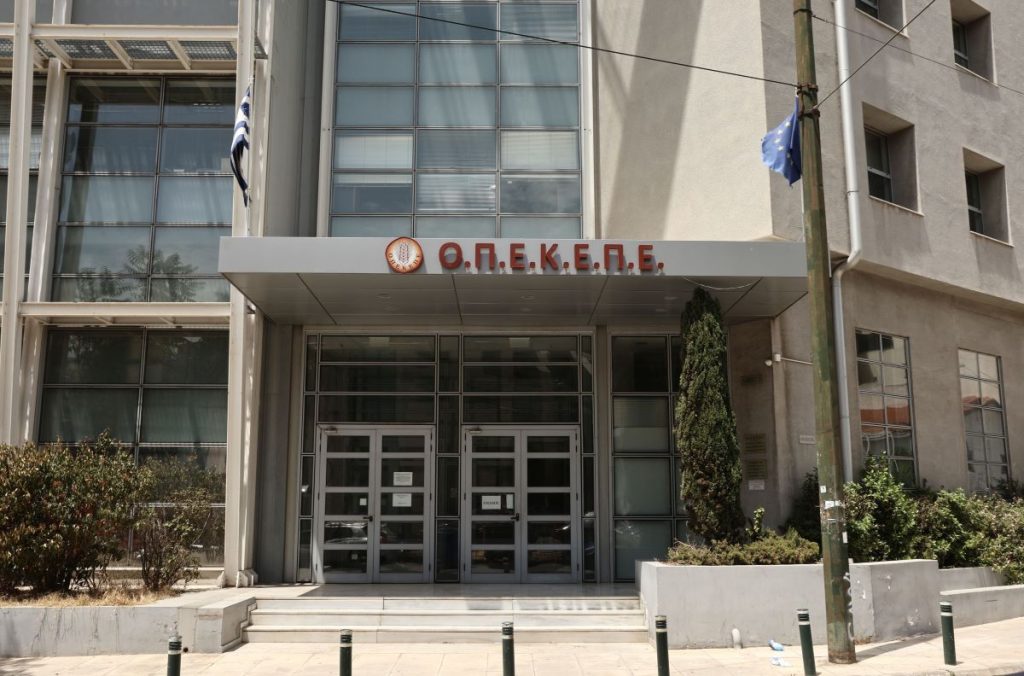
The operation, coordinated by the Northern Greece Organized Crime Division, took place early Wednesday morning with the support of local police in Thessaloniki, Pella, Edessa, Ioannina, Attica, and Crete. It forms part of a wider investigation into alleged misuse of agricultural subsidies distributed through OPEKEPE, Greece’s Payment and Control Agency for Guidance and Guarantee Community Aid, which manages billions of euros in farm payments each year under the Common Agricultural Policy (CAP).
Authorities say the network allegedly operated between 2018 and 2022, submitting false subsidy applications and fabricating documents to illegally secure funding. The estimated financial damage to EU and Greek coffers of this specific case is believed to exceed €20 million, with at least €5 million already confirmed as fraudulently obtained.
How the network allegedly operated
According to police sources, at the top of the organization were two alleged ringleaders — a 36-year-old man from Heraklion, Crete, who worked at a documentation center processing farm subsidy applications, and a 38-year-old man from Central Macedonia, who presented himself as a farmer. Investigators say the latter played a key role: he allegedly identified unregistered farmland, known as “orphan plots,” by accessing OPEKEPE’s digital system to find parcels that were not declared by legitimate farmers. Once these gaps were spotted, the group allegedly used forged leases and false ownership records to register the land under different names and collect the associated EU subsidies. The network is believed to have included at least 11 additional members who appeared alternately as landlords and tenants, helping to disguise the paper trail. Some reportedly had direct access to OPEKEPE’s online system, enabling them to view undeclared parcels and file fraudulent claims in the names of third parties.
Investigators say the group operated discreetly and methodically, rotating names on applications, submitting claims in different regions, and channelling payments through third-party bank accounts to avoid detection. Police sources said that while €5 million in payments have been confirmed as fraudulent, the actual amount of illicit subsidies may approach €10 million.
Police operation and next steps
The arrests followed months of cooperation between the European Public Prosecutor’s Office (EPPO) and Greek law enforcement, which had launched a preliminary investigation in the summer after detecting suspicious subsidy payments.
Wednesday’s coordinated operation included simultaneous raids and the seizure of documents, computers, and electronic devices. The case file reportedly includes around 120 individuals, some of whom had no genuine connection to agriculture. Among them, police say, were people working as waiters, DJs, and construction workers, who appeared as registered beneficiaries of EU farm aid through fabricated leases and falsified paperwork.
The 37 detainees are expected to be transferred to Athens for questioning and to appear before the European Prosecutor for formal charges. Authorities have also ordered asset freezes and bank account checks. Police stress that the investigation remains ongoing, with additional indictments expected as more individuals with peripheral roles are identified.
A statement from the Hellenic Police described the operation as part of a concerted effort “to dismantle a criminal organization involved in large-scale subsidy fraud to the detriment of the European Union and Greece.”
The arrests mark the latest chapter in a long-running investigation into the management of EU agricultural subsidies in Greece. What began as a series of audits into irregular payments has grown into a sprawling probe involving parliamentary hearings, court trials, and several large-scale criminal operations. The unfolding OPEKEPE scandal has ave revealed a complex picture of alleged mismanagement, forged subsidy claims, and systemic weaknesses in oversight. The ongoing inquiries now span several years, multiple regions, and tens of millions of euros in disputed payments.