Greek police are reexamining thousands of traffic violations detected by artificial intelligence-powered road cameras after identifying widespread errors and inconsistencies in the system’s findings.
According to senior police officials, a large proportion of the violations initially flagged by the AI system have proven to be inaccurate during manual reviews. In some cases, the technology reportedly identified offences that did not occur at all.
One striking example involved a vehicle whose passenger was allegedly recorded as not wearing a seatbelt. A subsequent review found that there had been no passenger in the car.
Seatbelts, Mobile Phones and Speeding Among Key Issues
Authorities say the system has struggled to accurately identify several common traffic violations.
Dark clothing, reflections, scarves or other items obscuring a seatbelt have reportedly led to incorrect detections of seatbelt offences. In other cases, objects mistaken for mobile phones were later identified as vaping devices, while ordinary gestures, such as scratching one’s head, were interpreted by the software as drivers using a phone.
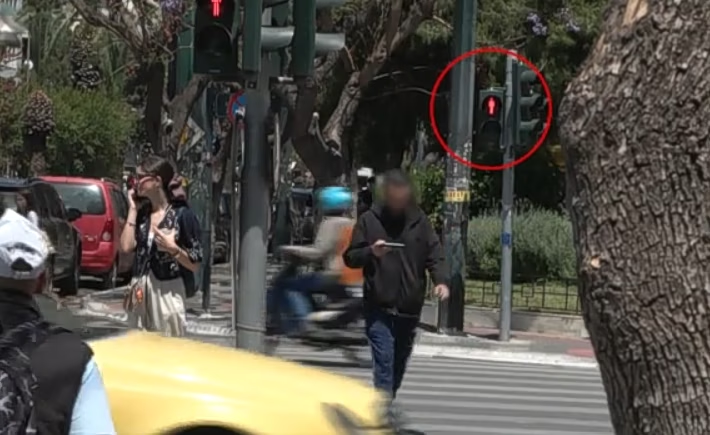
Police officials also noted that the system can be overly sensitive when detecting red-light violations and may fail to account for situations where traffic is being directed manually by officers.
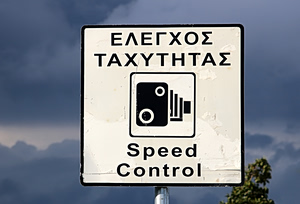
Questions have also been raised over speeding violations. According to officials, some detections are based on average speed calculations between camera points, a method that they argue currently lacks a clear legal basis.
Manual Reviews Reveal High Number of Errors
The AI camera system, which began operating in January 2026, is currently designed to detect offences including red-light violations, speeding, failure to wear seatbelts or helmets, and mobile phone use while driving.
However, police review teams have been tasked with examining images and videos before penalty notices are issued.
The results of those checks have raised concerns. In one traffic policing unit in the Athens region, officers reviewed approximately 5,500 of around 13,000 violations recorded between early April and mid-May.
According to officials, only about 400 cases were confirmed as valid. Around 3,800 speeding violations were rejected because they relied on average-speed calculations, while roughly 1,300 alleged offences involving mobile phone use, seatbelts and similar violations were dismissed after police analysis contradicted the AI system’s conclusions.
Challenges Ahead for Wider Rollout
The review process is becoming increasingly demanding as authorities prepare to expand the network. Plans call for hundreds of intelligent cameras to be operating across the Athens metropolitan area by June.
Police officials acknowledge that manually checking every image and video may become impractical once the system reaches full scale, potentially generating thousands of violations each day. The expansion is also expected to create additional challenges related to appeals, notification procedures and administrative processing.
A multi-ministerial committee has reportedly been established to address legal and operational issues surrounding the system, including possible legislative changes. However, no timetable has been announced.