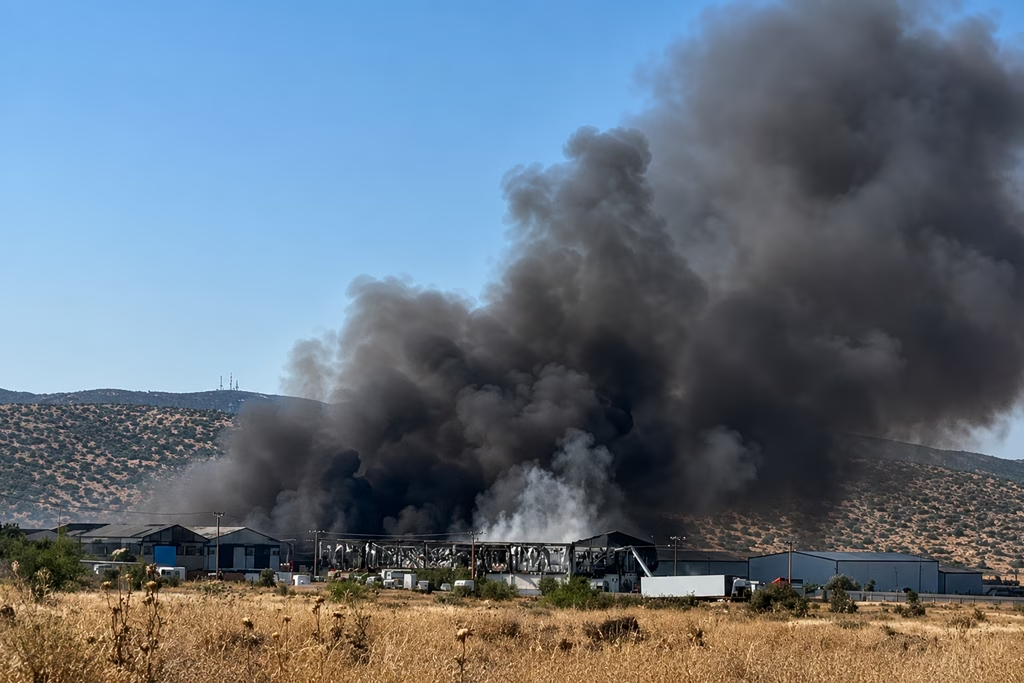
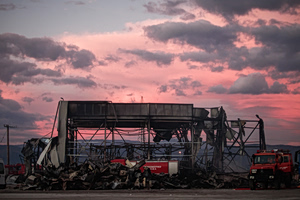
A man who was critically injured in last week’s explosions and fire at an industrial vehicle repair facility in Aspropyrgos died in hospital on Monday, becoming the first fatality linked to the incident.
The victim had been receiving treatment at Athens’ KAT Hospital after suffering severe burns in the blaze, which broke out on Thursday morning in the industrial town west of the Greek capital. Eleven people were injured in total in the incident, three of whom suffered serious burns and were initially listed in critical condition. Two of the severely injured victims were transferred to KAT Hospital, while a third remains hospitalized at Athens’ G. Gennimatas Hospital with extensive burns across much of his body.
The explosions occurred after a large fire broke out at a business dealing with vehicle spare parts and heavy vehicles in Aspropyrgos, one of Greece’s largest industrial centers and home to refineries, logistics hubs and manufacturing facilities.
Investigators examine cause of deadly blasts
Investigators from Greece’s Arson Crimes Directorate are continuing to examine the circumstances that led to the explosions.
According to preliminary findings by fire service experts, the first blast may have been caused by a leak of flammable gas from a propane or acetylene cylinder inside the workshop. Investigators believe the gas mixture ignited when a worker attempted to light a cigarette with a lighter, triggering the initial explosion. The fire that followed spread rapidly to an adjacent area where a tanker carrying propane was parked. According to the investigators’ report, the flames reached the tanker and caused a violent rupture of the vehicle’s propane tank, leading to a second, more powerful explosion and further fueling the fire.
Fire safety measures under scrutiny
Authorities are also examining whether the facility complied with the applicable fire safety requirements.
According to reports by TV broadcaster ANT1, the approximately 500-square-meter heavy vehicle workshop was classified as a low-risk facility and therefore was not required to hold an active fire protection certificate. Under the current framework, inspections at such businesses are carried out on a sample basis, despite the facility operating inside an industrial zone. Experts say the provision exposes potential weaknesses in Greece’s existing fire safety regulations.
The workshop owner has maintained that all required safety measures had been followed and said no repair work was being carried out when the explosion occurred. He said the propane tanker, which was carrying between 1.5 and 2 tons of propane, had been brought to the workshop the previous day so technicians could assess damage to its suspension system before deciding whether repairs would be needed.
Investigators are now reviewing the fire protection study submitted for the facility to determine whether the gas cylinders used on site had been properly declared.
Two people arrested in connection with the case are facing charges including two felony offenses and two misdemeanors. They were granted until Wednesday, July 15, to appear before an investigating magistrate.