Athens may be just a year away from a water shortage, as declining rainfall and snowfall have pushed reservoir levels to historic lows, the Athens Water Supply and Sewerage Company (EYDAP) has warned.
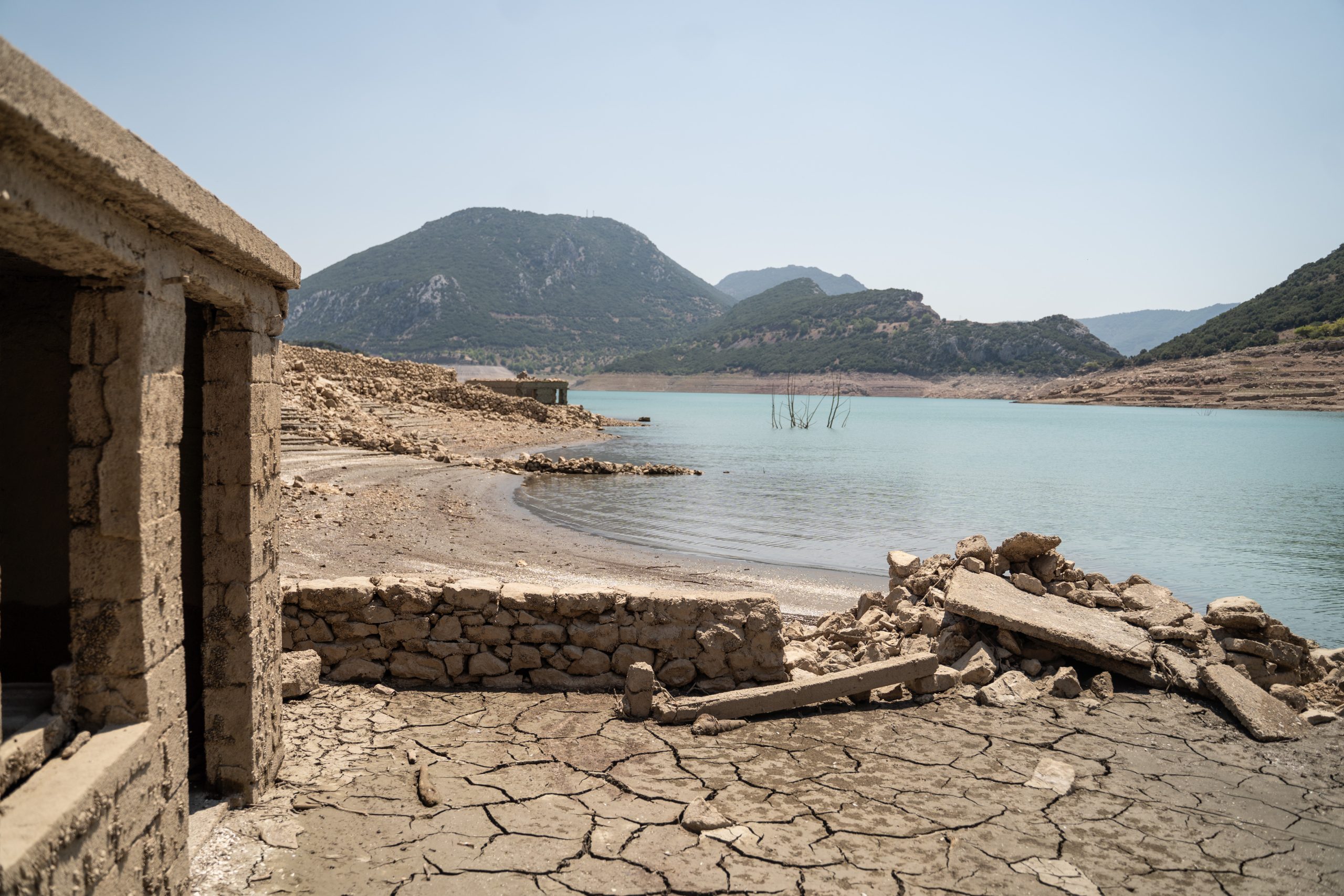
According to data released on September 16, water reserves in Attica dropped to 192.8 million cubic meters, marking a 64% decline compared to the 2010–2024 average. The Mornos reservoir, Attica’s main source of drinking water, has fallen to a 15-year low, exposing the once-submerged village of Kallio.
“Reserves are dwindling and if we continue like this, we will face a deficit,” said Giorgos Karagiannis, EYDAP’s general manager, in comments to Proto Thema. He noted that Athens needs between 450–500 million cubic meters annually to maintain secure supply.
As of September 26, EYDAP reported 408.4 million cubic meters across its three reservoirs, down sharply from 644.7 million just a year earlier, a shortfall of 236 million cubic meters.
The shortage follows what EYDAP President Giorgos Stergiou described as a “prolonged dry period” that began three years ago. “The water consumed is not replenished by snow and rain, so the reserves have fallen in total by 63%,” he told the Athens-Macedonian News Agency (AMNA).
To mitigate the crisis, EYDAP has announced plans to drill along the Mornos channel and at the foothills of Mount Parnitha to strengthen supply. Backup sources, including Lake Yliki and the Mavrosouvala wells, now provide around 40% of Athens’ water, while the rest continues to come from Mornos and Evinos reservoirs.
The last time Athens faced such a dire situation was in 1993, when emergency measures were enforced to prevent taps from running dry. Experts warn that unless rainfall patterns improve this winter, the city could face similar restrictions again.
In efforts to address the problem, several universities in Greece announced the development of Waterwise, a new digital tool that measures how much water is consumed and predicts future shortages, offering solutions for drought-stricken Greek islands.