
 Μake us preferred on Google
 A powerful storm system that swept across Greece on Wednesday left two people dead, caused extensive flooding, and disrupted transportation and public services, as authorities assessed widespread damage and warned that hazardous weather conditions have not fully subsided.
The storm turned streets into rivers, swept away vehicles, and forced school closures in multiple regions. According to Greece’s National Meteorological Service, the most intense phenomena are gradually weakening but strong rain, thunderstorms, and gale-force winds are expected to continue in parts of the country through midday Thursday.
Two Fatalities Reported
In Upper Glyfada, a residential area in southern Athens, a 56-year-old woman died after being struck by a car that lost control amid rushing floodwaters. According to emergency services, the woman was attempting to cross a street when the vehicle was carried by the current and trapped her beneath a parked car. Firefighters recovered her unconscious, and doctors later confirmed her death.
NEWSLETTER TABLE TALK
Never miss a story.
Subscribe now.
The most important news & topics every week in your inbox.
Earlier in the day, a 53-year-old coast guard officer lost his life at the port of Astros, in southern Greece, while trying to secure a boat during violent sea conditions. A strong wave swept him into the water in front of colleagues. He was rushed to a local health center but succumbed to severe head injuries.
Emergency Alerts and Flooding
The storm caused widespread damage to the road network in the Athens region. Numerous streets were flooded, vehicles were immobilized, and dozens of motorists required rescue assistance. Fire services reported more than 450 emergency calls in the capital alone, mainly for water pumping, fallen trees, and rescues.
Late Tuesday night, authorities issued an emergency alert via the 112 public warning system to residents near the Rafina stream east of Athens, urging them to evacuate due to flooding and move toward the town hall.
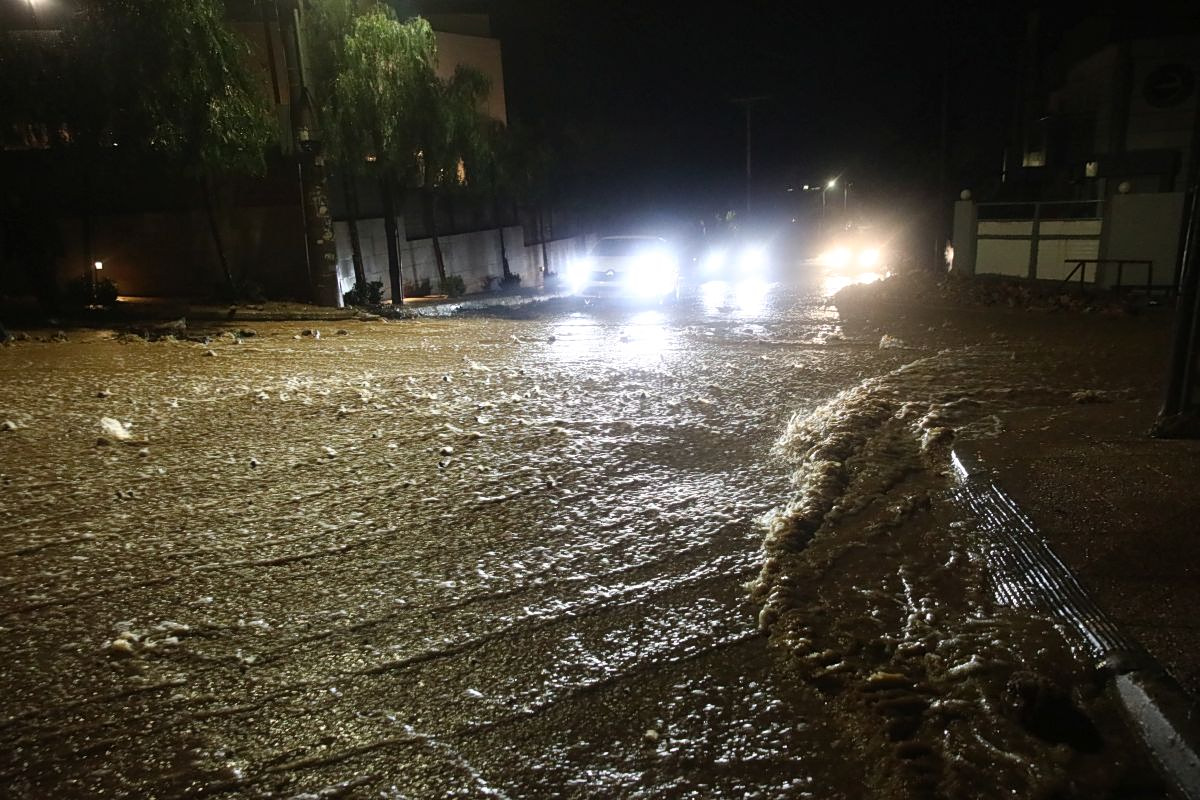
Several areas of Attica, especially the southern suburbs, experienced severe flooding, where torrents of water carried cars, garbage containers, and debris through residential streets. Video footage from the area showed extensive damage and submerged vehicles.
Transport and Power Disruptions
Public transportation was also affected. Sections of the electric railway and tram services were temporarily suspended due to water accumulation, particularly in low-lying urban areas. In coastal and northern districts, landslides and flooding forced traffic closures, while underpasses filled with water, trapping cars and halting circulation for hours.
A passenger train was immobilized north of Athens, with travelers transferred to buses. Power outages were reported in multiple regions.
At the country’s largest port, most ferry services were suspended due to dangerous winds and high seas, with only limited late-night departures operating.
Schools Reopen in Athens, Closures Elsewhere
Schools across the Athens region reopened Thursday after being closed on Wednesday as a precaution. Local authorities said weather conditions no longer justified continued closures, though some municipalities outside the capital kept schools shut due to damage or ongoing risks.
In northern and central Greece, several municipalities announced school closures or delayed openings, while in Kalamos, northeast of Athens, schools remained closed to allow for repairs.
Emergency Alerts and Preventive Measures
Shortly before midnight, authorities sent emergency alerts to residents in flood-prone areas near major streams east and west of Athens, warning of rising water levels and urging people to move to safer locations. Fire crews and municipal teams intervened with sandbags and drainage work, preventing more extensive flooding of homes in several neighborhoods.
Storm to Continue
According to the National Meteorological Service, severe weather conditions are expected to continue into Thursday, though with gradually decreasing intensity. Heavy rain and thunderstorms are forecast for parts of the Aegean islands, along with strong to gale-force winds in eastern maritime areas, posing continued risks to residents and transportation.