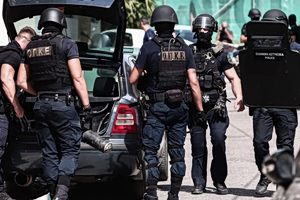
A coordinated police operation by the Narcotics Rapid Response Unit of the Directorate for the Prosecution of Crimes Against Life and Property (DDEEA), under the Attica General Police Directorate (GADA), dismantled two criminal organizations that were trafficking drugs to minors across the northern suburbs of Athens.
According to police, nine members of the organizations were arrested, seven of them minors and two adults, along with two parents charged with neglect of supervision of minors. The arrests took place on the morning of June 9, 2026 across various areas of Attica, while two additional individuals have been identified and are being sought.
The two organizations had built a drug sales network targeting primarily underage students, operating in locations where children and teenagers congregate, including playgrounds, town squares, bus stops, and school campuses.
A particularly striking detail is that the first criminal organization reportedly used a luxury vehicle worth over 150,000 euros to carry out its drug distribution, specifically to avoid drawing the attention of authorities.
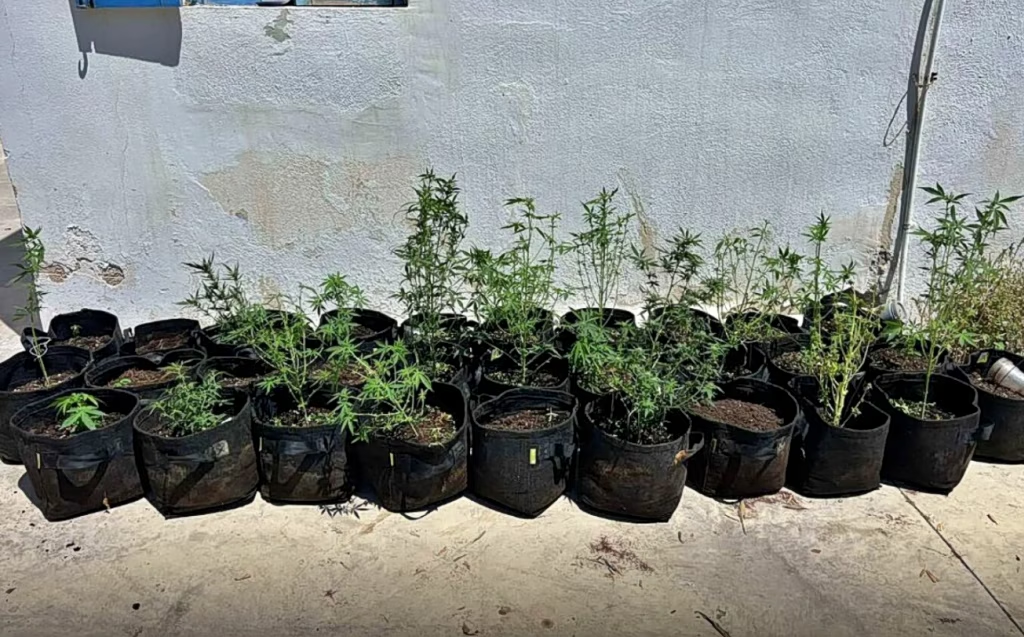
During the searches, police seized quantities of cannabis and cocaine, three replica pistols, two precision electronic scales, two maritime flares, brass knuckles, stiletto knives, a collapsible baton, a wooden club, and cash amounting to 3,980 euros.
The preliminary investigation by the Narcotics Rapid Response Unit revealed that the suspects had formed the two organizations since last April, with clearly defined roles and continuous activity, aimed at distributing drugs and generating illegal profit.
Police Statement on the Two Organizations
First Criminal Organization
The first criminal organization had been active since at least late April 2026 in the areas of Ekali, Drosia, Dionyssos, and Nea Erythrea.
It operated with a clear hierarchical structure consisting of a leader, two deputies, and operational members.
The 21-year-old leader held full control over criminal activity, drug supply, and revenue management. The 19-year-old deputy was responsible for procuring, transporting, and storing the drugs, while the 17-year-old second deputy oversaw the underage members, handled distribution, and collected sales proceeds.
The organization concealed its drug supply inside a car permanently parked outside the 17-year-old deputy’s home, to which only he had access. Notably, the vehicle was registered to a deceased person, a deliberate move to obscure true ownership and complicate police investigations.
The organization primarily trafficked raw cannabis, cocaine, and pharmaceutical tablets, mainly to underage students, using a luxury vehicle valued at over 150,000 euros. Most transactions took place at playgrounds in Ekali, a town square in Drosia, bus stops, and on school grounds.
Illustrating the scope of the operation, members of the organization were found to have attempted to recruit students as young as 13 years old (first-year junior high school students) into their criminal activities. Cocaine was also found to have been sold to a 14-year-old girl.
During the investigation, it was established that two members of the organization distributed a total of 100 grams of raw cannabis to minors in just four days.
During the police operation, the 21-year-old leader attempted to flee in a vehicle and rammed a police car, dragging and seriously injuring a police officer’s leg. An additional case was filed against him for attempted murder and he remains at large.
Second Criminal Organization
The second criminal organization operated primarily in the Thrakomakedones area and consisted of its 19-year-old leader, who was arrested, and two underage operational members aged 15 and 14, who carried out most of the drug distribution.
An abandoned house in Thrakomakedones served as the central storage and concealment site for their drugs. This organization trafficked mainly raw cannabis and cocaine, and its members used threats and physical violence against buyers who failed to pay their debts.
A feature common to both organizations was their use of extensive counter-surveillance measures: they communicated through encrypted messaging apps, used coded terminology, monitored passing vehicles to detect possible police surveillance, and avoided carrying large quantities of drugs on their person during movements.
Searches of the organizations’ operational sites yielded, among other items, the following seizures: 50.85 grams of raw cannabis, a small quantity of cocaine, the luxury vehicle used for drug trafficking, 3,980 euros in cash, two precision electronic scales, multiple operational mobile phones, three replica pistols, a gas pistol, pepper spray, two maritime flares, stiletto knives and brass knuckles, a collapsible baton, a wooden club, and drug packaging materials.
All those arrested were brought before the competent prosecutor.