When money becomes a tool of control, women often endure this silent form of abuse without fully recognising it. Economic independence is not simply a matter of income — it is a fundamental condition for freedom, dignity and the ability to escape violence.
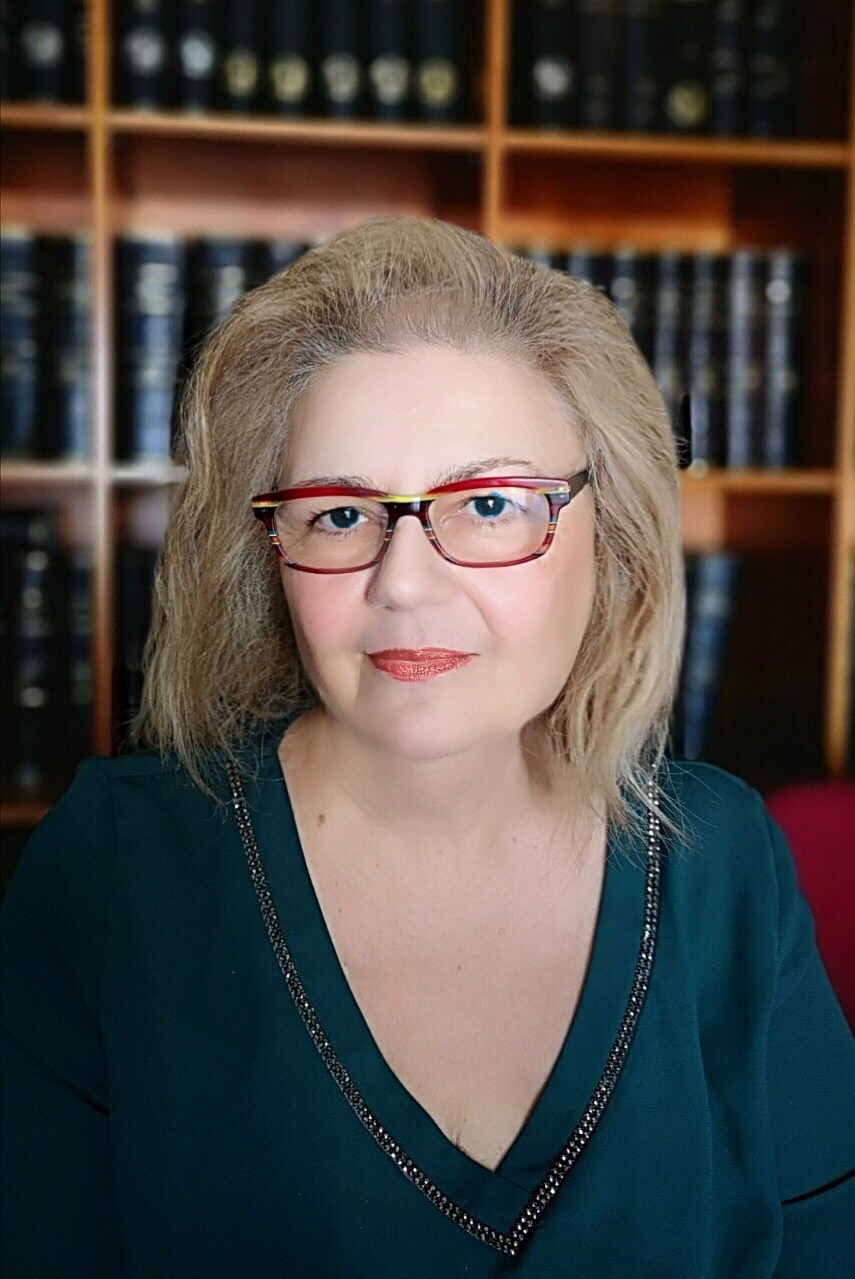
On the occasion of the conference “Economic Independence as a Shield Against Violence Against Women”—co-organised by the Greek Business Masterclass, the Athens Chamber of Small and Medium Industries, and the European Union of Women (EUW Hellas)—we spoke with Aphrodite Bleta, lawyer, accredited mediator and President of the European Union of Women for Greece. She explains the decisive role that financial autonomy, education and entrepreneurial empowerment play in preventing and addressing gender-based violence.
“Economic abuse leaves no bruises — that’s why it remains invisible”
Why do you think economic abuse is rarely discussed, leaving many women unable to recognise it as violence?
Unfortunately, economic abuse does not leave visible marks the way physical violence does. It begins with prohibiting a woman from paid employment—often justified by the supposed need for her to “focus on family duties.” It continues with controlling financial resources under the pretext of “managing household expenses,” and can reach the point where she is forced to hand over any personal income to her partner. In every case, the result is the same: loss of financial autonomy and, therefore, loss of personal independence.
Many women still interpret this behaviour not as abuse but as a sign of care—or even proof of a man’s devotion to the relationship and family. Society has long normalised the idea of the man as the “head of the household,” supposedly entitled to manage family finances.
A lack of information and the social acceptance of these patterns contribute to the silence surrounding economic violence.
A complex and fragile relationship: financial empowerment and domestic violence
Has the relationship between women’s economic empowerment and intimate-partner violence always been a challenging one?
This relationship is indeed complex and often contradictory, requiring delicate handling and balance. As mentioned earlier, financial independence reduces dependency on the abuser and strengthens a woman’s autonomy.
But it can also shift the power dynamics within a couple, sometimes triggering a partner’s reaction as he feels he is losing control—leading to a temporary increase in abusive behaviour. Research shows that during a woman’s journey toward independence, violence often escalates before it decreases.
How financial autonomy becomes a true shield
How can economic emancipation genuinely protect women from violence and exclusion?
Financial independence is a sine qua non condition—without it, a woman has no real capacity to choose and no ability to break free from her abuser. It allows her to:
- Secure housing after leaving the shared home and cover basic needs for herself and any children
- Access legal support
- Build self-esteem and participate more actively in society
Achieving this requires timely and sufficient education—academic, but above all social—so a woman has the strength to demand dignified, fairly paid work, social support and safety.
It is no coincidence that in many Asian and African countries where women often lack even legal identity, the number-one demand is access to education—yet it remains one of the strictest social prohibitions.
The gender pay gap: Women still pay the price of inequality
Financial insecurity is one of the main reasons women remain—or return—to abusive homes. What do the data show?
Economic insecurity is indeed one of the primary reasons women do not leave abusive relationships.
According to Eurostat and the European Institute for Gender Equality (EIGE), around 70% of women experiencing violence say that financial dependence is the main obstacle preventing them from leaving.
A significant number of women who do find the courage and resources to escape eventually return to their abusers due to insufficient economic support or lack of housing.
Economic opportunity is essential — but not enough
Greater economic opportunities are necessary. But they’re not a cure-all, are they?
Employment opportunities are necessary but not sufficient. They must be accompanied by:
- Social care
- Modern, accessible childcare facilities
- Adequate wages
- Training in self-protection, rights, and psychological empowerment
Meaningful change requires a holistic social strategy.
What support does the Greek state currently offer?
In Greece, the following structures are in operation:
- The National Network for Combating Violence Against Women (under the General Secretariat for Equality)
- Shelters and counselling centres
- SOS Hotline 15900
- Vocational training and employment reintegration programmes via OAED and EU-funded schemes (ESPA)
More specifically:
Legal Recognition
- Transposition of EU Directive 2024/1385
- Economic violence recognised as an autonomous criminal offence
- Tougher penalties (doubled when minors are involved)
- New offences (cyber-stalking, forced marriage)
Economic Autonomy
- 120 safe houses for victims
- 63+ domestic violence offices
- Panic Button and SafeYOUth app
- 24/7 Helpline 10201
- “My Home” housing programme (140,000 beneficiaries)
- Support for women’s entrepreneurship
Education & Awareness
- 4,226 psychologists and social workers in schools
- 22,663 trained educators
- Peer-mediation programmes in schools
Are these measures enough?
Despite significant progress, needs grow daily: more shelters, more funding, and better regional coverage. Enhanced coordination with employment and social welfare services is also urgently required.
What should change? What best practices can Greece adopt?
Necessary reforms include:
- Strengthening local support structures with stable funding
- Integrating financial-literacy programmes into victim-support services
- Public-private partnerships for employment pathways
Sweden and Spain offer strong models: victims there have access to temporary income, subsidised employment and social housing.
Does economic empowerment ever provoke violent “backlash”?
Some argue that when women gain autonomy, men may react violently to “regain control.” Is this true?
This alternative view has truth to it. As noted earlier, research shows that when women gain independence, some men respond violently to reclaim what they perceive as lost dominance.
This does not undermine the importance of empowerment—it underscores the parallel need to educate men, starting from primary school, to reshape stereotypes about masculinity and power.
This need is even more urgent today given increased migration from countries where social norms are more male-centric.
Stories that reveal the scale of the problem
Has the European Union of Women encountered cases illustrating the severity of economic abuse?
Both the European Union of Women and I personally, as a lawyer and mediator, have documented many cases where financial independence became the turning point for escaping oppression.
Women who found work—or even small micro-financing—managed to leave abusive environments and rebuild their lives.
But these stories also reveal, again and again, the need for broader social education. While we speak primarily about women, many issues concern all genders. These cases highlight the power of economic autonomy as a mechanism for liberation.
Just look at the numbers:
- Only 5.1% of economic-abuse cases are officially reported
- 69% of perpetrators are husbands or partners
- Around 1 in 3 women in Europe has suffered physical or sexual violence from a partner
And these represent only reported incidents. The real numbers are far higher, as many women never come forward due to fear, shame, lack of resources or lack of education.
Will we ever break the cycle of dependence and fear?
“Perfect is the enemy of good,” as the saying goes. Ending the cycle of violence permanently requires long-term, costly effort.
But if we manage—through the blend of policies we discussed, education, prevention, social support and empowerment—to improve conditions and reduce violence, that will already be significant progress.
We unfortunately live in an era where violence is not shrinking but expanding. The road ahead is long and painful, but it is worth it. With growing awareness, institutional intervention and community solidarity, we can build a more balanced society.