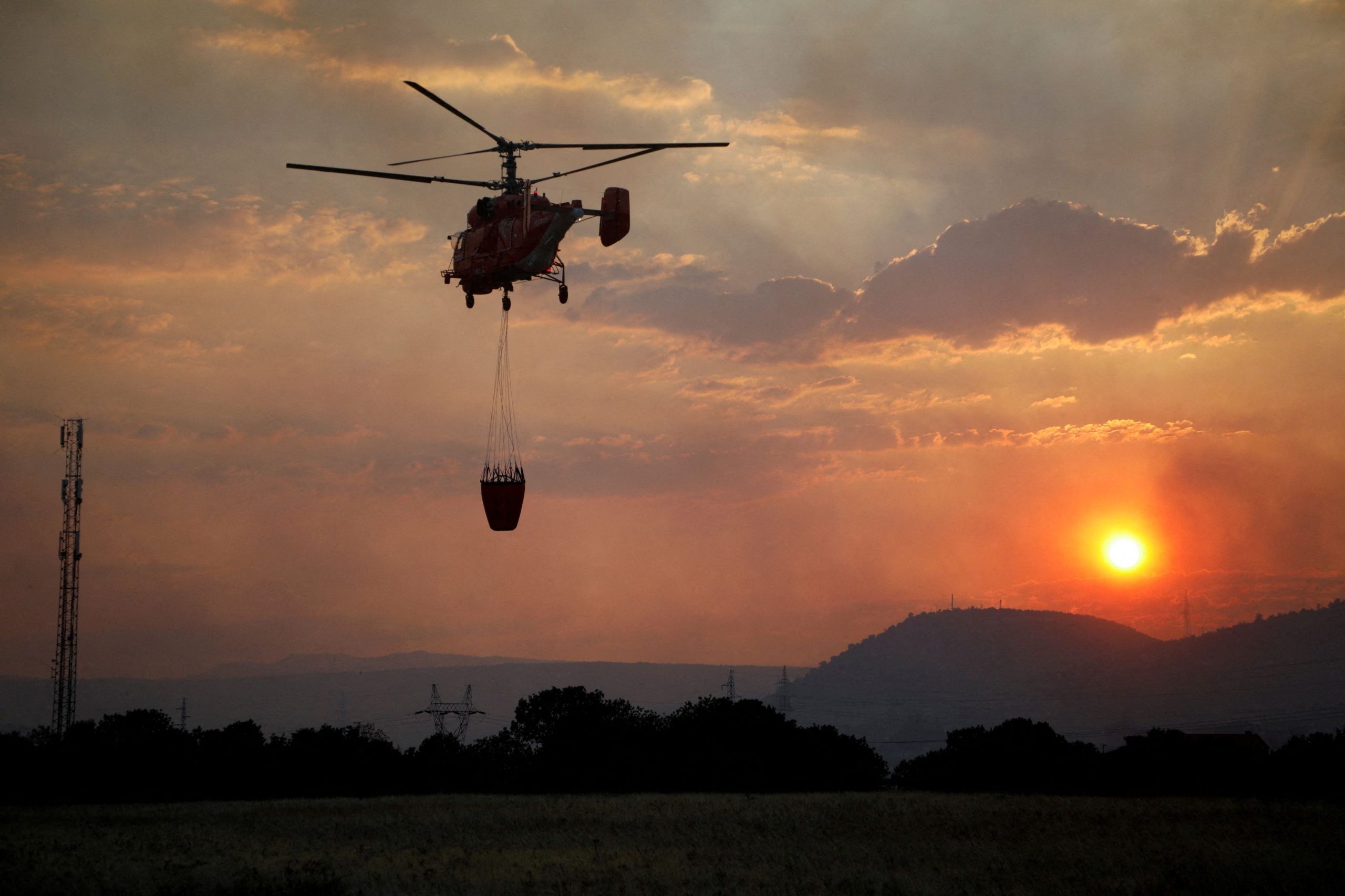
Meteorological conditions in Greece are set to create an unusually dangerous environment for wildfires during the late summer and early autumn of 2025, according to a seasonal analysis from the FLAME Pyrometeorology Group at the National Observatory of Athens.
The report, based on weather trends from July and seasonal forecasts, highlights a combination of severely reduced rainfall, significantly above-average temperatures, and intense atmospheric dryness. These factors have sharply increased the “pyrometeorological potential” — a measure of how favorable weather conditions are for the outbreak and spread of wildfires.
August 2025: Critical Fire Weather
July’s extreme heat and lack of precipitation have escalated fire danger levels.
- Upgraded to extreme risk: Attica, Peloponnese, Western Greece.
- Upgraded to high risk: Eastern Macedonia and Thrace, Epirus, Central Greece, North Aegean, Ionian Islands.
- Sustained high risk: South Aegean, Crete.
- Upgraded to medium risk: Central Macedonia, Western Macedonia, Thessaly.
September 2025: Danger Expands
Fire danger remains at extreme levels in Attica, Western Greece, and the Peloponnese, with the South Aegean and Crete joining this category. Eastern Macedonia, Central Greece, the North Aegean, and the Ionian Islands stay at high risk, while some areas like Epirus and Western Macedonia see reduced danger.
October 2025: Gradual Decline
By October, risk levels ease but remain high in Central Greece and the North Aegean. Extreme danger zones drop to high risk, while regions such as Central Macedonia and Thessaly fall to low risk.
This measure does not predict specific wildfire events but indicates how conducive weather conditions are to fire ignition and spread. It is derived from past climate data and seasonal forecasts, enabling authorities to identify regions where proactive fire prevention and readiness are most crucial.