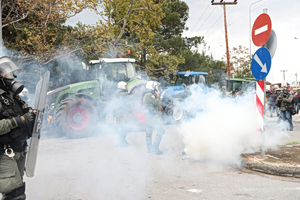
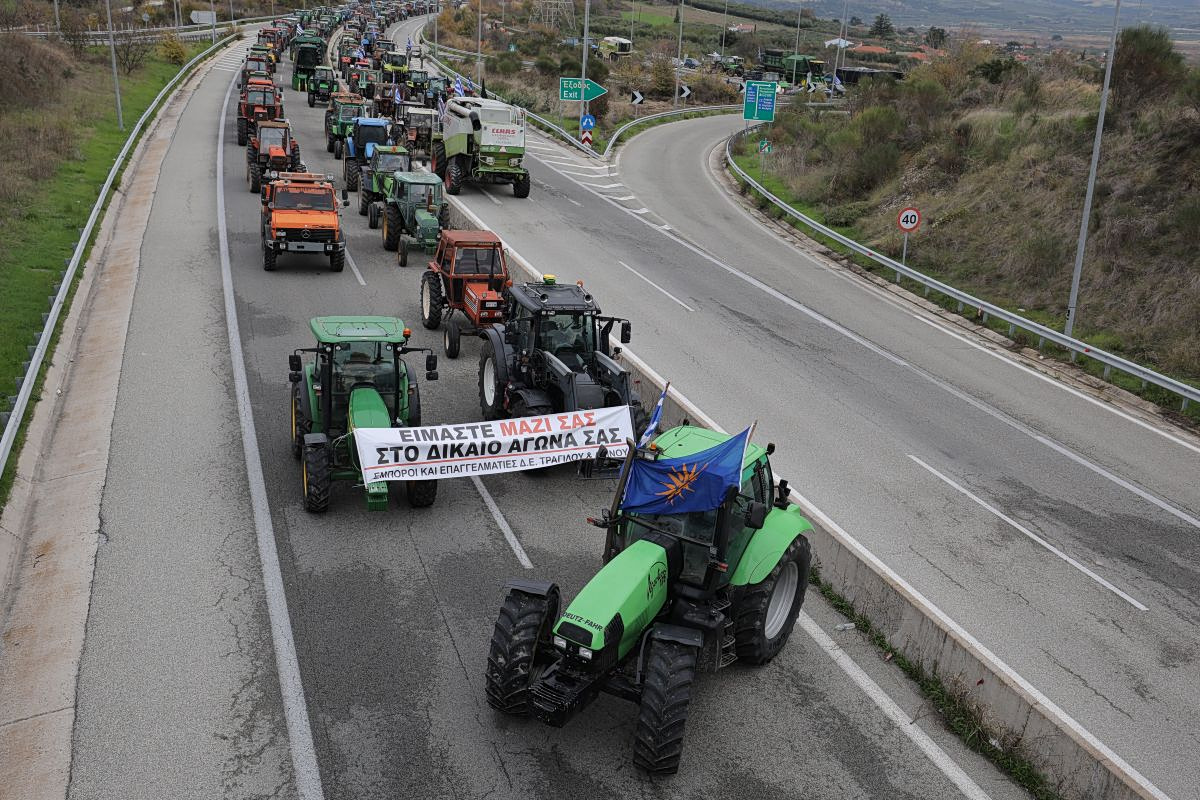
Greece is facing growing economic pressure as agricultural blockades expand across the country, raising concerns for transport, retail, and export sectors. What began with 14 blockades has quickly risen to 54 in just a few days, disrupting supply chains ahead of the busy Christmas season.
According to data from previous protests, transport delays have significantly increased costs, with product losses estimated between 10% and 25%, while delivery times grew by 20% to 80%. Perishable goods have been particularly affected, with spoilage contributing to daily losses of around €1.5 million, as reported by the Piraeus Chamber of Commerce and Industry (EBEP).
Exports have also suffered, with delays at ports costing €4–5 million per day due to disrupted truck schedules. Retailers have reported price fluctuations and increases between 2% and 7%, while industries have experienced raw material shortages and a 10–15% reduction in production.
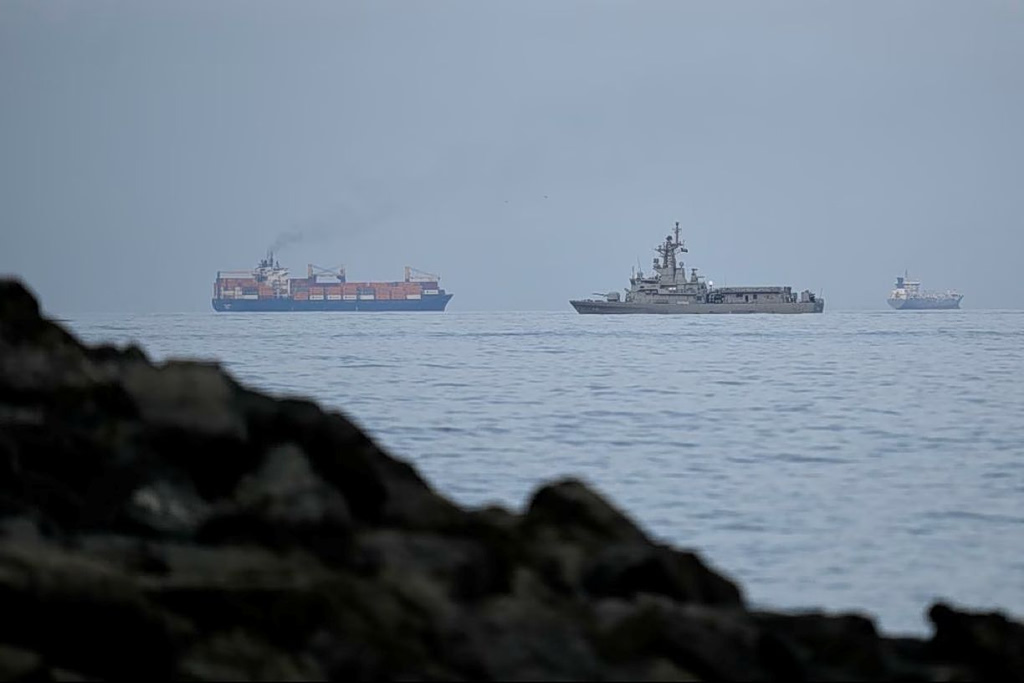
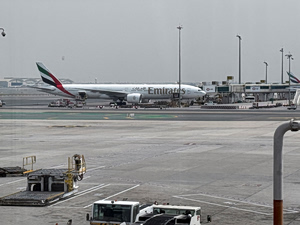
The current situation is considered critical as consumer demand rises ahead of the holidays. EBEP President Vassilis Korkidis warned that continued blockades, including potential closures of ports and airports, could severely disrupt supply chains and further raise prices.
Some vendors remain cautiously optimistic. Yiannis Sideris, a greengrocer at the Renti wholesale market, noted that while the market has not yet been heavily impacted, the risk of shortages and price hikes remains if the blockades persist.