Greece is pulling every diplomatic lever to ensure the Holy Fire (known also as Holy Light) makes it from Jerusalem to Athens this Easter, the Greek Foreign Ministry said, even as the ongoing conflict in the region casts uncertainty over one of Orthodox Christianity’s most sacred annual rituals.
“The Greek state will exhaust every possibility for the safe transfer of the Holy Fire to Greece,” the ministry said in a briefing, while acknowledging that the specifics of the operation could not be made public for security reasons. “The entire operation will take place in the middle of a war.”
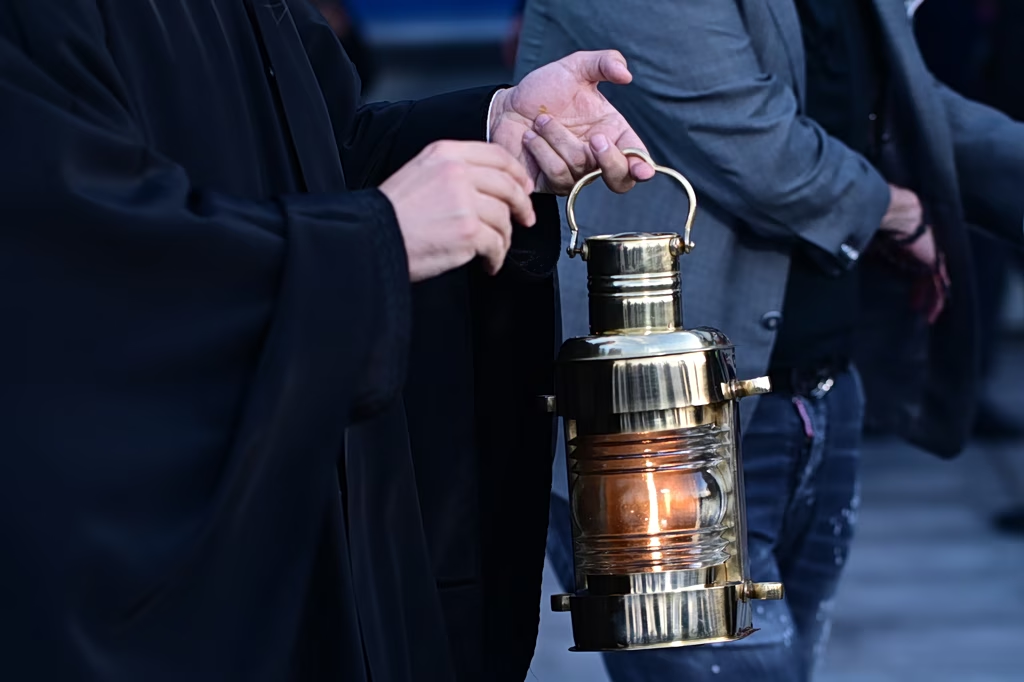
The Holy Fire is one of the most revered traditions of the Orthodox Christian faith. Every year on Holy Saturday, the flame is said to miraculously emerge from the tomb of Christ at the Church of the Holy Sepulchre in Jerusalem. It is then carried by a specially chartered flight to Athens, where it is distributed to churches across Greece and to Orthodox communities around the world.
Greek Foreign Minister Giorgos Gerapetritis is in direct contact with his Israeli counterpart, the ministry said, and Greek officials are in communication with all relevant authorities to coordinate the safe transfer of the Holy Fire. During a recent call with Gideon Sa’ar, the Israeli foreign minister, Gerapetritis also pressed for full respect of international law and raised the issue of protecting Lebanon.
The broader backdrop for this year’s ceremony is one of heightened tension. Following a meeting Monday between Israeli police and Latin Catholic Cardinal Pierbattista Pizzaballa — who earlier in the week had been briefly barred from entering the Church of the Holy Sepulchre on Palm Sunday — a shared framework for the upcoming Easter ceremonies was established. Under the terms agreed, all ceremonies, including the Holy Fire ceremony, will take place in a scaled-back, symbolic form.
Israeli authorities have imposed restrictions on large gatherings across Jerusalem’s Old City, citing the security demands of what they have designated Operation Roaring Lion. In recent weeks, Iranian missiles and debris have struck areas within the Old City itself. “These restrictions are a direct response to a real and present danger to all worshippers,” Israeli authorities claim.