A fresh wave of fuel price increases is sweeping the domestic market, reviving serious concerns for households, professionals, and producers. A sharp rise in international crude oil prices, combined with ongoing geopolitical turmoil along critical shipping routes, has already worked its way through to refinery prices and, in turn, to the pumps across the country for both unleaded gasoline and diesel.
The nationwide average price of regular unleaded gasoline is now steadily approaching 2.09 to 2.10 euros per liter, having climbed several cents in just a few weeks. Even more worrying is the trajectory of diesel, which has broken through the psychological threshold of 2.05 euros per liter. This is a development with broader economic consequences, since diesel underpins freight transport and the entire supply chain.
Global Backdrop: The Brent Rally And The Strait Of Hormuz
At the root of this new wave is the surge in international hydrocarbon prices. Brent crude is trading at multi-week highs on international markets and openly flirting with the $100-a-barrel mark. Natural gas is also climbing, surpassing 74 euros per megawatt-hour at Europe’s benchmark TTF hub.
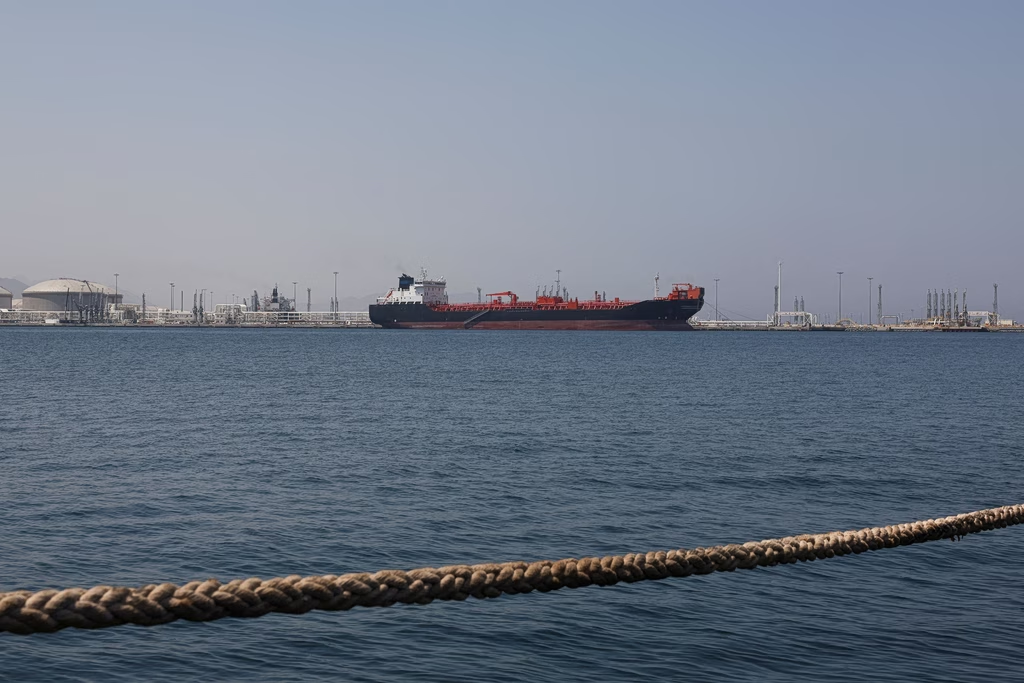
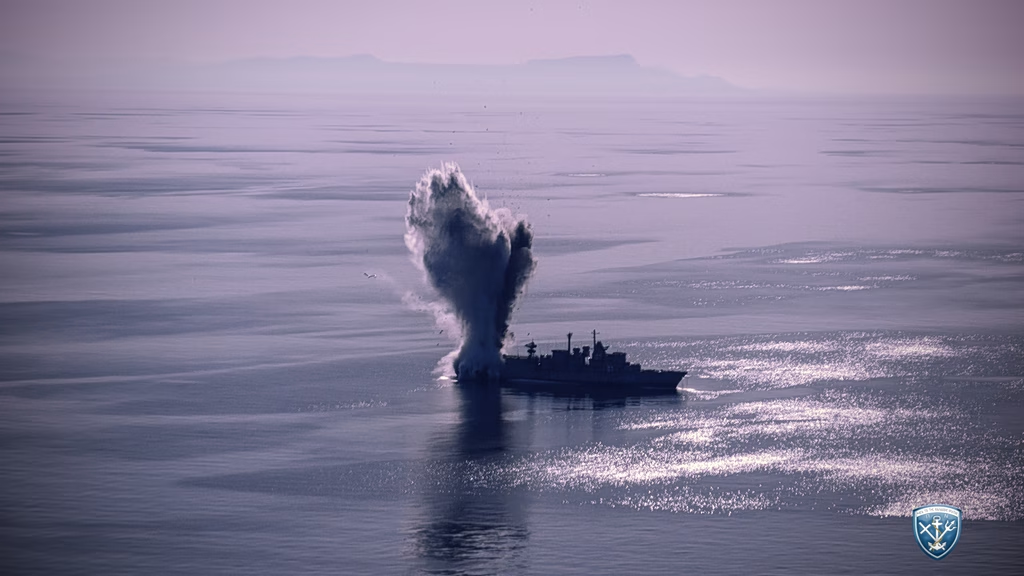
Market jitters are being driven mainly by renewed tension in the Middle East, particularly around the Strait of Hormuz. New restrictions and announcements of exclusion zones in the area have sharply reduced the number of tankers passing through daily. Under normal conditions, dozens of crude and LNG carriers move through that passage every day; current transits have shrunk to a small fraction of that, choking global supply.
The situation is being made worse by OPEC+’s decision to hold production steady rather than release additional supply into the market. That choice keeps the supply shortfall in place and adds to speculative pressure in futures markets.
A Snapshot Of The Greek Market
In Greece, wholesale increases have quickly passed through to retail. At the refinery level, unleaded gasoline has climbed significantly, reaching 1.54 euros per liter before taxes and profit margins, while the wholesale increase for diesel has been even sharper.
As is often the case, regional disparities are making the problem worse. While prices in major urban centers like Athens and Thessaloniki hover around or below 2.08 to 2.10 euros, the situation is far more severe on the islands and in remote mountain areas. In the Cyclades and Dodecanese, driven by higher transport costs and local competition conditions, unleaded gasoline has already topped 2.30 euros per liter, placing a disproportionate burden on year-round residents.
Fuel Supplies Hold, But Price Hikes Ripple Outward
On the question of fuel supply, market sources and energy sector officials say there is no immediate risk of shortages in the domestic market. Greek refineries maintain a diverse enough supplier base and are keeping the mandated strategic safety reserves. The issue, then, isn’t availability, it’s pure cost.
The knock-on effects of rising diesel and liquid fuel prices are expected to show up quickly in consumer price indexes:
- Supply chains and food: Higher transport costs pass directly into the prices of basic goods on supermarket and market shelves.
- Air and sea travel: The sharp rise in jet fuel and marine diesel is putting strong pressure on ticket prices, affecting both domestic tourism and everyday travel.
- Heating costs: With winter approaching, diesel and natural gas prices at these levels point to a particularly difficult heating season for households.
Outlook And Challenges
The current situation once again highlights how exposed European economies remain to external energy shocks. As long as geopolitical flashpoints stay active and OPEC+ keeps production tightly controlled, pressure at the pump is likely to persist.
For Greek consumers, the combination of high international prices, excise taxes, and VAT is creating a prolonged period of high prices, turning everyday commuting and covering basic energy needs into a daily challenge that takes real staying power to manage.