 Μake us preferred on Google
 Illiteracy might seem like a relic of another era, a problem that modern, industrialized life was supposed to leave behind. Yet in 2026, hundreds of millions of people still cannot read or write. September 8, International Literacy Day, marks 60 years since UNESCO established it in 1966. This year’s theme, “Literacy for People, Planet and Prosperity,” casts literacy as a foundation not just for education but for social inclusion and civic participation.
YT Shorts Video production: Christos Katopodis
UNESCO notes the concept has broadened well beyond decoding words: it now covers comprehension, interpretation, communication, and the practical use of information — a spectrum of skills rather than a strict divide between “literate” and “illiterate.” About 88% of the world’s population over 15 can read and write today, rising to 93% among 15- to 24-year-olds. Still, roughly 739 million people aged 15 and older lack basic literacy skills, nearly two-thirds of them women — around 466 million. This is where functional literacy matters: beyond decoding words, it’s the ability to use reading and writing in daily life — understanding a bill, a contract, a news report, or a public notice.
It’s on this front that the latest OECD data are raising alarm.
A Steady Decline in Reading
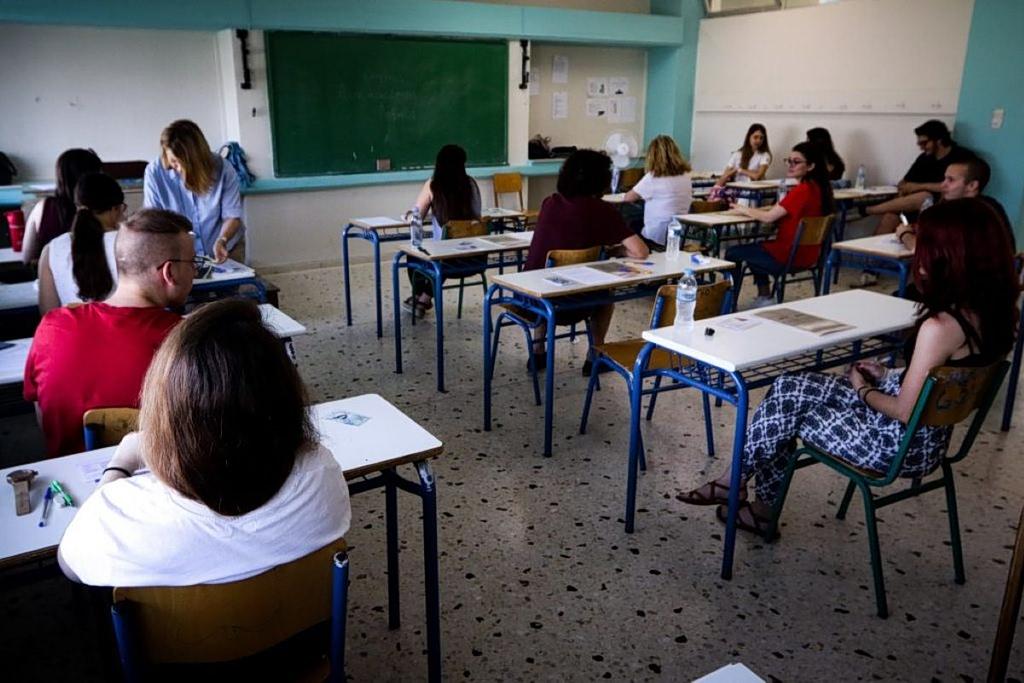
More than 760,000 fifteen-year-olds across 91 countries and economies — roughly 33 million students — took part in PISA 2025. Of the three domains tested, reading shows the steepest decline: the OECD average fell 28 points between 2015 and 2025. Students increasingly struggle with longer texts and with tasks requiring critical evaluation and synthesis of information from multiple sources, while fast-but-incorrect answers are on the rise. The OECD points to several possible drivers, from less reading for pleasure to greater screen exposure and changing digital reading habits.
Greece’s numbers are stark: just 56% of Greek 15-year-olds reached PISA’s baseline reading level, versus an OECD average of 69% — meaning 44% fall below it, compared to 31% OECD-wide. That baseline, “Level 2,” means being able to identify a text’s main idea, locate specific information, and reflect on its purpose. At the top end, only 1% of Greek students reach the highest reading level, against 6% across the OECD — where students handle complex texts, abstract ideas, and distinguish fact from opinion using indirect cues.
Since 2015, the share of Greek students below Level 2 has risen 17 percentage points, with 2025 performance even lower than 2022’s. That doesn’t mean 44% of Greek teens are “illiterate” — PISA measures whether students can effectively use what they read, not literacy in the strict sense.
From Books to ChatGPT
A new form of literacy has now entered the picture: digital literacy — the ability to search for information, assess a source’s credibility, spot misleading content, and use technology critically. AI literacy belongs in that frame too, given how thoroughly artificial intelligence systems have woven themselves into daily life.
In Greece, 34% of students say they use AI chatbots at least once a week to help with their studies. Twenty-four percent use them to summarize texts they need to read, and 25% use them to help write assignments.
The central question, then, is shifting. It’s no longer simply whether someone can read a piece of information, but whether they can judge who produced it, where it comes from, whether it can be trusted, and what might be missing from it. That may well be the defining literacy challenge ahead: the real task is learning to read the “subtext” of the world around us.