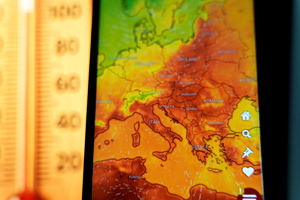
Greece has entered a prolonged heat wave, with temperatures breaking the 40°C mark and air masses running 6 to 8 degrees Celsius above what is normal for late August, according to the National Observatory of Athens’ Meteo weather service.
Forecasters describe it as the first long-duration heat wave of the summer. While the peak temperatures themselves are not considered extreme, the event is notable for how long it will last, with hot conditions expected to persist for six to seven days before forecasters reassess the outlook early next week.
Hottest Days and Hardest Hit Regions
Saturday and Sunday are expected to be the toughest days of the spell, with heat wave conditions lingering in many parts of the country until the middle of next week.
Kostas Lagouvardos, research director at the National Observatory of Athens and head of its Meteo unit, said maximum temperatures will generally reach 38 to 40°C, with some inland areas touching 41 to 42°C.
Thessaly, western Greece and central Macedonia are expected to bear the brunt of the heat, with the mercury climbing to 38 to 40°C and spiking to 41 to 42°C in localized spots. In Attica, the region that includes Athens, highs will run to 38 or 39°C.
Christos Giannaros, an assistant professor of meteorology and climatology at the University of Ioannina, told the Athens Macedonian News Agency that Sunday looks set to be the most difficult day, with nearly the entire country outside high mountain areas facing elevated heat stress. He singled out Thessaly, central Macedonia and western Greece as the usual trouble spots, while noting that Attica’s temperatures of 38 to 39°C will also translate into a heavy thermal load on residents.
Little Overnight Relief for Athens
One of the more taxing features of this heat wave is that nighttime offers scant relief. Lagouvardos said temperatures in the Athens basin will stay near 30°C in some areas well into the evening, keeping overnight lows around 29 to 30°C and compounding the sense of discomfort.
Giannaros said nighttime temperatures running higher than usual for the season are a significant factor on their own, one that calls for extra caution, particularly among vulnerable groups, in how people expose themselves to the heat and what precautions they take.
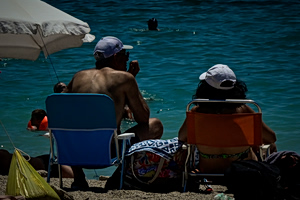
Beyond raw temperature, both meteorologists pointed to humidity, wind and solar radiation as key variables in how the heat actually feels. Giannaros said direct sun exposure during the hottest hours of the day adds the most strain, while coastal areas with higher humidity can make heat stress worse. Wind, by contrast, helps, which is why islands in the Aegean that catch a steady breeze tend to fare somewhat better.
Health and Safety Guidance
Greek authorities and meteorologists are urging particular caution for older adults, young children and people with chronic illnesses. Recommended precautions include:
- Avoiding sun exposure and limiting travel or strenuous physical activity during the hottest hours of the day.
- Keeping windows and curtains closed during the day to block heat, and airing out homes early in the morning or late at night.
- Drinking plenty of water throughout the day and avoiding heavy meals.
- Checking in regularly on elderly relatives or neighbors and using simple cooling measures, such as a cool foot bath, to help lower body temperature.
Strengthening Winds Raise Wildfire Alarm
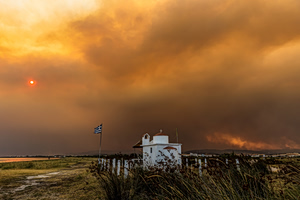
The same weather pattern that will eventually ease the heat comes with a serious downside. As the meltemi winds, the strong seasonal northerlies that sweep the Aegean each summer, intensify to 5 to 7 on the Beaufort scale, they will combine with the lingering heat to sharply worsen fire weather conditions. The drying out of vegetation and other fuel is significantly raising the risk that wildfires will ignite and spread, making the coming days especially dangerous on that front.
When Will the Heat Wave Break
Forecasters expect a modest drop in temperatures in eastern and southern Greece from early next week, as the strengthening meltemi winds bring relief to Attica, the Cyclades and northern Crete. The overall heat wave will be reassessed at the start of next week as updated forecast data comes in.