 Μake us preferred on Google
 Europe is entering a period in which economic weakness, political instability, social discontent and military insecurity are converging. Each problem could be addressed individually. Their simultaneous emergence, however, limits the scope for a response and increases the risk of a broader crisis. Given the current circumstances, I believe the risk of a serious European crisis has increased significantly. It is not inevitable, but the convergence of these pressures makes early preparation necessary. The challenge is to limit its scale, duration and consequences. This time, the risks appear broader than those of the previous financial and European sovereign debt crisis of 2009-2010.
Back then, the turmoil began in the financial system and spread to public finances, production and employment. Today, economic difficulties are compounded by wars, energy insecurity, technological competition and deeper political fragmentation. The pressures are affecting France, Germany, Italy and Spain simultaneously, the four largest economies in the eurozone. This does not prove that the next recession will be deeper. It does suggest, however, that the overall consequences of a new crisis could be greater and that addressing it could prove more difficult.
During the previous crisis, Europe could look to stabilizing the financial system and gradually restoring confidence. Today, intervention in banks or bond markets would not be enough to address an energy disruption, military escalation and a loss of productive competitiveness at the same time. Governments are also being called upon to fund defense, address population aging and modernize technology while maintaining social protection. If they resort to across-the-board cuts, they risk weakening demand and social consensus. If they increase borrowing without restraint, they undermine their future resilience. The picture becomes clearer when we examine how these pressures are unfolding in the eurozone’s four largest economies.
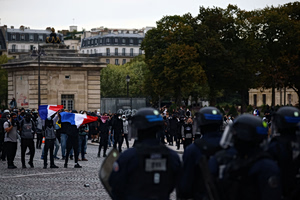
France offers the most immediate warning sign. According to the French statistics agency INSEE, public debt reached 119% of GDP in the second quarter of 2026, while the budget deficit for 2025 stood at 5.1%. Political uncertainty ahead of the 2027 presidential election is making decisions to restore fiscal balance more difficult. On October 5, Reuters linked the euro’s decline to a 17-month low against the dollar to concerns about French public finances. The inability to reach political agreement is already translating into an economic cost.
Prolonged turmoil in France would affect the entire eurozone. Higher borrowing costs reduce the resources available for investment and social services, while potentially placing additional pressure on banks and businesses. At the same time, a weaker euro makes imports of energy and raw materials priced in dollars more expensive. Fiscal difficulties can therefore fuel rising prices, while higher prices can intensify public discontent, making political decisions even more difficult.
While pressure in France is being felt primarily in public finances and the markets, Germany’s central problem is its struggle to regain its role as a powerful engine of the European economy. After two years of recession, growth in 2025 was limited to 0.2%. On October 2, 2026, Reuters reported that the German government was expected to raise its growth forecast from 0.5% to 1.3% for 2026 and from 0.9% to 1.1% for 2027. The prospect of this upward revision offers some hope, but it does not eliminate the country’s productive and political difficulties. The AfD’s gains in regional elections in September reveal the depth of public discontent. As confidence within Germany weakens, establishing a stable European direction also becomes more difficult.
In Italy, the pressure combines public debt equivalent to 138.9% of GDP in the first quarter of 2026 with long-standing weaknesses in productivity. Population aging is increasing the need for pensions and health care, while the gradual decline in the working-age population is limiting the potential for higher output. Government stability provides room for action, but high debt, combined with declining industrial production and inflation at 4.2%, limits the country’s capacity to withstand new shocks.
Spain highlights a different aspect of Europe’s problem: the gap between positive economic performance and citizens’ everyday experience. In May, the European Commission forecast growth of 2.4% for 2026, but stronger economic performance did not ensure political stability. The housing crisis and the inability to secure parliamentary support for measures to address it led Pedro Sánchez to announce an early election. The message extends beyond Spain. GDP growth loses its political significance when citizens struggle to secure housing and maintain a decent standard of living.
The different pressures facing the four economies are converging to create an unfavorable European environment. The Commission’s spring forecast projected growth of just 0.9% and inflation of 3% for the eurozone in 2026. The combination of low growth and persistently high prices is squeezing real incomes, making investment more difficult and increasing demands on government budgets. The room for easy solutions is narrowing.
Social resilience has already been tested. According to Eurostat, 92.7 million people in the EU were at risk of poverty or social exclusion in 2025.
When work offers no prospect of improvement and the middle class feels it is losing ground, economic insecurity turns into a challenge to institutions. A new crisis would find a significant part of society already exhausted and distrustful.
Under these circumstances, the military dimension takes on particular importance. The war in Ukraine continues to carry the risk of escalation, while increased defense needs are competing for resources from already strained budgets. NATO’s commitment to spending 5% of GDP by 2035 includes at least 3.5% for core defense requirements and up to 1.5% for security and resilience-related spending. This commitment heightens the need for long-term planning. Deterrence, however, requires ammunition production, equipment maintenance, secure supply lines and the ability to make joint decisions. A politically divided and economically weakened Europe will struggle to meet these demands. The risks also include cyberattacks and disruptions to energy, telecommunications and transportation networks, which can damage the economy without a full-scale war.
Preparation is therefore needed at every level. Politically, this means consensus and continuity in the functioning of the state. Socially, it means protecting essential services and vulnerable incomes. Militarily, it requires credible deterrence and workable civil protection plans. Above all, economic resilience must be strengthened before the available options begin to narrow.
For Greece, two priorities are critical. First, the continuity of financing for the state and the economy must be secured through adequate reserves, planning for borrowing needs and arrangements to maintain financing for viable businesses. Second, production and supply security must be ensured through alternative energy sources, protection of critical infrastructure and reserves of essential goods.
Let us take the necessary measures in good time, in the hope that we will never need to put them into practice.
Michalis Sallas is chairman of Lyktos Group, honorary chairman of Piraeus Bank and a former university professor.