Greece is considering the purchase of Israel’s BlueWhale unmanned submarines as part of a broader effort to strengthen naval capabilities in the Aegean Sea and the Eastern Mediterranean, according to information on ongoing defense planning.
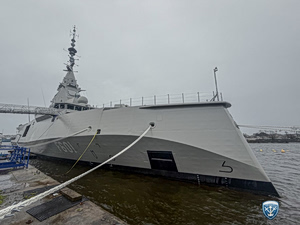
The potential acquisition comes after Greece’s recent purchase of French-made frigates and fits into a wider strategy to modernize the navy’s capabilities both on the surface and at greater depths. The goal is to shift high-risk missions from crewed platforms to autonomous systems and accelerate the technological modernization of the armed forces.
A preliminary framework agreement is already in place that would allow for co-production between Israel’s aerospace industry and Greek companies if the system is ultimately selected.
What the BlueWhale can do
The BlueWhale is an unmanned submarine about 11 meters (36 feet) long, with a shape similar to a large torpedo. It can reach speeds of up to 7 knots and operate continuously for as long as four weeks. It can dive to depths of up to 300 meters (about 980 feet), and its low acoustic signature makes it difficult to detect.
Equipped with artificial intelligence systems, the platform can carry out missions with a high degree of autonomy, even without constant human control. Although it is not armed, it plays a significant role in anti-submarine warfare by detecting hostile submarines, collecting critical data, and transmitting targeting information as part of the early stages of a military “kill chain.”
The system can also operate in shallow waters near naval bases, ports, and offshore installations, using advanced sensors to gather intelligence. Its potential use in mine warfare is considered important, as naval mines remain among the most destructive maritime threats.
Working alongside crewed submarines
Greek defense planners place particular emphasis on how unmanned submarines could work together with the navy’s conventional submarines. Similar to how drones now complement crewed aircraft, the BlueWhale could extend surveillance range and operational reach without putting crews at risk.
For the Greek navy, such a capability could offer a strategic advantage in areas where underwater monitoring plays a key role. International experience shows that even forces with limited traditional assets can use unmanned maritime systems to constrain stronger fleets.
Cost and procurement scenarios
According to military analysts, each unmanned submarine is estimated to cost around €80 million ($ equivalent not specified), excluding additional expenses for infrastructure, support, and training.
One scenario under discussion involves the initial purchase of a single system for trial use, with the prospect of a larger order that could eventually reach up to a dozen units.