
Greece’s Ministry of Environment and Energy (YPEN) is rolling out a wave of urban planning and zoning extensions, affecting everything from the legalization of illegal structures to building permit validity. At the same time, it’s enforcing new freezes on construction in three of the country’s most high-profile and environmentally sensitive areas: Mykonos, Santorini, and Mount Hymettus, overlooking the greater Athens-Piraeus agglomeration from the east.
According to the new regulations — currently under public consultation until next Wednesday — the freeze on out-of-plan construction in Mykonos will remain in effect until late 2026, pushing back previous deadlines by a full year.
The decision comes after a turbulent period in 2023, when the so-called “mafia of illegal builders” made headlines for an attack on an archaeologist from the Cyclades Antiquities Authority who had exposed unauthorized developments on the island. Following that incident, the issuance of new building permits was suspended until the approval of Mykonos’ Special Urban Plan (Eidiko Poleodomiko Schedio – EPS) — a suspension that will now remain in force through next year.
Construction Freeze in Santorini and Hymettus
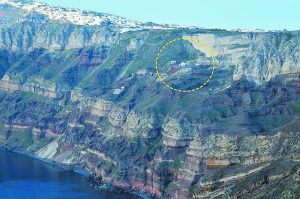
In Santorini, building permits will likewise remain suspended until the Special Urban Plan is approved — and no later than December 31, 2026. The ban applies not only to new constructions, but also to expansions, pools, and any water-related developments across the island’s Caldera zone, which includes the islands of Thera and Thirassia.
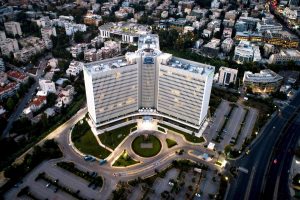
Meanwhile, in Hymettus, the ministry is proposing to extend the existing ban on building works in the mountain’s protected zones — as well as the Metropolitan Parks of Goudi and Ilisia — until December 31, 2026.
This moratorium covers all building pre-approvals, construction permits, small-scale work approvals, and any form of building activity, pending the long-awaited issuance of a new Presidential Decree defining the mountain’s protection measures. (The previous 2011 decree was annulled by the Council of State in 2017, and a new one has yet to be published.)
New Deadlines for Legalizing Illegal Constructions
YPEN is also extending key deadlines for property owners seeking to legalize unauthorized buildings or land-use changes under Law 4495/2017. The new cutoff is December 31, 2027, while documentation submission deadlines will be extended for an additional 36 months beyond their current expiration dates.
The extensions also cover previous legalization frameworks, such as Law 4178/2013 (for cases not transferred under Law 4495/2017) and the even earlier Law 4014/2011 (for files that were later transferred to Law 4178/2013).
In the Evros Delta, one of Greece’s most ecologically sensitive areas, illegal structures can also be legalized until December 31, 2026. During that time, demolition orders and fines will be suspended, providing a temporary reprieve to affected property owners.
Additionally, a new provision proposes that no “legalization permit” will be required for unauthorized constructions or land uses established up to October 31, 2025.
A “legalization permit” refers to a retroactive construction license issued to legalize works that were carried out without official approval — provided they comply either with current zoning laws or with those in effect at the time of construction.
Extended Deadlines for Building Permits
The new framework also grants one- to two-year extensions for various categories of building permits, especially those involving structures where the load-bearing framework has already been completed and only facades or roofs remain unfinished.
This includes permits issued under Law 2831/2000 (Article 26) — which governs building modernization and expansion — as well as older permits and revisions issued up to March 2012 or 2017, depending on the applicable legal regime.
The mandatory relocation of fuel, LPG, and natural gas stations, along with their auxiliary facilities, is also being postponed until December 31, 2026.
Out-of-Plan Building Extensions
For properties located outside official urban plans, the deadline to request written certification from the local Building Service (YDOM) is extended until June 30, 2026, provided the initial application for a construction permit or pre-approval was filed by December 31, 2024.
Similarly, all existing pre-approvals will remain valid until June 30, 2026, even if they were set to expire earlier.
This measure mainly concerns older parcels — subdivided before 1978 — ranging from 750 square meters to two hectares, with road frontage of 10 to 25 meters, depending on whether they lie along national, regional, municipal, or abandoned roads, or adjacent to railway lines.