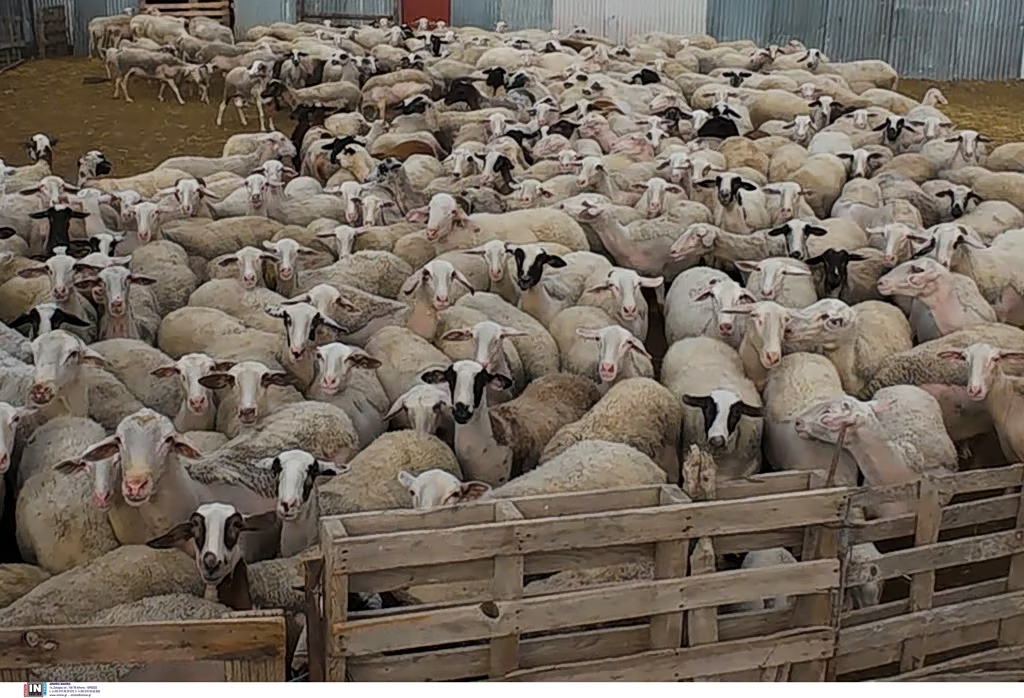
More than 2,000 confirmed cases of sheep and goat pox have been recorded in Greece since August 2024, according to new figures released by the Ministry of Rural Development and Food, highlighting the ongoing impact of the disease on the country’s livestock sector.
The ministry reported a total of 2,172 confirmed cases between August 2024 and May 24, 2026. The outbreak has affected 2,681 livestock farms, while 488,754 animals have been culled as part of disease-control measures.
Officials said the situation remains under close monitoring as new infections continue to be detected. Between May 11 and May 24 alone, authorities identified 10 new cases in several regions of the country, underscoring the continued spread of the disease.
“The disease remains a serious threat to Greek livestock farming,” said Spiros Protopsaltis, Secretary General for Rural Development and Food. He noted that current figures suggest containment efforts are producing results but warned against complacency, particularly during the summer months.
According to the ministry, disease prevention relies heavily on strict compliance with veterinary regulations by farmers, transport operators, traders, slaughterhouses and local veterinary services.
Thousands of Inspections Conducted
Authorities have intensified inspections and enforcement efforts as part of the response. Between October 14, 2025, and May 24, 2026, a total of 81,998 inspections were carried out, resulting in 124 recorded violations and 121 arrests.
From February 1 to May 24, 2026, authorities conducted 65,263 inspections alone, leading to 84 violations and an equal number of arrests.
Officials said cooperation between veterinary services, regional authorities and law enforcement agencies remains a key element of the national response strategy.
Financial Support for Farmers
The government also continues to provide financial assistance to farmers affected by the outbreak.
During 2026, compensation payments totaling €26.4 million have already been distributed for animals that were culled due to the disease. An additional €4.4 million has been allocated to regional authorities to cover operational costs linked to the implementation of veterinary control measures.
The ministry said efforts will continue with scientific monitoring, strict controls and coordinated action aimed at reducing infections and ultimately eradicating the disease.