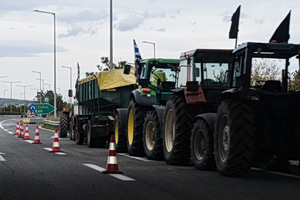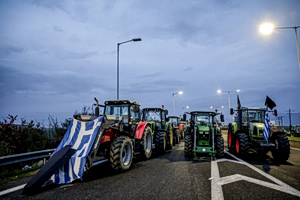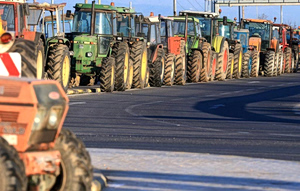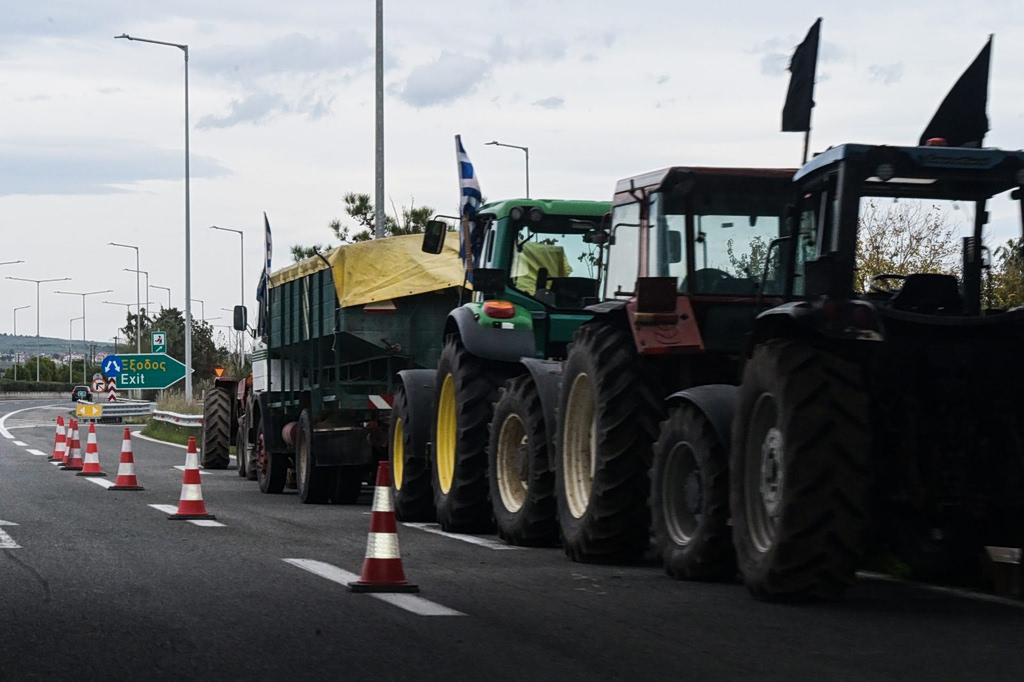
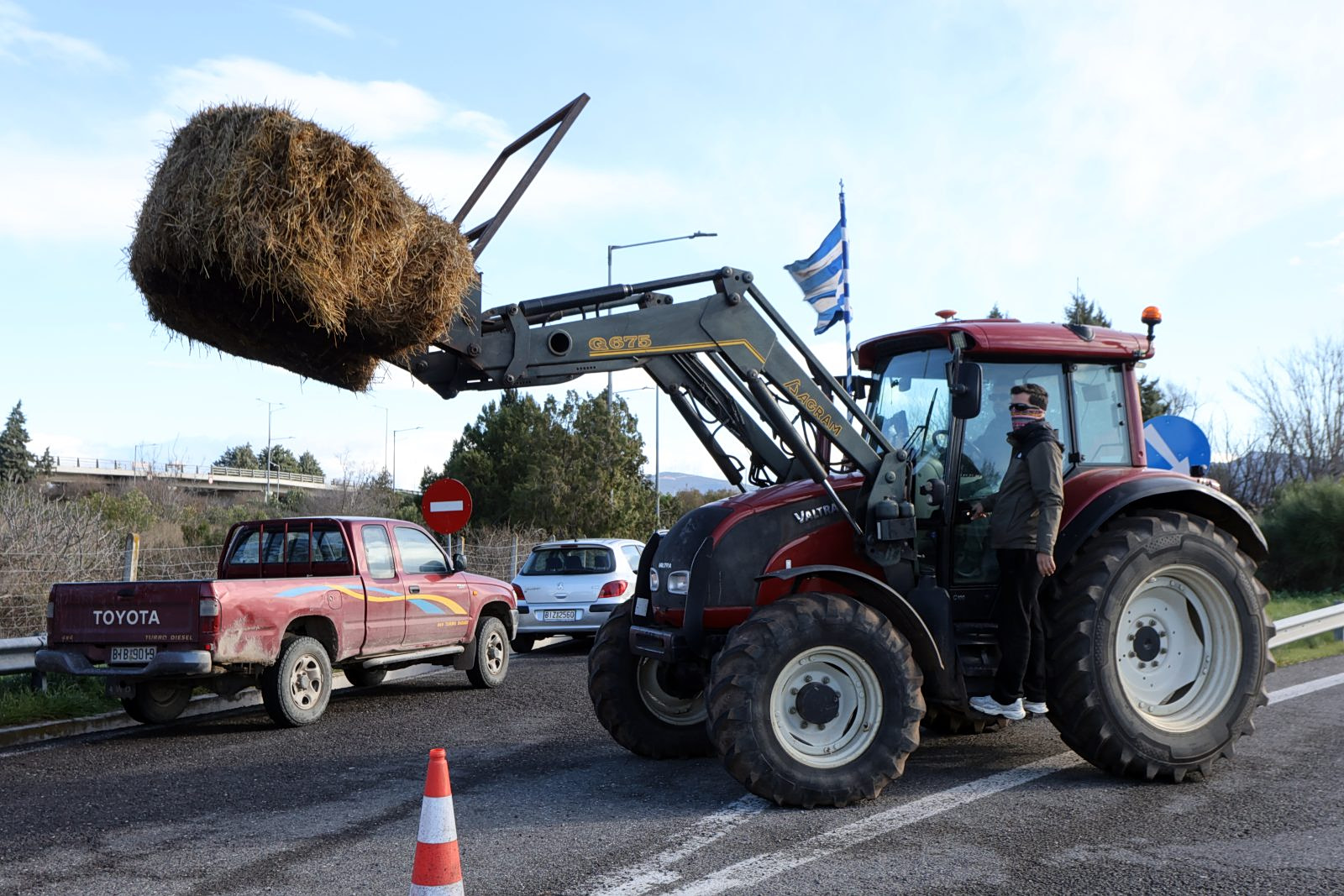
Greek farmers have intensified their nationwide protests, closing major highways, bypasses, and key infrastructure, and threatening a 96-hour blockade if their demands are not met.
The Athens–Lamia National Highway at Kastro, Boeotia, is completely blocked, with passage allowed only for ambulances and emergencies. Local police have implemented traffic diversion plans in both directions. Farmers say the initial blockade will last 48 hours but could extend to 96 hours if their requests remain unresolved.
Similar actions are taking place across the country. In Nikaia, farmers on the Athens–Thessaloniki highway plan to block the Tempi Valley tunnels today, using tractors and agricultural vehicles following a coordinated march from the Nikaia checkpoint.
In Western Macedonia, farmers have imposed 48-hour blockades at Siatista on the Egnatia Highway and at Filotas junction, with participation from farmers, livestock breeders, and beekeepers. Customs posts at Promachonas, Exohi, Evzoni, and Niki, as well as the high bridge in Chalkida, are also closed.
Strong police forces, including riot units and highway patrols, are deployed at tolls and strategic points to prevent prolonged disruption. Authorities warn of fines up to €600 for illegal road occupation or use of agricultural vehicles on highways.
The government maintains an open door for dialogue but insists that roads must remain open. Officials emphasize that law enforcement aims to prevent clashes between farmers and police, while avoiding the country being “split in two.”
Government sources say that in case of total tractor blockades, measures may include targeted police actions, administrative fines, and potential legal proceedings. The Prime Minister’s office continues to offer talks on structural agricultural reforms, but only with unified farmer representation and open roads.
Farmers’ unions argue that only 20 of 27 demands have been met, with the remaining seven considered financially or legally unfeasible under national and EU regulations.