A worker in Greece’s health and social care sector earns an average of 6.9 euros gross per hour. A colleague doing the same job in Germany earns 36.1 euros. The European average is 27.4 euros. Some of the thousands of young doctors who have left the country in recent years are likely well aware of this gap. But the pay difference is not the only reason brain drain continues, even if it has slowed somewhat.
Mismatched wages and living costs, long working hours, limited free time, and weak career prospects keep pushing younger and not-so-young Greeks to emigrate. A number of first and second generation immigrants are following the same path, looking for better jobs abroad.
Many more would like to leave but are hesitating. According to a Metron Analysis poll of people aged 17 to 45, almost seven in ten (68 percent) have considered moving abroad for a better life. A separate survey by the non-profit “Paremvasi Neon” found that six in ten young people aged 17 to 30 do not see Greece as a country where they can build their future.
Still, leaving is not an option for everyone. Most people who stay end up comparing their working and pay conditions with the rest of Europe. The gap is wide.
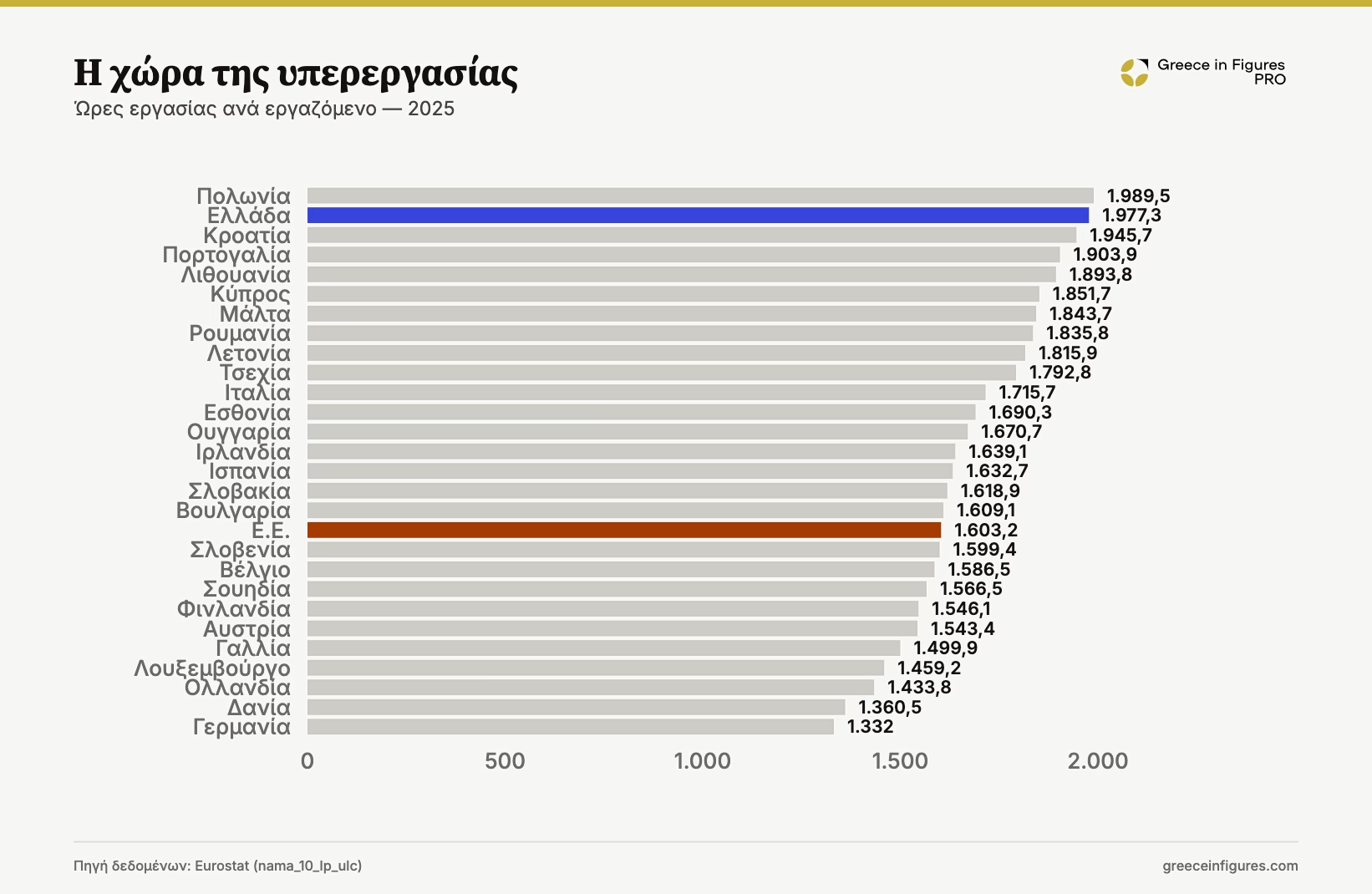
The Country of Overwork. Hours of work per worker in 2025, with Greece in blue, while the EU is in brown. Source: Eurostat
Overworked and Underpaid
The team behind the Greece In Figures platform, researchers Dionysis Koulolli and Dimitris Michailidis, recently sparked a wave of social media reaction with a post on subjective poverty. Their question of why seven in ten Greeks feel poor, even though Greece is not objectively the poorest country in Europe, does not have a simple answer.
In a follow-up analysis, the researchers explained that Greece looks less poor when measured by what people consume, but far poorer when measured by how much they have to work to afford it.
In terms of actual individual consumption, Greece ranks 21st in the EU, low but not at the bottom.
To maintain that level of consumption, though, Greek workers have to put in 25 percent more hours than the average European. Greece works the longest hours in the EU after Poland, with the average worker logging 1,977.3 hours a year. Poland works only 12 hours more, but hourly wages there are noticeably higher than in Greece, both nominally and in purchasing power.
The researchers noted that Greece ranks very low in terms of consumption per hour worked, and that the country’s material standard of living demands a disproportionate amount of labor, which explains part of the sense of financial hardship many Greeks feel.
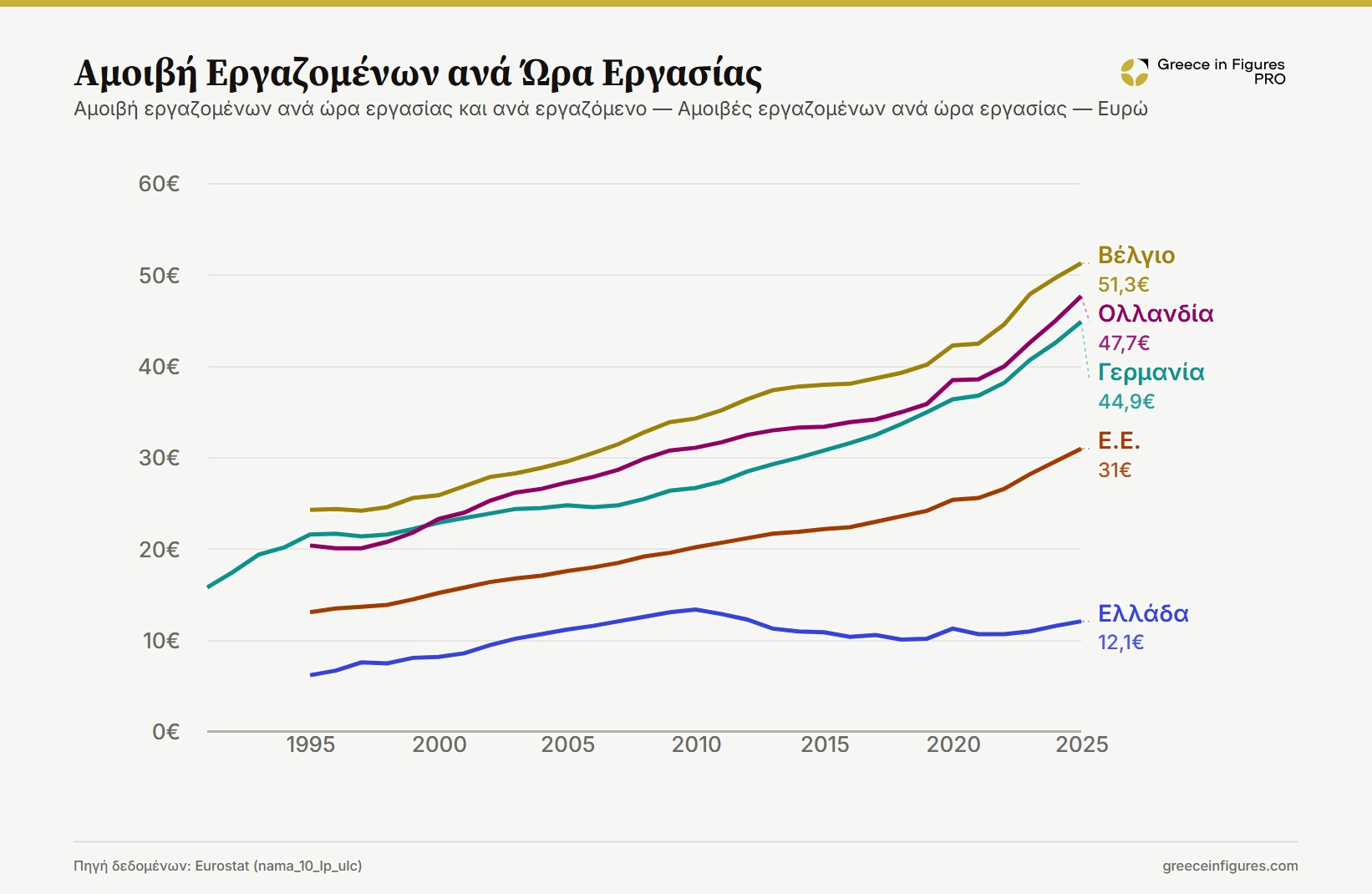
Compensation of Workers Per Hour. Greece is in blue. Source: Eurostat
Pay Per Hour Worked
Beyond the link between consumption and hours worked, another indicator of Greece’s difficult position is hourly pay. Drawing on data from Greece In Figures Pro, based on the latest official Eurostat figures for 2025, the gap becomes clear across major sectors, compared with three popular destinations for Greek emigrants: Germany, the Netherlands and Belgium.
The average hourly wage in Greece is 12.1 euros gross. In Europe it is 31 euros, two and a half times higher. In Belgium it is 51.3 euros, in the Netherlands 47.7, and in Germany 44.9.
Even accounting for differences in cost of living, the pay gap is enormous. Productivity per hour worked also lags well behind, with Greece at just 43 percent of the EU average.
Factoring in unpaid overtime pushes the average hourly wage in Greece down even further. According to a Metron Analysis survey for INE-GSEE, 52 percent of private sector employees work more hours than their contract specifies. Of those, nearly half (49 percent) are not paid at all for the extra hours, and 16 percent are only partly compensated. In other words, almost one in three works unpaid or partly unpaid overtime.
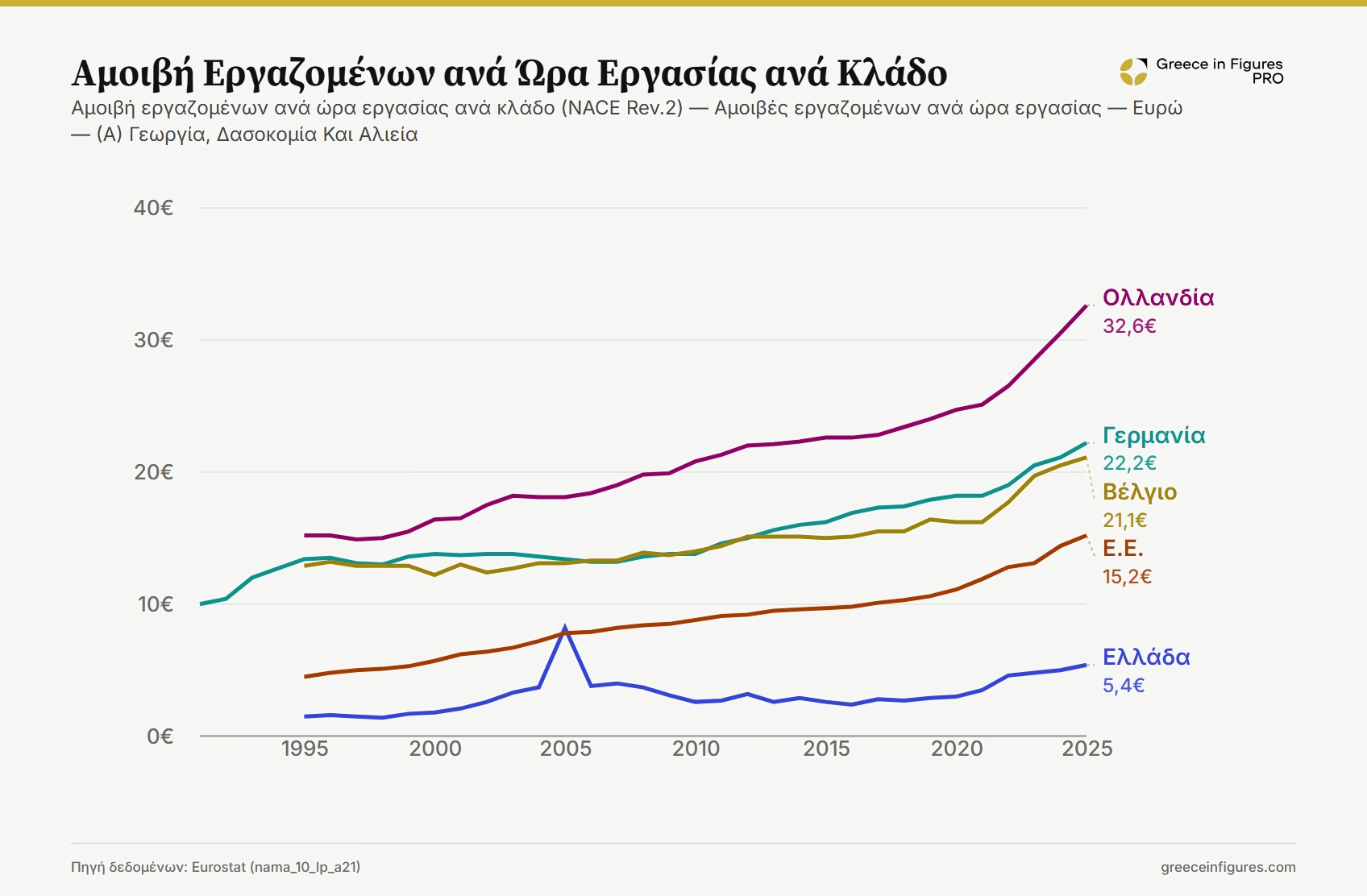
Compensation of Workers Per Hour in Specific Fields including agriculture, forestry and fishing. Greece is in blue. Source: Eurostat
Agriculture and Industry
One hour of work for the average European farmer pays almost as much as three hours for a Greek farmer.
In agriculture, forestry and fishing, the average EU hourly wage is 15.2 euros. In Greece it is 5.4 euros.
In the Netherlands, an hour of farm work pays 32.6 euros, the highest of the three countries in the comparison. Germany and Belgium follow at 22.2 and 21.1 euros respectively. Put another way, a Dutch farmer earns in one hour what a Greek farmer earns in six.
In industry, excluding construction, the EU average hourly wage is 31.6 euros. In Greece it is just 14.8 euros, less than half. Belgian industrial workers earn 58 euros an hour, Germans 53.5, and the Dutch 52.2, meaning they earn 3.5 to 4 times more per hour than their Greek counterparts.
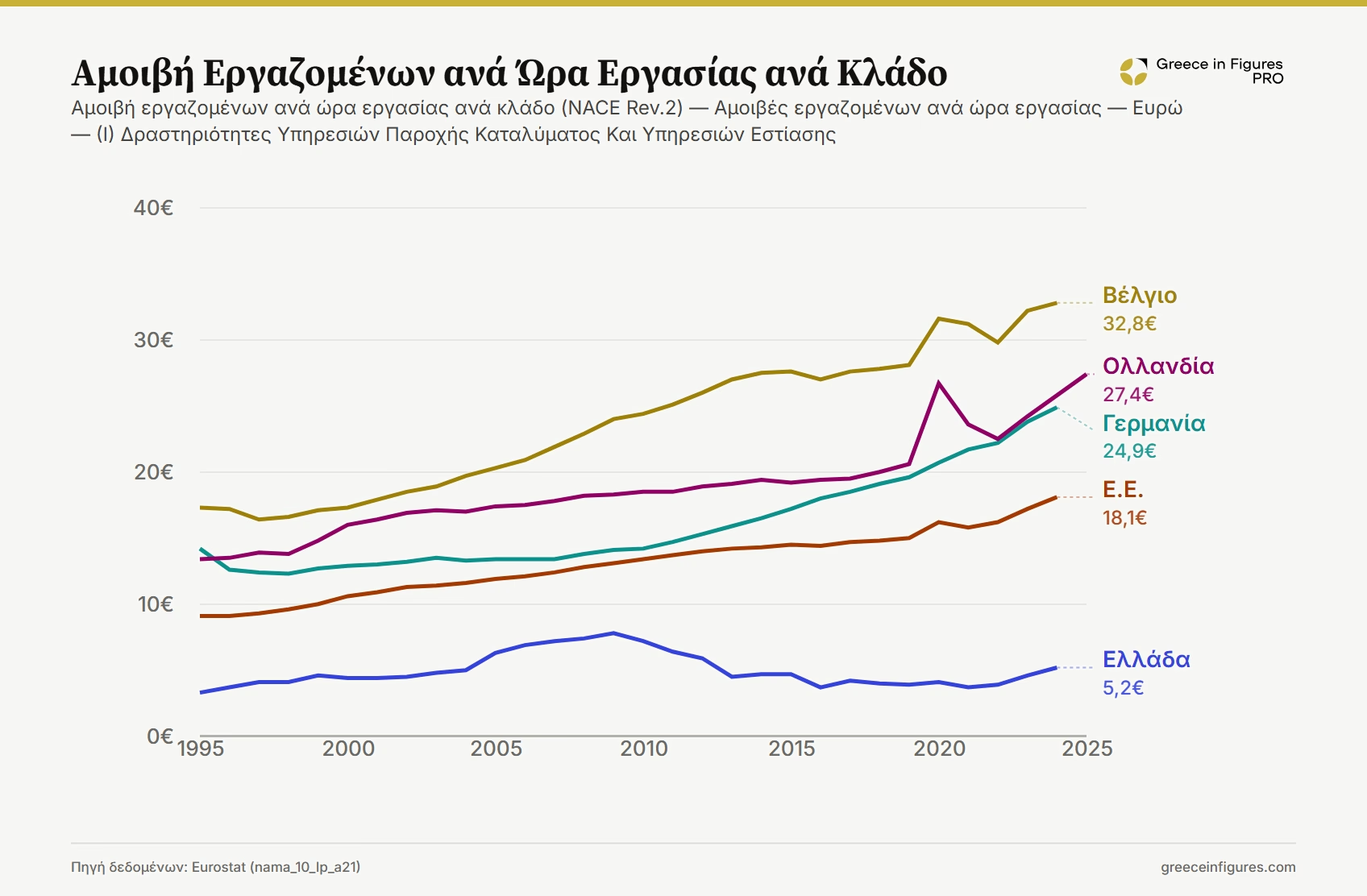
Compensation of Workers Per Hour in Specific Fields including αccommodation and food service activities. Greece is in blue. Source: Eurostat
Retail, Food Service and Hospitality
Retail and food service or hospitality are the largest employment sectors in the services industry.
Hourly pay in wholesale and retail trade in Greece is 9.6 euros. The EU average is 24.9 euros.
In Belgium, retail pay is 44.9 euros an hour, almost five times higher than in Greece. In the Netherlands it is 39.7 euros, and in Germany 36.8 euros.
In food service and hospitality, pay in Greece is at rock bottom, just 5.2 euros an hour, close to the 2025 minimum wage. The EU average is 18.1 euros. In the three comparison countries, pay in this sector ranges from 24.9 to 32.8 euros an hour.
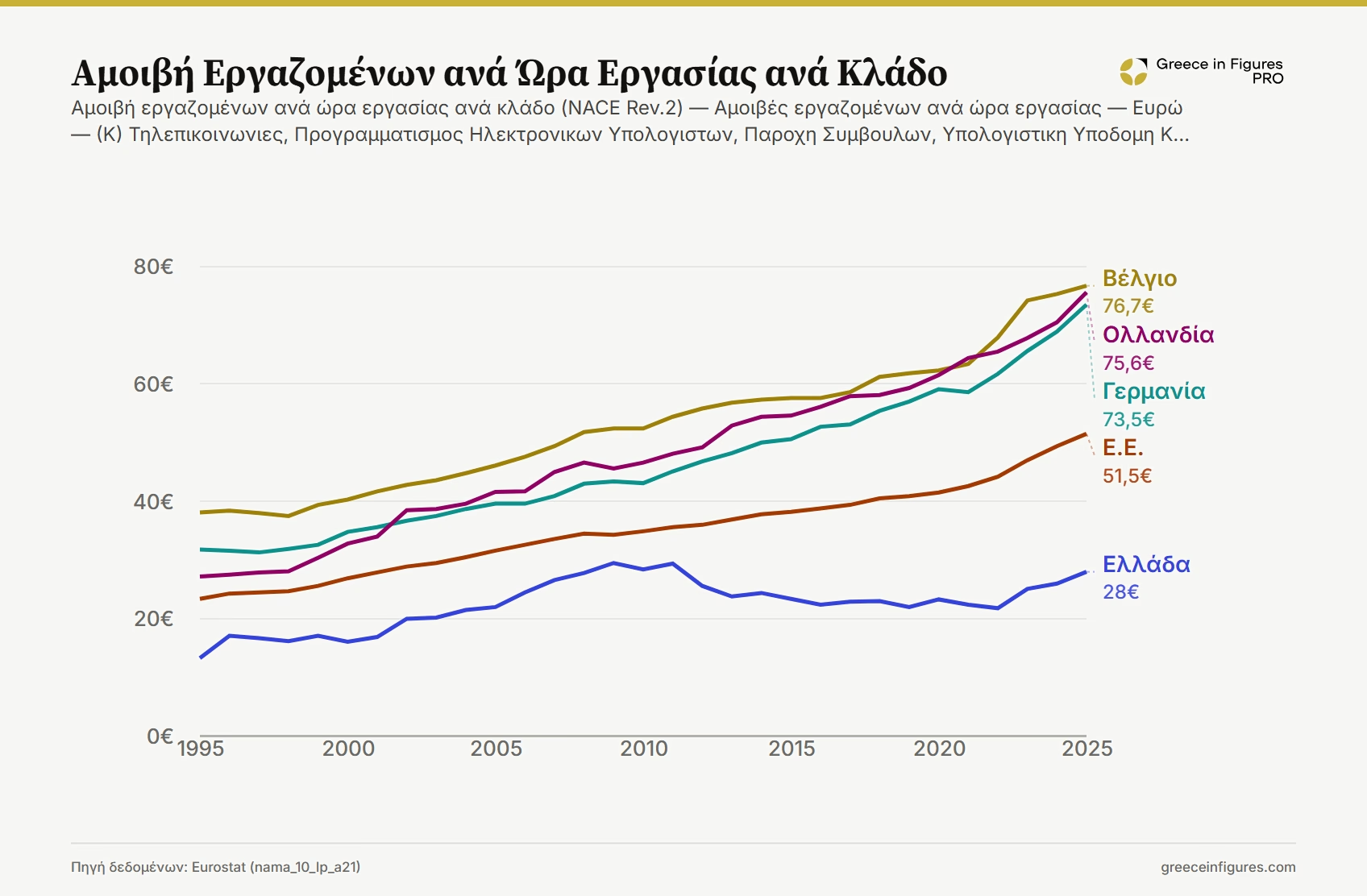
Compensation of Workers Per Hour. in telecommunications, computer programming, consulting. Greece is in blue. Source: Eurostat
Science and Technology
In the broader professional, scientific and technical sector, average hourly pay in Greece is 7.3 euros, compared with 24.9 euros across the EU. In the Netherlands, Belgium and Germany it stands at 35, 33.5 and 32.5 euros respectively.
Pay is higher still in fields tied to new technologies, including telecommunications, computer programming, consulting and IT infrastructure services. In Greece, average pay in the broader telecoms and IT sector is 28 euros an hour, double the general average. That figure seems unusually generous for the Greek market, since it would imply the average IT worker earns more than 4,000 euros gross a month. One likely explanation is that the average is pulled up by the high salaries of senior executives at major providers.
The EU average in IT is 51.5 euros an hour. In Belgium it is 76.7 euros, in the Netherlands 75.6, and in Germany 73.5.