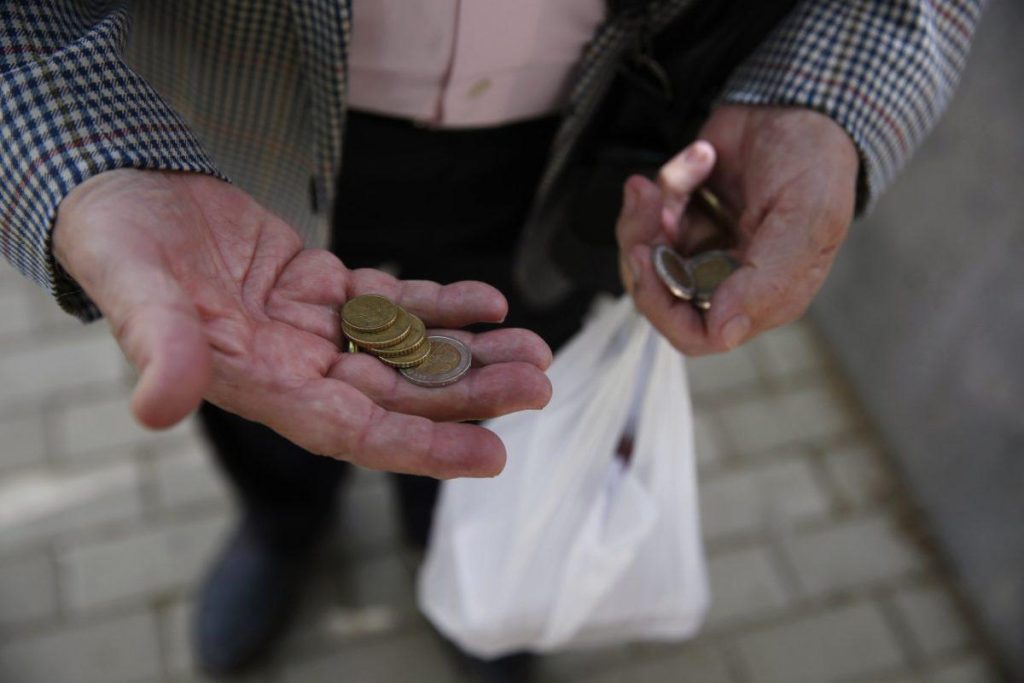

Greece recorded the highest proportion of people in the EU who said they were struggling to make ends meet and who subjectively considered themselves poor, nearly double that of the second country on the list, Bulgaria.
Specifically, 66.8% of Greek citizens reported difficulty making ends meet, compared with 37.4% in Bulgaria and 28.7% in Slovakia, according to Eurostat.
Data from recent years show that Greece has been reducing its rate of subjective poverty only very slowly since 2019. It remains the only EU country where more than 66% of the population has consistently reported such difficulties over the past decade, by far the highest level in Europe.
“Subjective poverty” refers to households’ perception that they struggle to meet their needs, in contrast with “objective poverty,” which is measured using specific income criteria.
By comparison, other Balkan countries have shown notable improvements. In Serbia, the share of people reporting subjective poverty fell from 42.6% in 2020 to 34% in 2024, while in Romania it declined from 35.8% to 23.8% over the same period.
At the other end of the spectrum, the lowest rates were reported in the Netherlands and Germany (both 7.3%), followed by Luxembourg (8.5%).
Across the European Union, 17.4% of the population considered themselves subjectively poor in 2024, an improvement from 19.1% the previous year.
The assessment takes into account the material well-being of households, including their income, expenditures, debt, and wealth.