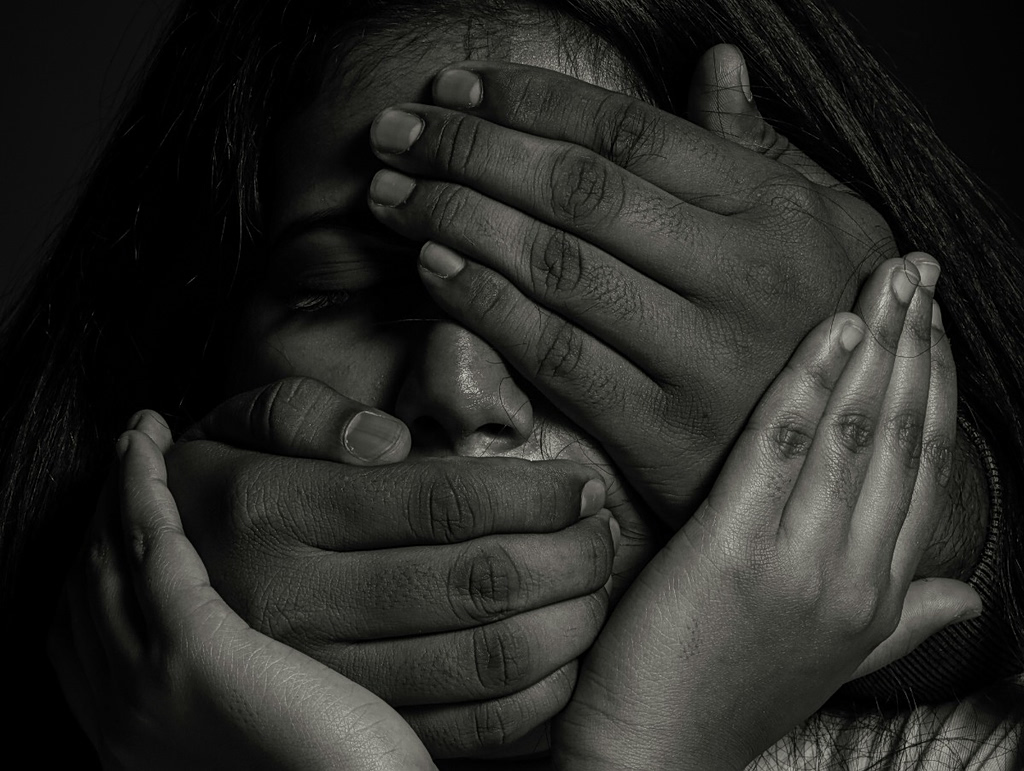
Her injuries don’t match the accident she’s describing.
Once again, it’s supposedly those steep stairs, the careless cabinet door, the polished parquet floor. The woman who arrives at the emergency room—this time accompanied by the perpetrator—cannot tell the truth. She is not allowed to. But her eyes plead with the nurses and doctors for help. She speaks without words.
In Greece, the most recent law introduced by Minister of Justice Giorgos Floridis (Law 5172/2025) protects healthcare professionals who report incidents of domestic violence, giving legal cover to the people who may be the only ones to come into direct contact with victims.
Yet goodwill isn’t enough. Frontline healthcare workers need guidance and structured training. Too often, they alone shoulder the responsibility of identifying survivors of gender-based violence, activating support pathways, and acting as informal intermediaries within a fragmented system.
This is where CARE POWER comes in—a program designed to train healthcare professionals in detecting, managing, and supporting victims of gender-based violence, and in referring them to specialized services.
“Preventing and detecting gender-based violence requires knowledge, sensitivity and coordinated action. By empowering healthcare professionals, we strengthen those on the front line who must recognize the signs of violence and provide meaningful support to victims,” says Jennifer Clarke, Director of Programs and Grants at the Bodossaki Foundation, which co-leads the initiative.
“Violence is not just clinical—it is ethical, emotional, institutional.”
“There is a shared and urgent demand for a health and education system that recognizes, supports, and meaningfully prepares those who must face gender-based violence with competence, empathy and professional integrity,” explains Manolis Smyrnakis, General Practitioner and Professor of Primary Health Care & Medical Education at Aristotle University of Thessaloniki. He also heads the Hellenic Society for Research and Education in Primary Health Care and Clinical Skills, the implementing body of CARE POWER.
Gender-based violence, he notes, triggers not only clinical challenges but also ethical, emotional and institutional ones. Effective training programs must take all of these into account.
Healthcare workers struggle with heavy workloads and limited time, unclear protocols, a lack of standardized tools for detection, risk assessment or safety planning, and insufficient training. These gaps leave them unsure and often unprepared.
A nationwide effort, funded by the EU
CARE POWER is one of 24 projects funded since April under PREVENT, a major initiative designed by the Bodossaki Foundation in 2023 and approved by the European Commission. PREVENT supports projects that combat gender-based violence and violence against children. It is co-funded by the EU through the Citizens, Equality, Rights and Values (CERV) program, the Bodossaki Foundation, and Cyprus’ NGO Support Centre—total funding €2.3 million.
Interview with Manolis Smyrnakis
“Gender-based violence is one of the gravest human-rights violations”
Gender-based violence against women, Smyrnakis stresses, is both a major human-rights violation and a serious public-health issue. According to the World Health Organization, 1 in 3 women globally has experienced physical and/or sexual violence by a partner during her lifetime.
Healthcare professionals often serve as the only point of contact for victims—offering medical care, referrals to support services, and pathways to justice. Studies show abused women are more willing to discuss these issues with their doctors than with anyone else.
Health systems must therefore invest in early detection and holistic, trauma-informed care founded on safety, trust, empathy and respect.
Since April, CARE POWER has been developed by a multidisciplinary team of doctors, psychologists and sociologists and will continue through March 2026. Its core mission: address the critical gap in early detection of gender-based violence in Primary Health Care and hospital emergency departments.
The project also places strong emphasis on medical students and young professionals—ensuring they acquire the necessary skills before entering clinical practice.
Scratches and bruises are not “domestic violence”—until they are
To build its training framework, the team conducted three Focus Group Discussions with 35 participants:
- 9 final-year medical students,
- 13 frontline healthcare professionals (doctors and nurses),
- 13 additional professionals from a wide range of specialties.
This diversity allowed for a deeper, multi-layered understanding of the challenges involved in recognizing and handling domestic and intimate-partner violence.
A clear conclusion: everyone needs training
The findings were striking. Medical students—even though they spend their final year rotating through hospitals and health centers—often cannot accurately interpret what they see. They fear making a mistake that could worsen a woman’s situation, so many choose silence.
According to international research, healthcare workers identify only 1 in 35 abused women.
Professionals already working in emergency departments and health centers show greater familiarity with the concept of gender-based violence but still lack clarity about their responsibilities. Institutional barriers—unclear procedures, lack of clinical supervision, understaffing—contribute to burnout and hesitation.
Despite years of experience, many request interactive, experiential training that combines knowledge with practical tools and emotional preparedness.
“Other” femicides: Would a standard protocol help?
Tools exist, Smyrnakis notes, but many are not adapted to the needs of frontline staff, who simply do not have the time to sift through options during emergencies. A standardized, Ministry-approved protocol is essential.
Medical students want frameworks that prepare them to act safely; working professionals seek training that strengthens their role and gives institutional backing to their interventions.
Next steps: digital training, live seminars, networking
The project’s training material is nearly complete and will be freely available to healthcare workers on the online platform arecs.org.gr/openeclass.
Three online training sessions are scheduled for December. In early 2026, the team will conduct in-person workshops and networking activities with relevant institutions.
But education, Smyrnakis stresses, should not be optional. It must be systematically integrated into the curricula of all medical students—and involve practical, experiential learning.
CARE POWER’s in-person seminars in Thessaloniki, Larissa and Ioannina will be small-group, immersive workshops designed to address highly sensitive issues openly.
Building trust: the foundation of support
A trusting environment is crucial. Survivors must feel they can speak without fear. The goal is not an aggressive interrogation, but an “open-door approach” that lets victims know that—even if today is not the moment—support will be there next time.
Primary Health Care plays a uniquely important role. Unlike hospitals, which operate in fragmented shifts, community health units can provide continuity—seeing the same patient again and again, building long-term trust.
What should a holistic, sensitive health system include?
Beyond education, Smyrnakis emphasizes the need for:
- Systematic, gender-sensitive training for all healthcare professionals
- Institutional policies and standardized protocols to ensure safety and confidentiality
- Cross-sector collaboration with social services, police, justice and NGOs
- Anonymous, secure data collection to inform national policy and accurately assess the scale of the problem