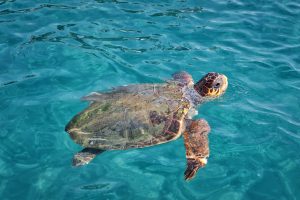
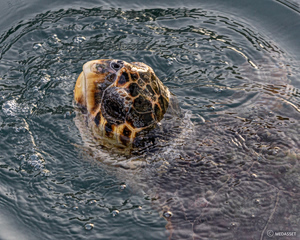
Only 12% of Greece’s loggerhead sea turtle (Caretta caretta) nesting beaches are in good conservation condition, according to a new assessment by WWF Greece and ARCHELON, raising concerns over the impact of tourism and weak beach management on one of the Mediterranean’s most emblematic protected species.
The assessment, carried out in 2024–2025 under the “Alliance for Wildlife” initiative, examined 167 nesting beaches across the Ionian Islands, Crete, the Peloponnese, Epirus and the Dodecanese, covering about 270 kilometers of coastline. Particular attention was given to protected areas within the Natura 2000 network.
The findings show that half of the beaches were rated as being in moderate condition, while 38% were classified as poor. Protected areas performed better, with 19% of beaches inside Natura 2000 sites rated in good condition, compared with just 5% outside protected areas. The results suggest that legal protection helps, but does not by itself remove the pressures facing nesting sites.
Tourism emerged as one of the main sources of disturbance. Hotels, beach bars and restaurants are among the most frequent interventions recorded on nesting beaches. Beach furniture was found on 77% of the beaches assessed, potentially obstructing turtles as they come ashore to nest. Nighttime light pollution was recorded on 71% of beaches, while 68% had intense human presence during the evening hours, when nesting typically takes place.
WWF Greece and ARCHELON are calling for stronger protection and better management of nesting beaches, including full implementation of the National Action Plan for Caretta caretta. They also recommend maintaining a five-meter free zone from the waterline so turtles have enough space to reach the beach and create nests, as well as removing umbrellas, sunbeds and sports equipment during nighttime hours.
The findings underline a growing challenge for Greece: how to protect critical wildlife habitats in areas that are also central to the country’s tourism economy.
Despite the evident “room for improvement”, previous reports have shown that Greece’s loggerhead turtles are slowly making a comeback, on account of improved protection measures and awareness.