
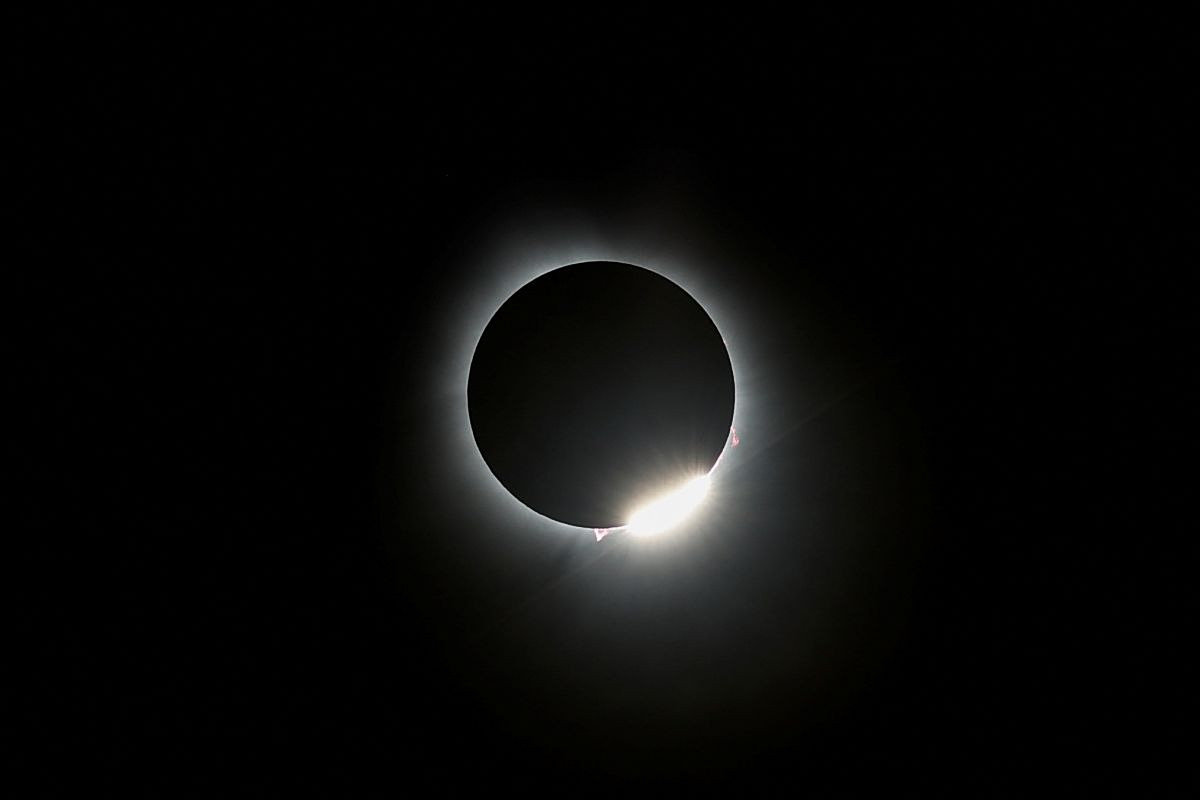
A major astronomical event is set to unfold on 2 August 2027, when a total solar eclipse will sweep across parts of Europe, North Africa and the Middle East. Scientists say this will be the longest total solar eclipse of the 21st century, with complete darkness lasting up to 6 minutes and 23 seconds along the central path.
The eclipse will begin over the Atlantic Ocean before reaching land near the Strait of Gibraltar. From there, the path of totality will move across southern Spain, Morocco, Algeria, Tunisia, Libya and Egypt, before continuing toward the Middle East. Because its route crosses several densely populated regions with good transport networks, a significant influx of visitors is expected. Countries in the Americas, including Brazil, will not be able to view any part of the event.
Around 60 to 80 minutes before totality, the Moon will start to gradually cover the Sun. The full phase of darkness will last from a few seconds to more than six minutes depending on the observer’s location. Afterward, the Sun will slowly reappear during another hour-long partial phase. Local astronomy centers are expected to publish precise timings as the date approaches.
During the moments of totality, observers may notice a drop in temperature, shifts in wind, and unusual behavior in animals. The sky may darken enough to reveal planets such as Venus and Mercury, while phenomena like the “diamond ring” effect and the Sun’s faint corona are also expected to be visible.
Although totality will not be seen in Greece, much of the country will witness a significant partial eclipse. On the island of Gavdos, the Moon will cover about 90% of the Sun, while the rest of Greece will see coverage ranging between 60% and 89%.
Total solar eclipses occur somewhere on Earth roughly every 18 months, but few last as long or pass through such accessible regions. For scientists and skywatchers worldwide, the 2027 event is already considered one of the most anticipated celestial spectacles of the century.