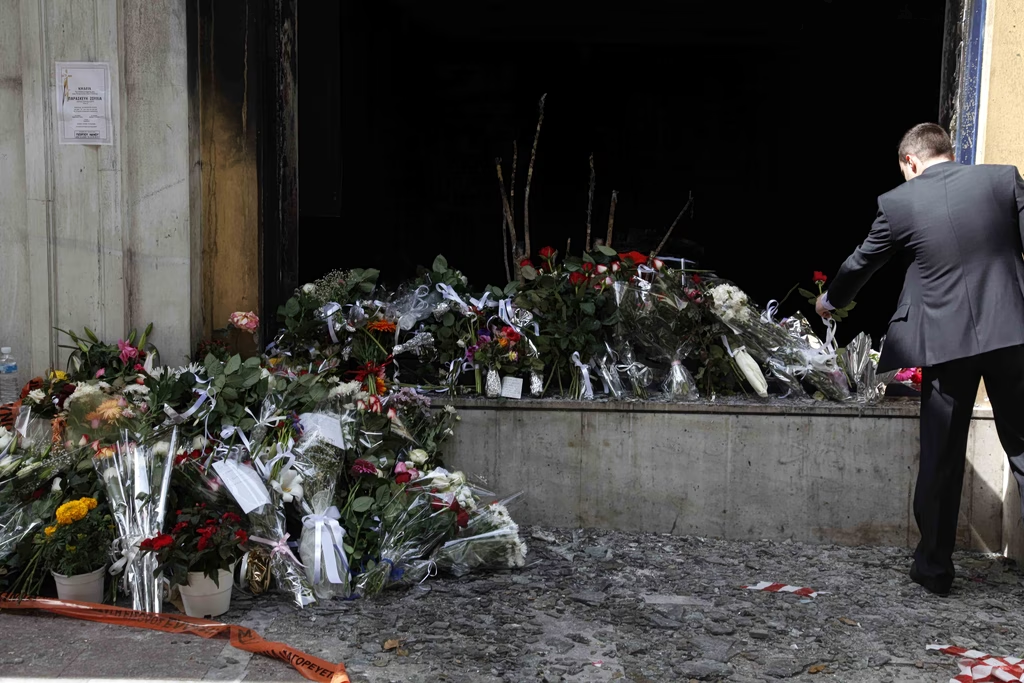
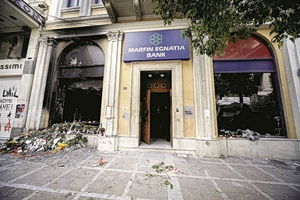
Sixteen years after the deadly Marfin bank fire in Athens claimed the lives of three employees, the investigation has entered a new phase following the arrest and pre-trial detention of two suspects.
An investigating judge and prosecutor unanimously ordered the detention of the two defendants, both now aged 42, after a lengthy police investigation. According to Greek authorities, the case is supported by modern analysis of photographic material and witness testimony, particularly from people who were near the bank branch on the day of the attack.
However, the defense has strongly challenged the evidence, arguing that the case lacks conclusive identification of those accused.
Defense disputes identification evidence
Speaking to Greek broadcaster MEGA, defense lawyer Thanasis Kampagiannis said there is currently no definitive identification linking his client to the attack.
He argued that the Directorate of Criminal Investigations itself concluded that the available photographic evidence is “inconclusive” and does not establish the identity of either his client or the other defendants.
Kampagiannis warned against declaring the case solved without what he described as robust evidence, recalling that previous prosecutions in the same case collapsed in court in 2016. He said those failed proceedings caused additional suffering for both the accused and the victims’ families, who were forced to relive the tragedy during the trial.
According to the lawyer, police conclusions about individuals seen in photographs have changed repeatedly over the years, with different people identified as the same suspect at different stages of the investigation.
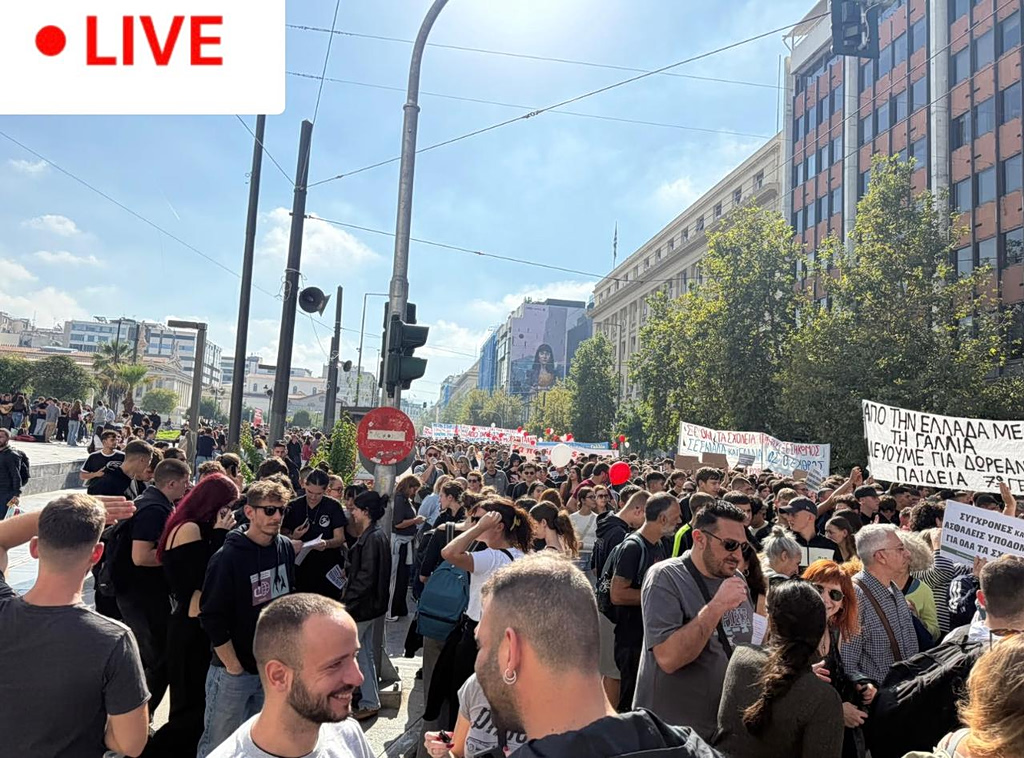
He also noted that his client had attended the large protest taking place in central Athens that day, along with tens of thousands of other demonstrators, but stressed that being present at the demonstration does not prove involvement in the deadly attack.
Questions over anonymous email
A central point of the defense’s criticism concerns an anonymous email included in the case file.
Kampagiannis described the email as unreliable, claiming it identifies as one of the perpetrators a person who was serving a prison sentence at the time of the 2010 attack.
He said the defense has formally requested that authorities identify the sender of the email, arguing that no investigative steps have been taken in that direction.
According to the lawyer, relying on such material, combined with inconclusive photographic analysis, is insufficient to support a conviction. He also questioned the decision to place the suspects in pre-trial detention, suggesting that less restrictive measures, such as electronic monitoring or house arrest, could have been considered while the investigation continues.
The lawyer further emphasized that neither of the two defendants is accused of throwing the incendiary device that started the fatal fire, insisting there has been no conclusive identification of the individuals responsible for that act.
Photojournalist recalls the attack
As debate over the evidence continues, photojournalist Ilias Provopoulos, who documented the tragedy as it unfolded, shared his memories of the attack in an interview with MEGA.
Provopoulos said he happened to be photographing the demonstration from a nearby building when he noticed a small group of individuals whose appearance stood out from the rest of the crowd.
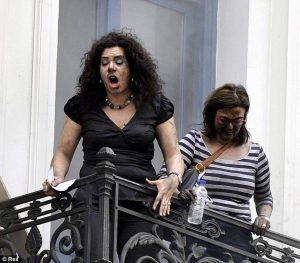
He recalled capturing dramatic images of employees trapped inside the burning bank, including workers calling for help from a balcony before firefighters rescued them. One photograph also shows a man escaping by jumping to a neighboring building.
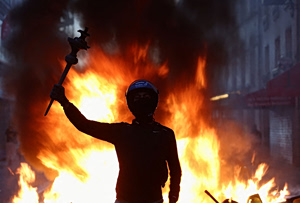
The photojournalist described another image showing one individual breaking a window while another threw a container filled with flammable liquid into the building, causing the interior to rapidly fill with smoke.
He described the group as operating “like an execution squad,” saying they appeared coordinated and were dressed similarly in black clothing, backpacks and face coverings.
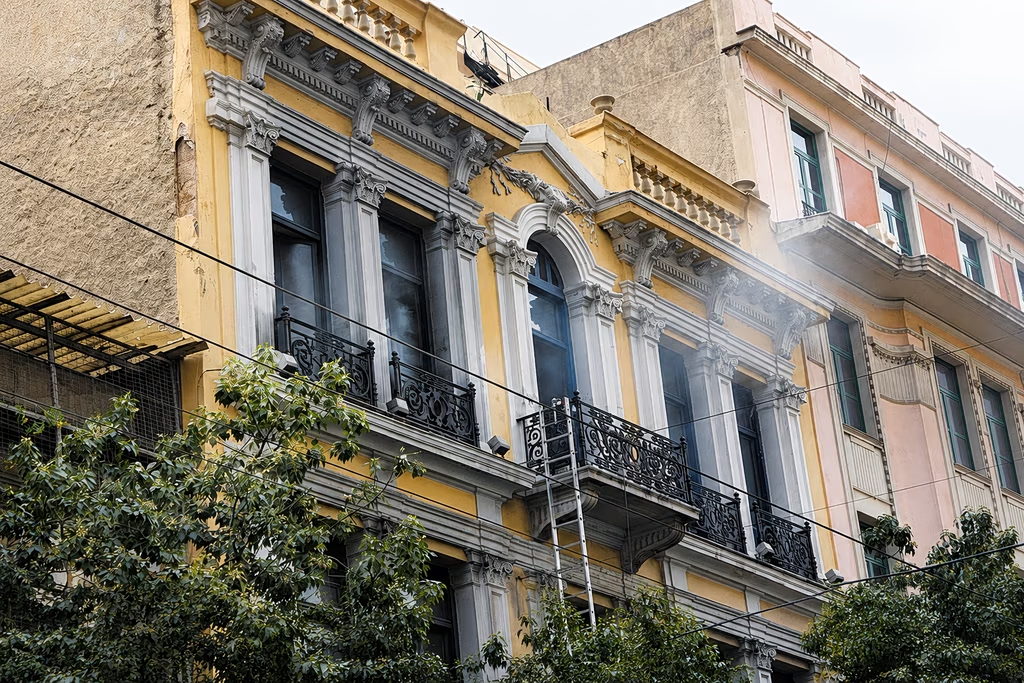
Provopoulos also said the fire brigade arrived at the scene within about eight minutes but faced significant difficulties reaching the building because of the massive crowd, as well as obstacles created by roadside trees and trolleybus power lines, which complicated the rescue operation.