 Μake us preferred on Google
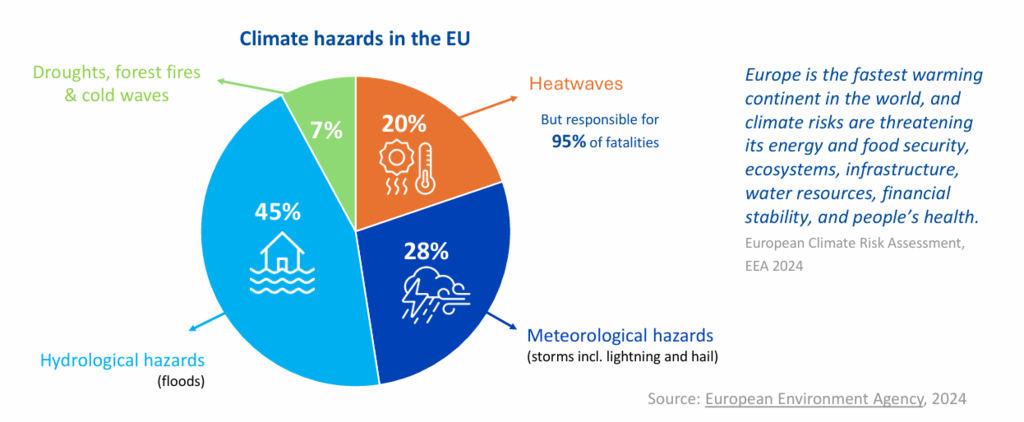
 According to the European Commission, around 95% of all fatalities linked to weather and climate-related extremes in Europe over the past four decades have been associated with heatwaves. An estimated 48,000 people died from heat-related causes across the continent in 2023 alone.
Unlike a flood or a wildfire, extreme heat rarely produces a single, easily documented disaster scene. It kills by aggravating cardiovascular and respiratory disease, worsening kidney conditions and causing heat exhaustion or heat stroke. Older people, infants, outdoor workers and those with existing health problems are particularly vulnerable.
NEWSLETTER TABLE TALK
Never miss a story.
Subscribe now.
The most important news & topics every week in your inbox.
And, its full toll is also difficult to measure. Heat is often the underlying cause of death rather than the condition recorded on a death certificate, which may lead people to underestimate related risks.
Europe is especially exposed. The European Environment Agency describes it as the world’s fastest-warming continent, with rising temperatures already affecting health, food and water supplies, infrastructure, ecosystems and the economy.

A woman uses a fan while holding a baby amid heatwave, during Mass led by Pope Leo on the Solemnity of Saints Peter and Paul, Apostles, in St Peter’s Basilica, at the Vatican June 29, 2026. REUTERS/Yara Nardi
The growing danger is reflected in the EU Day for the Victims of the Global Climate Crisis, observed each year on July 15. Established by the European Parliament, the Council and the European Commission in 2023, the day commemorates those killed by climate-related disasters and calls for stronger protection against future events.
The date marks the anniversary of the devastating 2021 floods in Germany and Belgium. But while floods prompted its creation, heat now represents Europe’s largest climate-related threat to human life.
The challenge is particularly acute in cities. Concrete, asphalt and limited vegetation trap heat, making urban areas considerably warmer than their surroundings. During a heatwave, this urban heat-island effect can leave residents exposed to dangerous temperatures even after sunset, when the body would normally have a chance to recover.
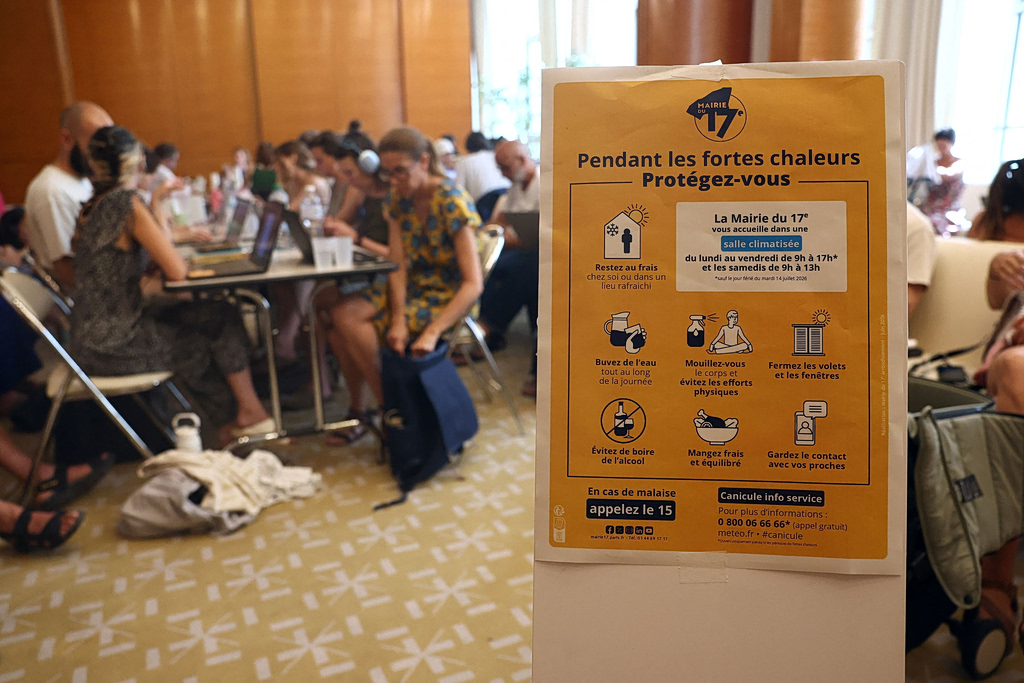
A sign reading ‘During intense heat protect yourself’ is seen inside an air-conditioned room open to the public inside the 17th district city hall as temperatures rise in Paris, during a heatwave affecting a majority of the country, in France, June 25, 2026. REUTERS/Alice Sacco
Greece and the wider Mediterranean face even greater risks. Densely built neighborhoods, an ageing population and long periods of extreme summer temperatures create a particularly dangerous combination.
Heat also highlights a broader shift in Europe’s response to the climate crisis. For decades, policy concentrated largely on reducing greenhouse-gas emissions to limit future warming. That remains essential, but governments are also placing greater emphasis on adaptation: preparing communities for impacts that are already being felt.
In the case of extreme heat, many of the most effective measures are practical and well understood. These include early warning systems, cooler and better-insulated buildings, shaded public spaces, more urban vegetation, resilient hospitals and targeted support for older people, outdoor workers and those living alone.
Cities have a particularly important role to play. Trees, parks, reflective surfaces and improved building design can help lower temperatures, while public cooling centers and clear health guidance can reduce risks during periods of extreme heat.

A thermometer displays the temperature on a hot day, in Rovaniemi, Finland, July 15, 2025. REUTERS/Alexander Kuznetsov
Preparedness also makes economic sense. Weather and climate-related disasters have caused an estimated €822 billion in losses across the European Union since 1980, with roughly a quarter of that damage recorded between 2021 and 2024.
Although floods, storms and wildfires often cause the most visible destruction, heat can reduce labor productivity, increase demand for electricity, disrupt transport and place additional pressure on health services.
The European Commission is expected to present a new European Integrated Framework for Climate Resilience this year, aimed at strengthening preparedness as climate-related hazards become more frequent and severe.
For Europe, the growing threat from heat is not only a warning. It is also an opportunity to apply measures that are already known to save lives and make communities safer, healthier and better prepared.

An elderly man trying to beat the heat in the shade in the National Garden of Athens.