
 Μake us preferred on Google
 Shock has gripped the United States after 23-year-old Ukrainian refugee Iryna Zarutska was fatally stabbed on a Charlotte metro train on August 22. Authorities say 34-year-old DeCarlos Brown attacked her without provocation, as fellow passengers looked on without intervening.
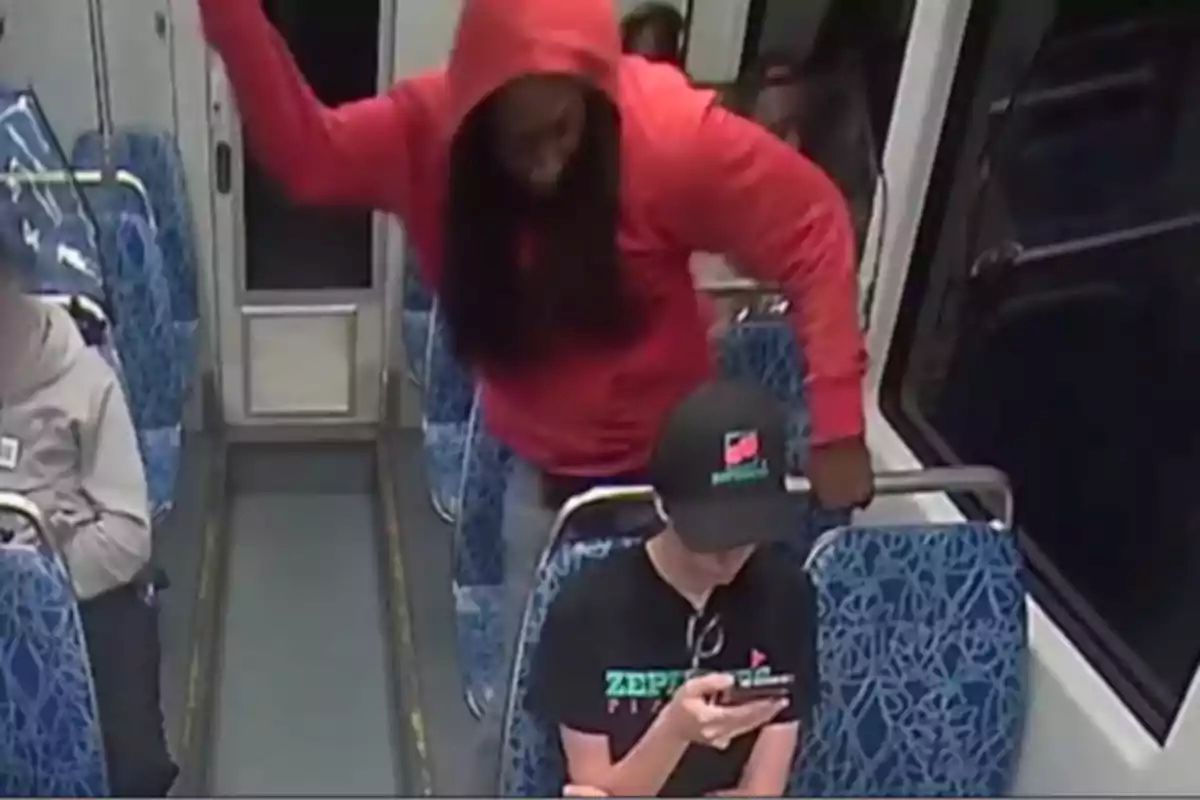
Zarutska, who had fled Kyiv in 2022 to escape the war and was living in the U.S. with her family, collapsed amid the terrified stares of other commuters. Security camera footage of the incident is harrowing: passengers remain frozen, some look away, and none appear to confront the attacker or offer first aid. Brown left the train at the next station and was arrested shortly thereafter; he now faces first-degree murder charges.
The response—or lack thereof—of the passengers has ignited a heated national conversation in the U.S. about social apathy in the face of violence. The image of a young woman who survived the bombs in Kyiv only to meet her death in front of dozens of passive witnesses has become a haunting symbol.
Understanding the “Bystander Effect”
Psychologists stress that the Charlotte tragedy is not unique. For decades, studies have documented the “bystander effect”: the paradox that the more witnesses there are to an emergency, the less likely anyone is to act.
The idea gained attention in the 1960s after the murder of Kitty Genovese in New York, a case that became a symbol of public inaction. Experts say the effect is real—and its consequences can be deadly.
Researchers Bibb Latané and John Darley identified three main factors driving this phenomenon:
• Diffusion of responsibility: the assumption that “someone else will act.”
• Social conformity: people mimic the inaction of others around them.
• Ambiguity of the situation: in chaotic scenarios, individuals hesitate if they are unsure of what is happening or fear becoming victims themselves.
The result can be tragic: when every second counts, human life may be left to chance.
Can It Be Prevented?
Experts say awareness is the first step in breaking the cycle of apathy. Educational campaigns at universities and organizations have shown that people are more likely to act once they understand the bystander effect.
Authorities emphasize that intervention does not always require physical confrontation. Calling the police, activating an emergency alarm, or shouting specific instructions to a nearby individual—such as “you, help her”—can save lives. Targeting a single person reduces the diffusion of responsibility and increases the likelihood of action.
Iryna Zarutska’s death starkly underscores a harsh truth: silence and inaction in the face of violence can be almost as devastating as the act itself.