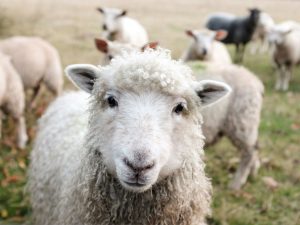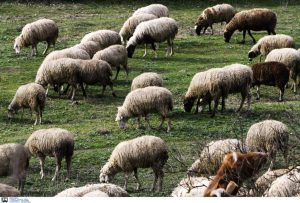

Greece’s relevant agriculture minister on Wednesday dismissed opposition criticism over the prospect of an available vaccine for sheep and goat pox, as an epidemic in the country has so far led to the culling of more than 400,000 stockbreeding animals.
Speaking before a Parliament committee on an emergency legislative framework aimed to offer more relief to the sector in the wake of the epidemic, Rural Development Minister Kostas Tsiaras charged that the political opposition in the country was “seeking easy and communicative solutions” to a serious issue.
“We have tried to be as strict as possible in implementing the biosecurity measures provided for in the European directive,” he said, emphasizing that the country will not risk losing its “free status”.
“If the country loses its free status from sheep pox, this means a different reality for the export of our products.”
Although veterinary vaccines are available in other countries, such as Turkey and Pakistan, no specific product has been licensed and approved for use in the European Union so far.
According to the EU, prophylactic vaccination is currently prohibited in member-states, although emergency vaccination can be considered under specific conditions by the European Commission in response to an outbreak.
According to available data, since the outbreak of the disease in August 2024, nearly 404,000 sheep and goats have been culled, as required by European Regulation 687/2020 regarding the implementation of biosecurity measures.
At the same time, from October 21 to 31, 2,711 inspections were carried out in six regions of the country (central, eastern and western Macedonia, western Greece, central Greece and Thessaly), and several violations were found, leading to arrests by the authorities.