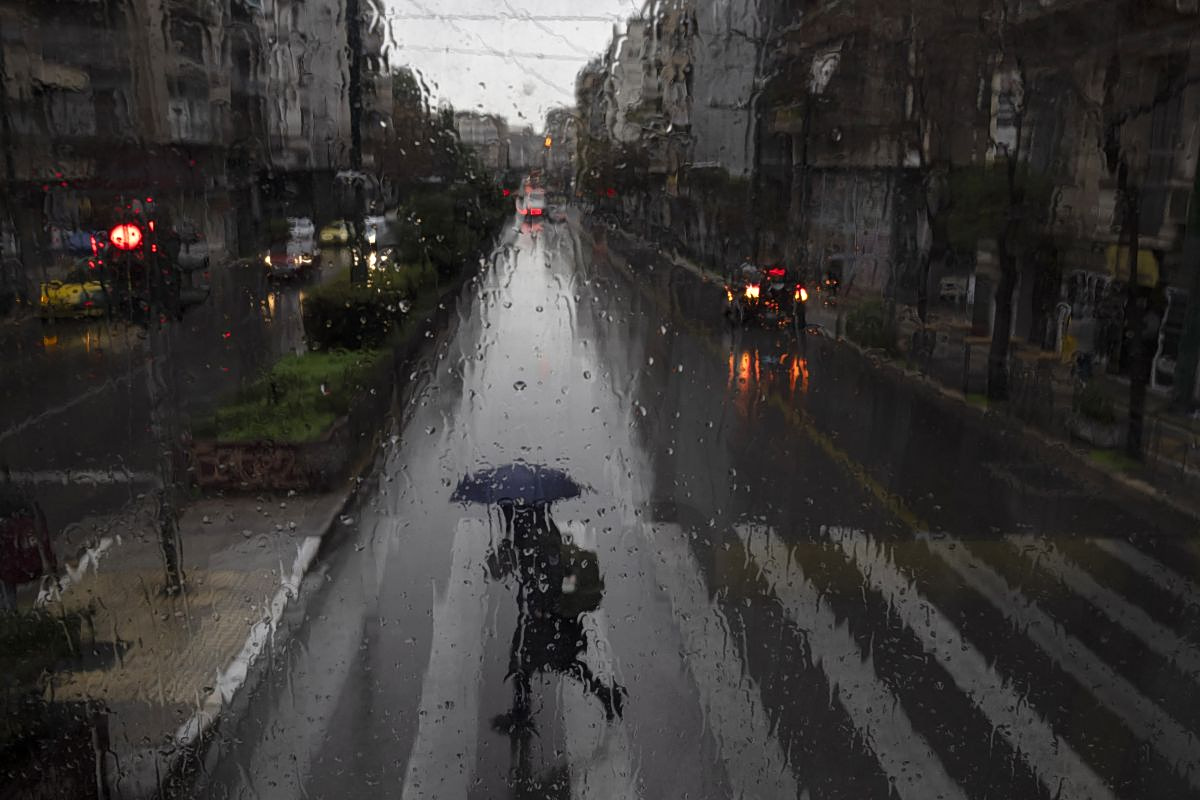
Greece is bracing for a new wave of severe weather this week, with Wednesday, Thursday, and Friday expected to bring the heaviest impacts. Meteorologists warn that the approaching system, referred to as an “African storm,” could trigger localized flooding due to large volumes of rainfall.
Tuesday offers a temporary break in unsettled conditions. In Athens, skies will be mostly sunny with occasional clouds, temperatures ranging from 9°C to 18°C, and light variable winds shifting to southeast in the afternoon. Thessaloniki will see a mix of sun and clouds, with temperatures between 6°C and 14°C and variable winds up to 3 Beaufort.
Wednesday
A low-pressure system will form off the northern coast of Africa, near Libya’s Gulf of Sidra, marking the start of the African storm. Initially, western Greece will be affected, though less intensely than previous storms.
Thursday
The storm intensifies, spreading across much of the country. Heavy rainfall and thunderstorms are expected, particularly in coastal and island regions, raising concerns about flooding. Strong winds are forecasted, especially over the Ionian Sea, central and southeastern Aegean, reaching 7 Beaufort. Temperatures will rise slightly.
Areas expected to face the worst conditions include western Greece, southern Peloponnese, Thessaly, Evia, eastern Central Greece, Attica, the Sporades islands, Central Macedonia, the eastern Aegean, the Cyclades, the Dodecanese, and Crete.
Friday
Rain and scattered thunderstorms continue, particularly along the coasts, while western areas experience variable cloudiness with localized showers. Light snow is expected in northern and central mountainous regions. Winds will remain strong in the southeastern Aegean, potentially reaching 8 Beaufort. Elsewhere, winds will gradually shift westward and southwestward, and temperatures will remain largely stable.
Meteorologists advise residents to prepare for potential flooding and hazardous conditions during the peak days of the storm.
Historical Note
This week also marks the anniversary of a deadly storm in 1957 that claimed four lives and blocked numerous villages under deep snow, with accumulations reaching up to 3 meters in the Pelion region.