
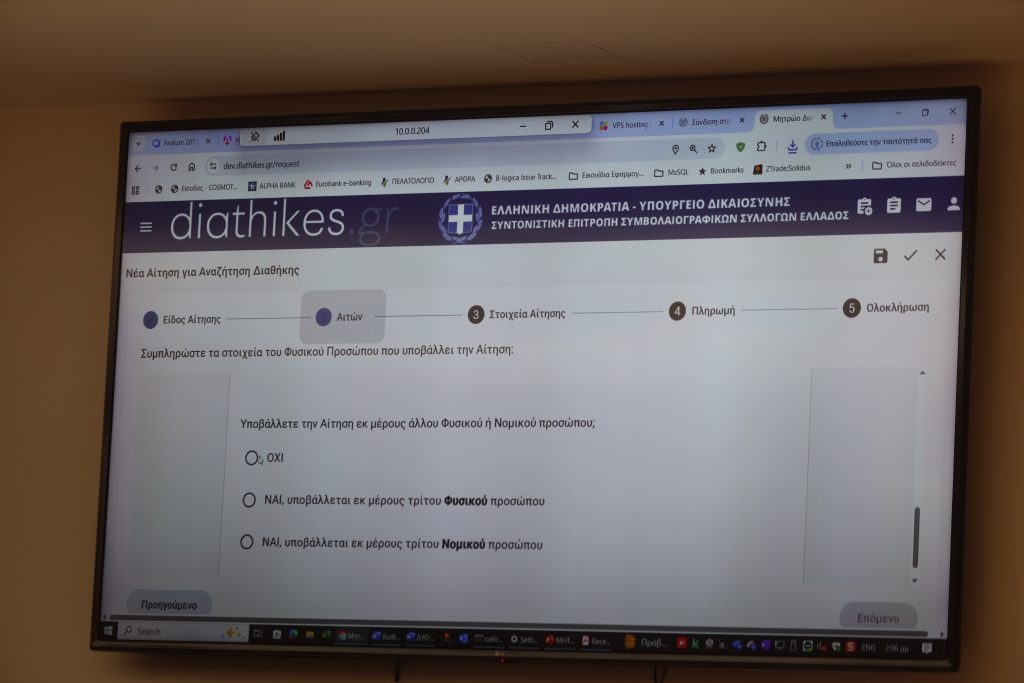
The latest judicial reform in the country, continuing an “avalanche” of digitalization and inaugurated online services that have dramatically cut “red tap” and layers of proverbial modern Greek bureaucracy, involves wills and testaments.
According to the relevant justice ministry, beginning Nov. 1 the authority unveiling such documents will pass from the courts to notaries public, a long-standing demand by the latter’s associations.
Notaries in Greece are law school graduates who draw up and attest to the signing of contracts, last wills and testaments and, significantly, property transactions, while retaining legal copies of all the aforementioned transactions in their own archive.
A registered user in Greece will be able to access a new online platform, diathikes.gr, to receive a certificate of publication for a will and testament. The latter will be ready in three to seven days, with the current process taking up to 450 days.
The platform will be managed by four of the largest notaries’ association in the country, namely, Athens, Piraeus, Aegean and the Dodecanese islands.
The latest reform is also expected to benefit the public sector, as taxes due will in a prompter manner, while freeing up judges and court officials.
In statements on Wednesday, Justice Minister George Floridis said there are now more than 14,000 pending wills on court dockets slated for publication throughout the country. He said the reform will free up 100 jurists and then a significant number of court officials.