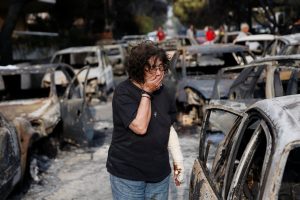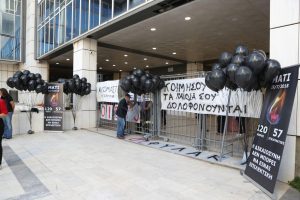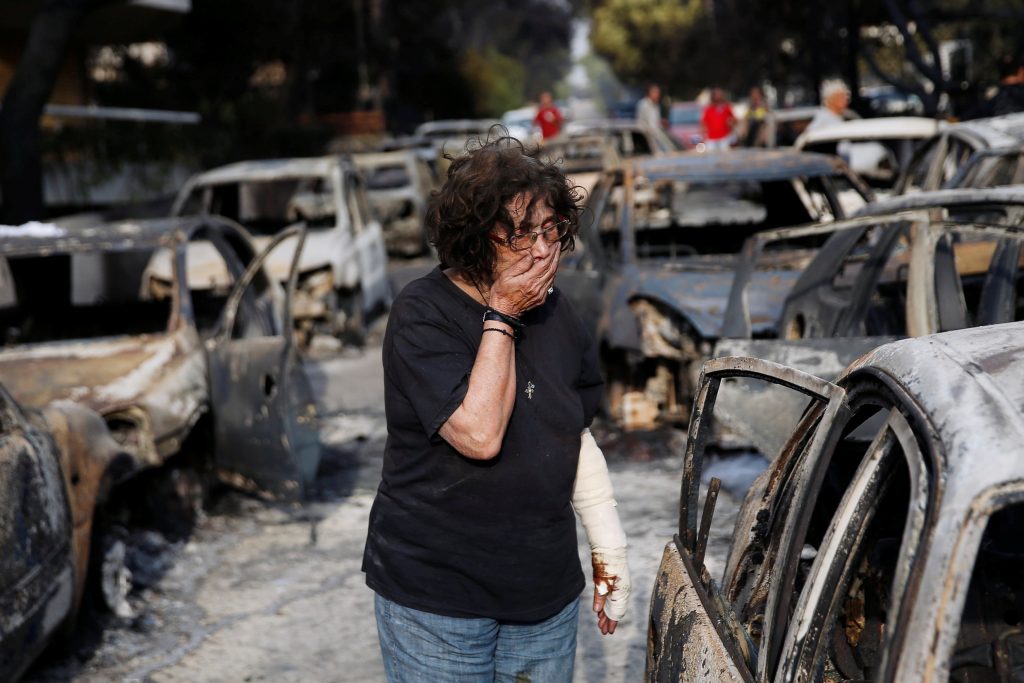
Seven years, two months, and eleven days after the inferno that swept through Mati, a seaside town near Athens, survivors still live with the scars — physical and emotional. On that dark afternoon of July 23, 2018, more than 120 people lost their lives as flames trapped hundreds in their homes and cars.
For many who lived through it, the memories remain seared into their minds and bodies. “I sleep, I wake, and that film plays in my head on repeat,” says Kalli Anagnostou, who suffered severe burns and now heads the Association of Victims and Burn Survivors of Mati. “It will never stop playing.”
A State “Deafeningly Absent”
Beyond their trauma, survivors have faced another battle — against bureaucracy, neglect, and financial ruin. Many victims’ families and burn survivors, Anagnostou says, have had to fight alone for basic medical care, psychological support, and housing reconstruction.
“The state has been deafeningly absent,” she says. “We’ve had to beg for the obvious.”
Ten Minutes from Death
Mary Avramidou calls herself one of the “lucky ones” — though, she adds, “no one who lived through that day can ever feel lucky.” She escaped the flames by just ten minutes, driving out of the area with her 12-year-old daughter. Behind her, her mother, sister, brother-in-law, and 21-year-old nephew were trapped in their cars in the Kokkino Limanaki area.
“I was the last car to make it out,” Avramidou recalls. “If the police had diverted me like the others, I’d be dead. My family died ten minutes later.”
She stayed on the phone with them until their final moments. “I heard my sister crying, screaming. My mother asked, ‘What is this? Fire?’ I couldn’t believe it was that close. And then — silence.”
“I Saw People Exploding in Front of Me”
Anagnostou’s story is even more harrowing. She was trapped with her five-year-old son and her in-laws, all of whom suffered burns. “I was fully conscious,” she says. “I saw people melting, I heard my child screaming, I smelled flesh burning. People exploded in front of me.”
For months, she was hospitalized, undergoing surgeries and enduring unimaginable pain. “I survived by chance,” she says. “At night, we heard screams in the wards — screams that would suddenly stop. That meant someone next to us had just died.”
Surviving the Aftermath
When Anagnostou was finally discharged, she faced new agony: a year of home care paid entirely out of pocket. “I had to cover everything — special dressings, creams, elastic bandages. It cost €800 to €1,000 a month. The state offered nothing.”
Even today, she says, many survivors still buy their own medical supplies. “The state classifies them as ‘cosmetic products,’” she explains bitterly. “But for us, they’re essential — the difference between living and rotting.”
The Cost of Healing
Because burned skin loses elasticity, even minor weight gain can cause tearing. “My body feels like it’s made of mesh,” says Anagnostou. “I’ve had two surgeries, and I need five or six more. My scalp was so badly burned that I nearly lost an eye. I had to pay for all the treatments myself.”
Meanwhile, psychological care — another essential — is often unaffordable. “I can’t afford therapy for both me and my child,” she says. “So I send him. I go without.”
Avramidou, too, stopped therapy when COVID hit. “There was no coverage. Everything had to be paid for privately,” she explains. Her nephew, who lost both parents, his brother, and grandmother that day, only manages sporadic sessions “when we can afford them.”
“I Thought I’d Wake Up from a Nightmare”
After losing four family members, Avramidou closed her small business and accepted a low-paying civil service position offered by the government — earning just €635 a month.
“I had no choice,” she says. “I had to raise my children and my orphaned nephew. I thought I’d wake up from a nightmare. But seven years later, the nightmare hasn’t ended. There was never real help — only promises.”
The True Death Toll: 120, Not 104
Officially, the Mati fire claimed 104 lives. But Anagnostou says the true number is higher. “We know of at least 120 dead,” she explains. “Sixteen DNA samples from a mass grave have never been matched. There were also unrecorded victims — people found later, never linked to the fire.”
Debt, Despair, and Delays
Of the roughly 100 families affected, most are still struggling with debts from rebuilding and medical costs. “We had to pay for everything upfront and wait for compensation that, for many, never came,” Anagnostou says. “People lost homes, family, and the ability to work — and were left with nothing.”
The state, she adds, “even deducts early financial aid from the final compensation — as if we made a mistake by surviving.”
Still Fighting for Dignity
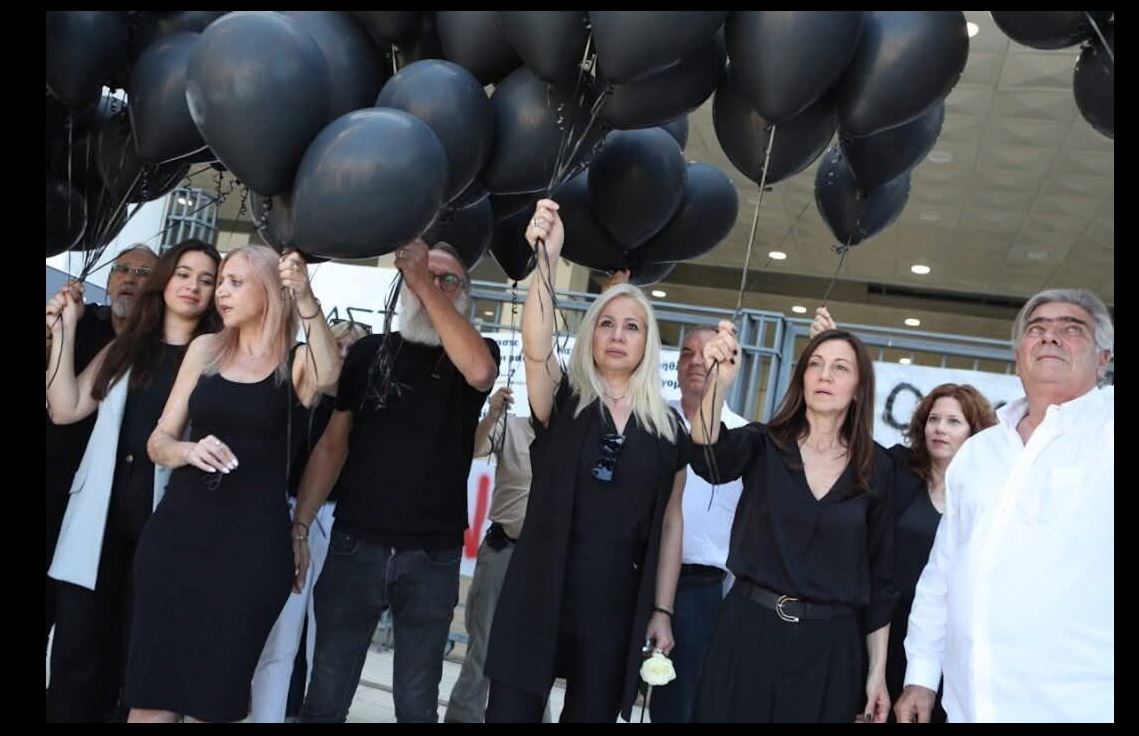
Survivors are now demanding a special pension, equivalent to four times the national rate, for each affected family, as well as permanent medical coverage — especially for supplies still deemed “non-essential.”
“These aren’t luxuries,” says Avramidou. “They’re things we need for life.”
A Nation’s Wound That Never Healed
The Mati wildfire remains the deadliest in modern Greek history — a national trauma that exposed deep failures in emergency response and state care.
For Anagnostou and Avramidou, the fire may have ended that July evening, but the struggle to live — and to be seen — continues every day.