Timelines are now coming into focus for the next step in the development of the former royal estate at Tatoi. After Easter, the evaluation of the bids submitted during Phase 1 of the competition, which closed yesterday, is expected to be completed. Investors who make the shortlist will advance to Phase 2, where they will have at least one month to submit binding offers. Assuming no complications arise during the competitive process, summer will mark the entry into the phase of final financial and technical proposals that will determine the winning bidder for a concession lasting at least 65 years.
The process, which is being run by the Greek State Asset Development Fund (the Superfund), has already attracted five investor groups with different profiles but a common denominator: the capacity to manage a complex project spanning culture, tourism, and agri-food production.
Investor Interest in Tatoi
Among the interested parties is AKTOR Concessions S.A., the core concessions arm of the Aktor Group, with a strong track record in concession projects, public-private partnerships, infrastructure, and real estate development. Its experience with long-term contracts and technically demanding projects is considered a key advantage for an undertaking that combines monument restoration with new uses.
Also on the list is EKTER S.A., a construction company that has expanded its footprint into tourism, already operating a hotel on the island of Paros, while simultaneously pursuing an upgrade to the top-tier Class 7 contractor classification in the Greek construction framework (an application was submitted in late 2025). Its chairman and CEO is Athanasios Sipsas.
Also present is DIMAND S.A., one of the most recognized real estate development companies in the Greek market, with a portfolio focused on urban regeneration and the adaptive reuse of landmark buildings.
Rounding out the field is ELIA Corporation S.A., a company linked to the interests of Ioannis Mytilineos, with activities ranging from horse breeding and agri-livestock farming to renewable energy power generation and real estate development. Its profile suggests a model that could place particular emphasis on reviving the estate’s agricultural dimension.
Finally, the real estate firm REINA Hellenic Properties is also participating in the process, with Errikos Arones serving as chairman and CEO.
What the Tatoi Concession Covers
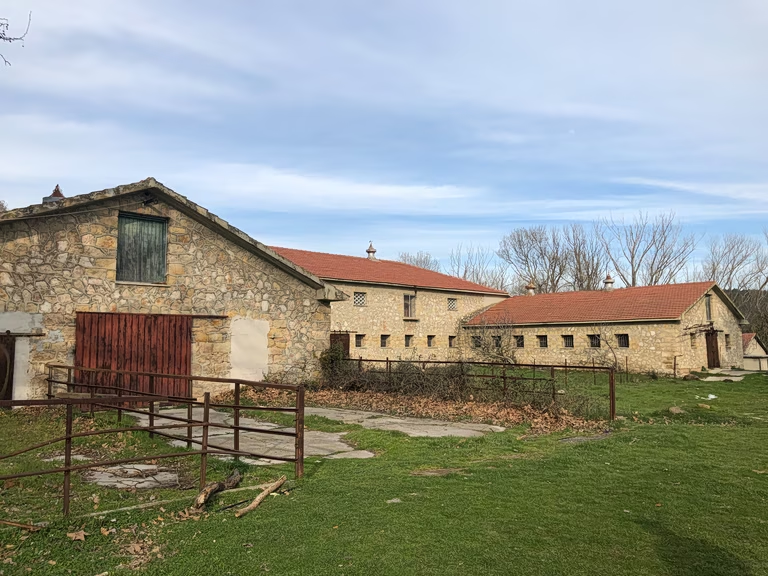
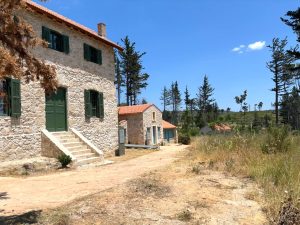
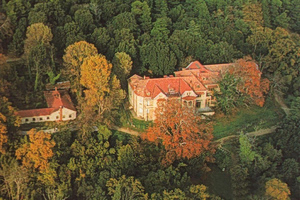
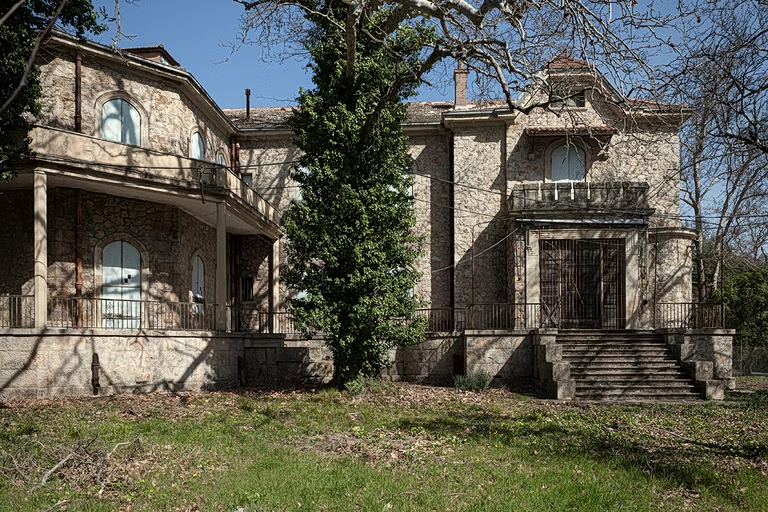
The concession agreement covers a broad range of interventions: the restoration, adaptive reuse, and operation of selected buildings; the development of outdoor spaces; and the launch of activities compatible with the character of the historic site and its buildings as protected modern monuments. Of the approximately 40 structures on the estate, 24 are included in the core development scope, ranging from small auxiliary outbuildings to larger complexes.
The new uses will center on hospitality, food and beverage, culture, and agri-food production. The plan calls for guesthouses and boutique hotel units, dining and event spaces, visitor-facing production facilities such as a winery and an olive press, as well as a greenhouse and on-site retail points for estate products. The concept evokes a modern château, where the visitor experience goes well beyond a simple overnight stay to encompass gastronomy, nature, and history.
Maturation and Technical Interventions at Tatoi
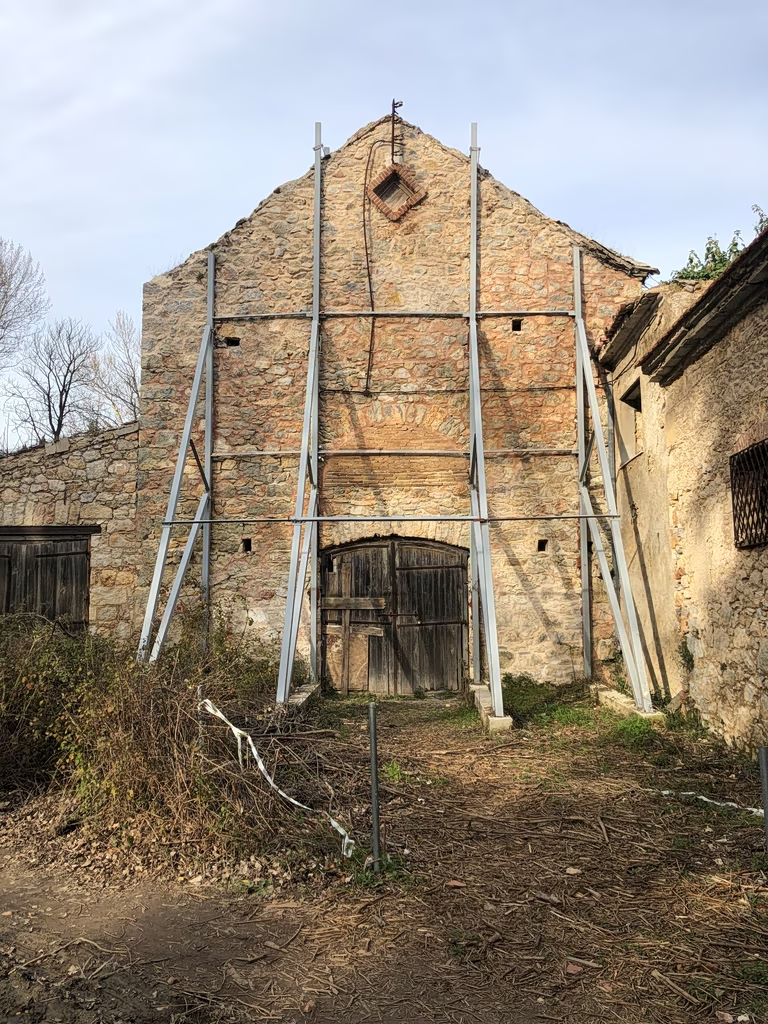
The project is not starting from scratch. Survey work and technical reports have already been prepared for a number of the buildings by the Ministry of Culture, documenting their condition prior to the damage they have suffered. In many cases the deterioration is severe, the result of years of abandonment and exposure to the elements. Extensive structural reinforcement, roof reconstruction, and restoration of architectural features will be required in several instances. All interventions will be carried out under strict oversight to preserve the authenticity of the facades and architectural characteristics, while any additions will be limited to those functionally necessary.
The total existing built area comes to approximately 161,000 square feet, with the buildings included in the concession accounting for roughly 69,000 square feet. Limited expansions of up to 10% of the floor area are permitted, primarily for technical support and accessibility purposes. There is also provision for modest outdoor structures and agricultural infrastructure in designated zones.
Agri-Food Development and Operations Outlook
Phase 2 of the competition will also incorporate the development of arable land, roughly 300 acres within the historic core, with the aim of reviving the estate’s productive character. The reactivation of a vineyard and an olive grove, along with the potential use of historic commercial brands associated with the estate, could add significant value to the overall project. An organized parking facility outside the central core is also under consideration to ensure smooth visitor flow management.
Running alongside the concession process is an ongoing monument restoration program within the historic core, with a target completion date of late 2026. The plan calls for the operation of museums, exhibition spaces, and educational facilities, as well as upgrades to basic infrastructure. The goal is for Tatoi to function as a multifaceted destination where culture, recreation, and agri-food experiences come together under one unified identity.