
 Μake us preferred on Google
 A Scottish couple whose teenage son took his own life after being blackmailed on Instagram have launched legal action against Meta, the owner of the social media platform, in what is believed to be the first UK case of its kind.
Murray Dowey was just 16 when he died at his home in Dunblane in December 2023. He had been targeted online by scammers posing as a young girl, tricked into sending intimate images of himself and then threatened with exposure unless he paid money. Investigators believe the criminals responsible were operating from West Africa.
Now Murray’s parents are suing Meta in a US court, seeking punitive damages and alleging that Instagram was not a safe environment for their son. They argue that the tragedy was preventable and that Meta knew for years that its platform was being used to target vulnerable teenagers through so-called sextortion scams.
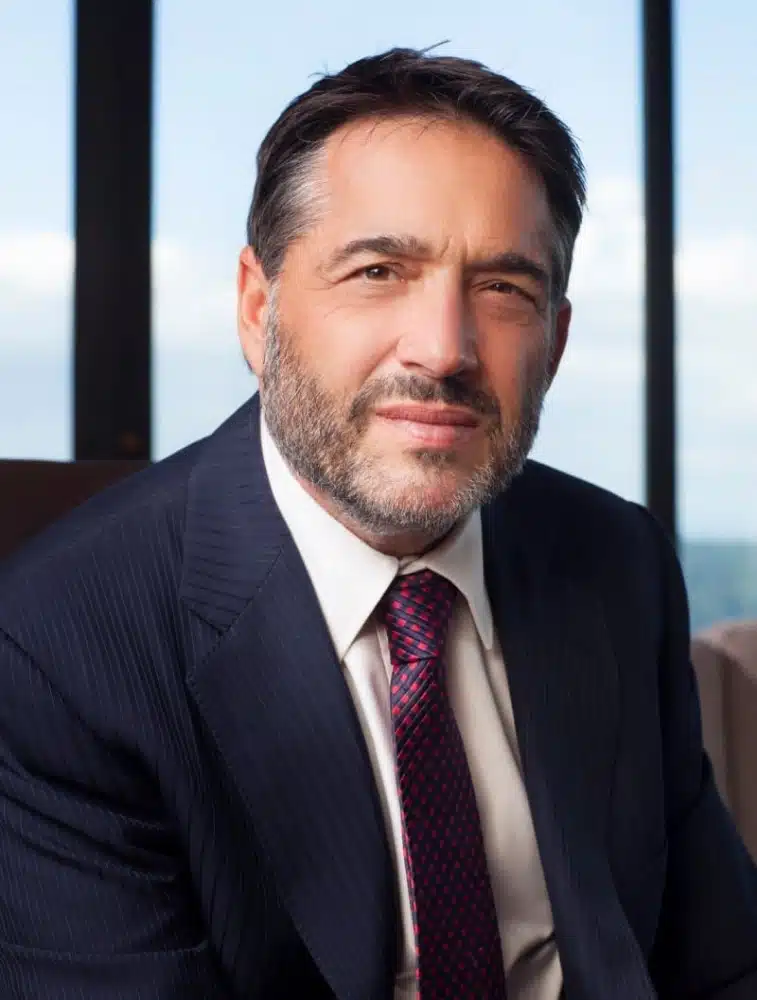
“This is a tragedy that didn’t have to happen,” said Matthew Bergman, the founding attorney of the Social Media Victims Law Center, who represents the Dowey family.
A case with wider implications
Speaking in an exclusive interview to TO VIMA, Mr Bergman said the case was significant not just because it is the first brought on behalf of a UK victim, but because it exposes what he claims Meta knew about sextortion long before Murray’s death.
“Sextortion is a known phenomenon. It has been known to Meta for a very long time,” he said. “Recent documents that have been publicly disclosed for the first time in litigation make very clear that Meta was very aware of predators using Instagram to connect with young men.”
According to Mr Bergman, internal company documents show that Instagram’s design features made it easier for adult predators to reach adolescents, groom them into sharing intimate images and then blackmail them through threats of humiliation.
“Meta had a decision to make about whether adolescent access would be open or closed by default, and they chose not to make it closed by default for reasons of finance or profit,” he said. “That is why this case matters.”
Where responsibility lies
From the family’s perspective, responsibility rests squarely with the platform, Mr Bergman said.
“Meta has a responsibility to prevent predatory adults from accessing vulnerable kids when it knows this phenomenon is going on,” he said. “It also has an obligation, when it finds out about sextortionists, to shut down their accounts – which, as we set out in the complaint, they do not do.”
The Doweys also allege that Meta knew about safety features that could have reduced the risk to teenagers like Murray, but failed to implement them effectively.
Although the alleged offenders were based overseas, Mr Bergman said this did not diminish Meta’s responsibility.
“Meta knew that out-of-state actors were targeting British citizens,” he said. “Whoever did this should face justice in a British court, but Meta cannot escape accountability simply because the criminals were operating abroad.”
Grief and purpose
The legal fight comes as Murray’s parents continue to live with the devastation of losing their son. Mr Bergman said their motivation is not primarily financial.
“Like so many parents I represent, their singular focus is protecting other families from this horrific loss,” he said. “They have no illusions that this is an easy fight. Meta is one of the biggest corporations in the world. But even if one life is saved by this, then it’s all worth it.”
He added that only financial accountability would force meaningful change.
“It needs to be more expensive for Meta to make dangerous platforms than to make safe ones,” he said. “That is the only way their economic calculus will change.”
Parents and platforms
Some argue that parents must shoulder greater responsibility for monitoring their children’s online lives. Mr Bergman rejected the idea that families alone can keep teenagers safe.
“Instagram is designed to thwart parental authority,” he said. “It encourages kids to open multiple accounts under different names and actively undermines parents’ ability to see what’s going on.”
He added that adolescents often hide embarrassing experiences not because they are irresponsible, but because of normal developmental behaviour.
“Teenage boys are neurologically and hormonally vulnerable, and extremely sensitive to humiliation,” he said. “That combination is exactly what sextortionists exploit.”
The wider threat
Professor David S. Wall, from the Centre for Criminal Justice Studies at the University of Leeds, told TO VIMA sextortion has evolved rapidly in the digital age.
“We have always had sextortion, but in the past it was more face to face and on a smaller, more personal scale,” he said. “Today, the internet and social media allow it to operate globally, in greater volume and more remotely.”
He explained that the psychological impact on victims can be overwhelming.
“The breach of trust and the threat of shame can be devastating,” he said.
“The effects upon the victim can be devastating. For the offender, they may not even see it as personal, only that the victim has been caught out and even may deserve the shame and so must pay for it. Some cases where victims have been groomed online to provide pictures of themselves have led to suicide.”
Professor Wall said investigating such crimes remains extremely difficult for UK police, particularly when offenders are based overseas, and called for stronger prevention messages from schools, parents, platforms and the media.
Meta’s response
A Meta spokesperson told TO VIMA the company takes sextortion seriously and is working to combat it: “Sextortion is a horrific crime. We support law enforcement to prosecute the criminals behind it and we continue to fight them on our apps on multiple fronts. Since 2021, we’ve placed teens under 16 into private accounts when they sign up for Instagram, which means they have to approve any new followers. We work to prevent accounts showing suspicious behavior from following teens and avoid recommending teens to them. We also take other precautionary steps, like blurring potentially sensitive images sent in DMs and reminding teens of the risks of sharing them, and letting people know when they’re chatting to someone who may be in a different country.”