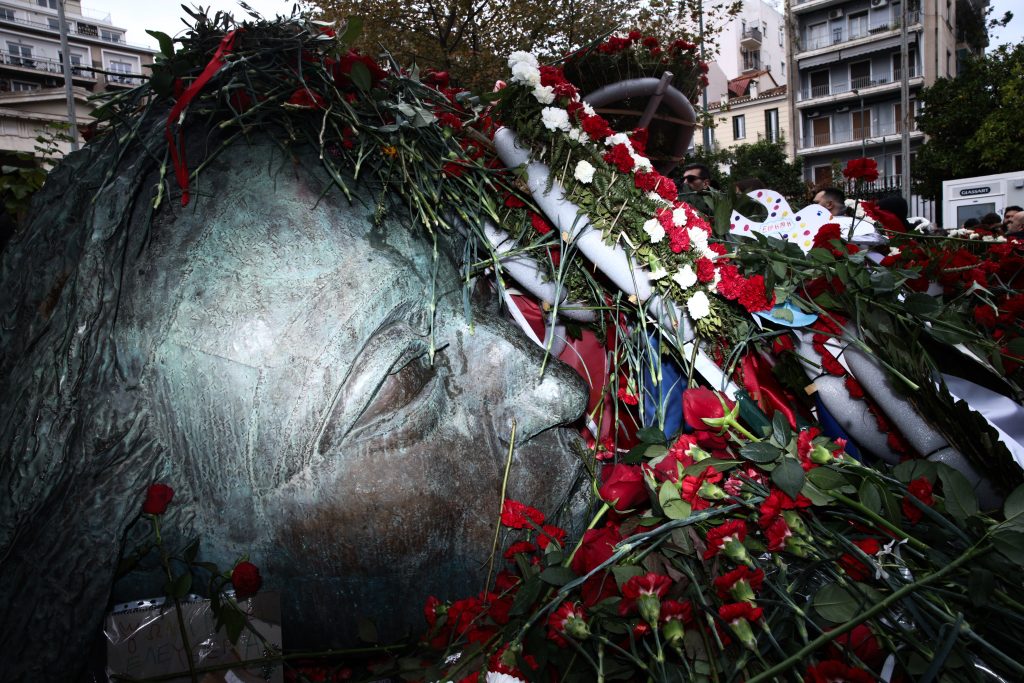
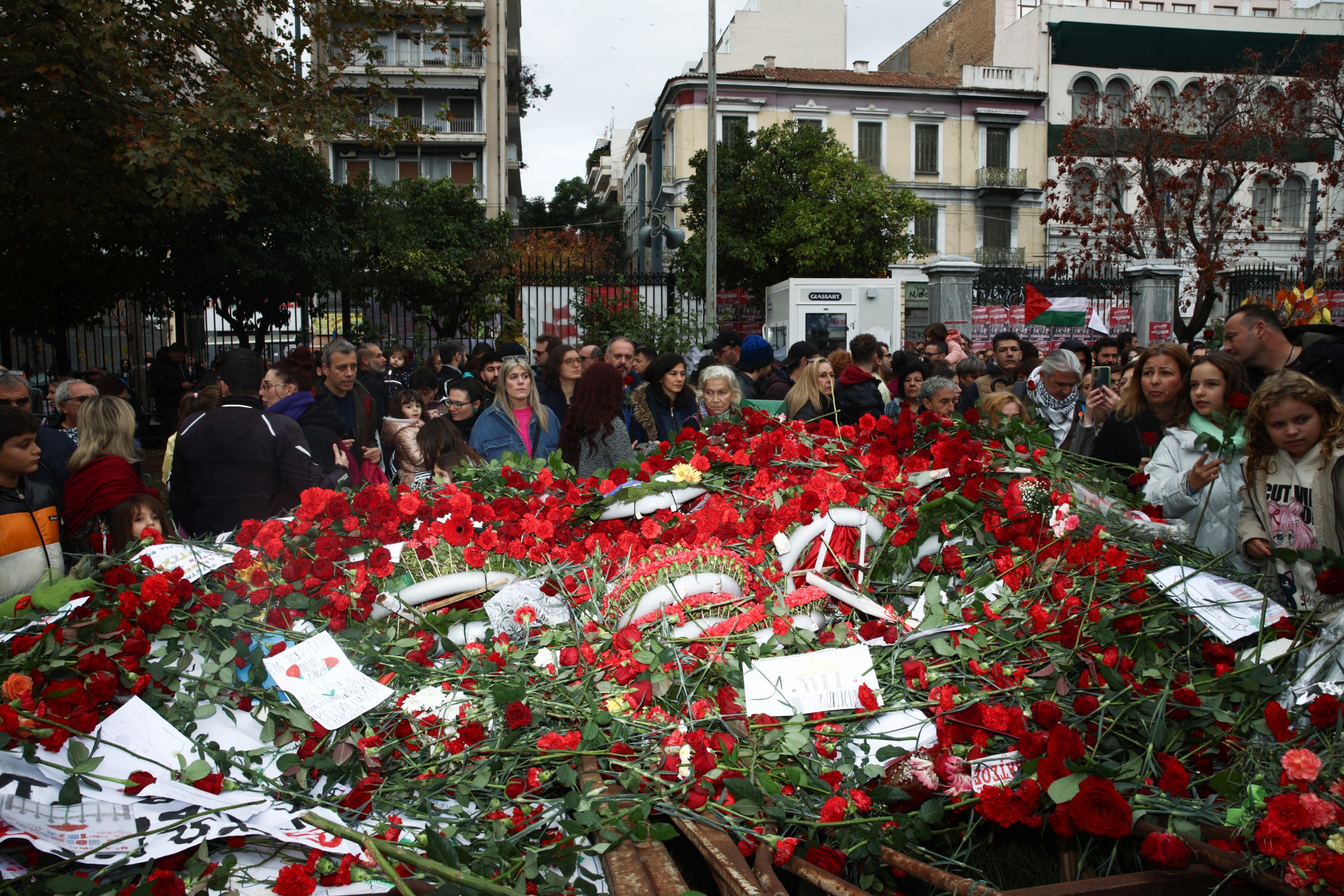
Absolute silence prevails, even though 2,000 people are in the courtyard. The chants have stopped. No voice comes out anymore. A sense of the sacred permeates everyone.
Just a few minutes earlier, the students were afraid. They were breaking the legs off chairs and desks to defend themselves. They were fortifying the main entrance on Patission Street with rubble and the rector’s Mercedes.
When fear gave way to transcendence, the tank first reversed a little and then rammed the gate with force.
Even if someone knows nothing about the Polytechnic, they have certainly seen the photograph of the tank crushing the railings. The details are not clearly visible and the scene is lit only by the headlights of the military vehicle. Yet this is how that moment was captured in time, and this is how it was etched into our collective memory.
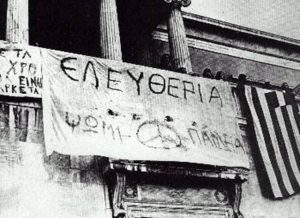
But the Polytechnic is not only the moment the tank entered. It is three days and a few hours during which tens of thousands of young people lived a revolutionary surge that swept the entire country away. Boys and girls who stood against the junta, overthrowing at the same time everything imposed on them until then by the oppressive society of their parents, with the harsh morals of the era.
For as long as the occupation lasted, the students lived a form of direct democracy. They cooked together, slept together, sang and discussed politics, and co-decided everything. At the same time, they risked everything for freedom.
Although the Polytechnic is a historical event, the people who experienced it are alive. And they can recount the events exactly as they happened. To Vima organized a conversation among four young people of that time. Stelios Logothetis (then 22), George Oikonomou (then 23, who was injured by a bullet), Dimitris Papachristos (then 23 and the legendary voice of the radio station), and Dimitrios Chatzisokratis (then 22) speak among themselves without journalistic intervention. We simply record:
For Dimitrios Papachristos, the Polytechnic is not a “heroic” event, but something that emerged from young people who stood against the darkness: “It began with the children of those who tolerated seven years of dictatorship, and it became the pride of Greeks everywhere.”
Dimitrios Chatzisokratis highlighted the uniqueness of the fact that the commemoration of the Polytechnic continues to be repeated to this day: “Every year when we talk about it, there is something new that leads us not to sit alone in a corner, but to face things through a collective process.” And he added: “It is important to feel that you grow older together with your old comrades.”
“George (Oikonomou) came close to dying,” added Stelios Logothetis. “The junta proved that it was a criminal organization, a criminal entity that killed in cold blood.”
And George Oikonomou: “The Polytechnic is the only historical event with a political meaning. The other national anniversaries carry a national message. They are national anniversaries established from above. The Polytechnic is the only case that was established from below.”
The meaning and message of the Polytechnic lies in the fact that we are still discussing it today.
Let us go back to the moment of the tank. The photograph. The moment that cuts across historical time and makes us speak of the events before the Polytechnic and the events after the Polytechnic.
Before the Polytechnic, a large portion of the students had already taken on the anti-dictatorship struggle, paying the heavy price of torture. But even after the Polytechnic—until the coup in Cyprus and the fall of the junta nine months later—those who resisted the regime had to be ready to face tragic personal consequences.
But of all the events that preceded or followed, the Polytechnic is the one that became a symbol. Perhaps because in November 1973, everyone believed, for a few hours, that the junta would fall. Even the junta itself—which is why it reacted so violently.
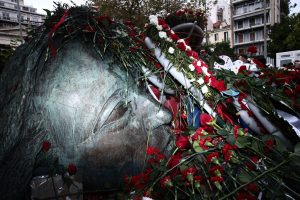
And that is ultimately what remained: the feeling that for a moment, the world could change. Even if only in our mythical subconscious.