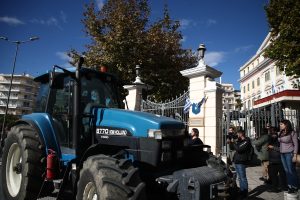
Farmers across Greece intensified their protests on Monday, blocking major national highways with their tractors and signaling an escalation of their mobilizations as tensions with the government rise. Demonstrators say they will remain on the roads until authorities address the financial hardships they face.
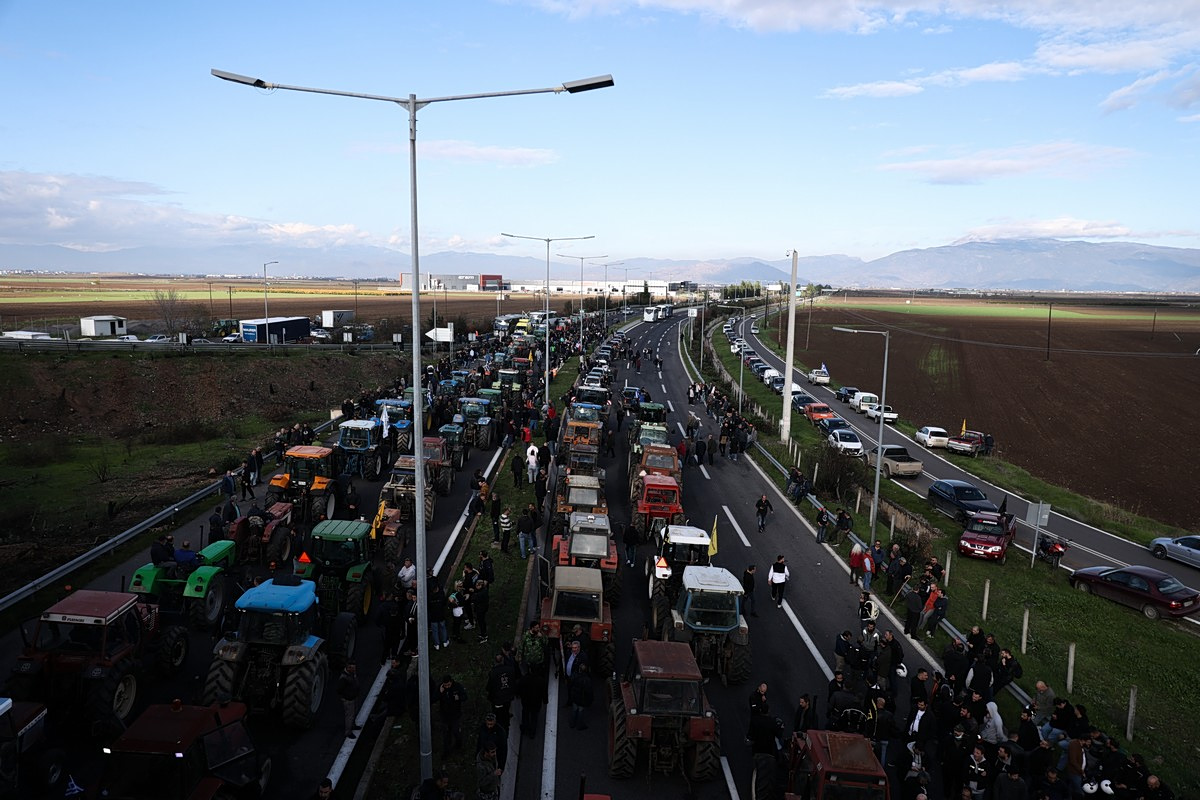
The national highway connecting Athens and Thessaloniki, a key north–south artery, was shut down near the city of Larisa after dozens of tractors entered the roadway. Farmers from several nearby regions joined the demonstration, leaving both directions of traffic blocked.
Violent clashes marked the first day of protests. In the area of Nikaia, farmers broke through barriers and attempted to overturn a police vehicle as they pushed toward the highway. Police responded with tear gas and flash grenades, injuring at least two protesters. Despite a heavy police presence, farmers eventually entered and blocked the highway.
The unrest comes as farmers in the central region of Karditsa expand their blockade of the E65 motorway. Traffic restrictions remain in place along a large stretch of the road as tractors line the entrances and exits. Protesters there plan to hold a key assembly late Monday to decide how to intensify their actions, including remaining on the roads through the holiday season if necessary.
Tensions have risen sharply following the police response in Nikaia. At a mass gathering in Karditsa, representatives accused the government of using excessive force instead of addressing long-standing issues in the agricultural sector. They described the situation as a “criminalization” of their struggle and denounced the injuries suffered by demonstrators.
Farm leaders warn that the coming days will bring further disruption. They announced plans for new blockades at major junctions in northern Greece, including areas such as Malgara, Thiva, Livadeia, Kastoria, Evros, and Serres. “Everyone will be out on the national roads,” one representative said, receiving loud applause.
At the core of the protests is what farmers describe as the “impoverishment” of Greece’s primary sector. They cite rising debts, financial strain, and heavy competition from imported agricultural products. Many argue that increased imports have weakened domestic production and pushed smaller producers to the brink.
“They want us poor and in debt,” said one farmer representative, adding that Greece once produced many of the goods it now imports. Farmers insist they will remain on the streets until they secure conditions that allow them to maintain their livelihoods with dignity.
“We are determined to stay in our villages, to work, and to live decently,” one protester said. “We will not go back to 1910.”