Those watching the opening match of the 2026 World Cup between Mexico and South Africa in Mexico City may have noticed something hard to ignore: a striking visual uniformity on the pitch. Nearly every player appeared in vivid hot pink football boots, creating the impression of a coordinated aesthetic choice rather than coincidence.
There was a time when football boots came in a single colour: black. The classic black leather boot defined the sport for decades, symbolising tradition, simplicity, and function over style. Footwear was treated as a tool for performance, not a canvas for personal expression.
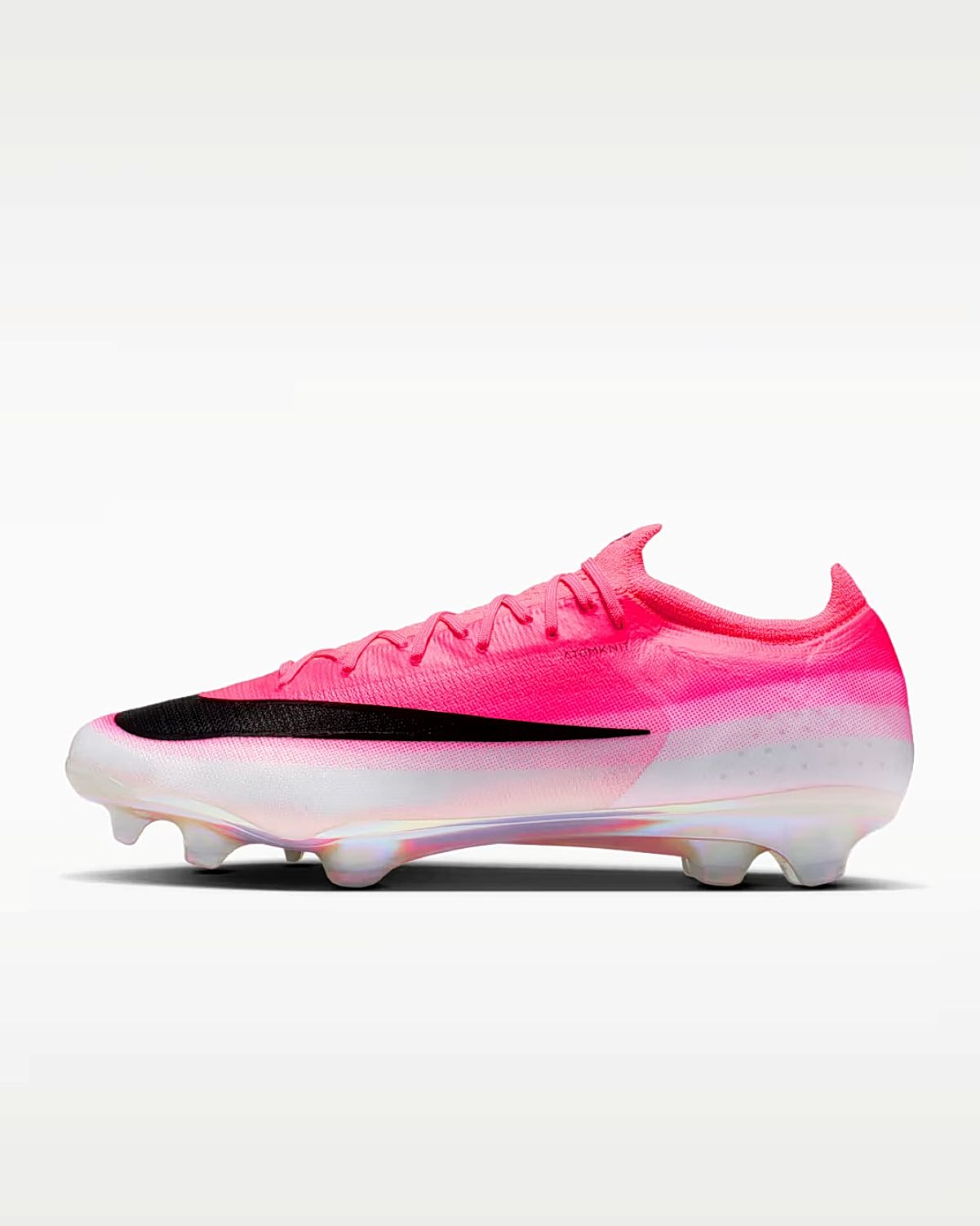
Nike
Over the past 25 years, however, that mindset has shifted dramatically. Major sportswear companies began investing heavily in design and visual identity, transforming boots into statement pieces as much as performance equipment. Players started appearing in bold colours—reds, yellows, greens, blues, oranges and purples—reflecting a broader fusion of sport, branding and fashion.
Yet at the 2026 tournament, the trend appears to have come full circle in an unexpected way. While uniformity has returned, it is no longer the traditional black that dominates the pitch, but a near-universal shade of pink.
The main reason for the prevalence of hot pink lies in the synchronised direction taken by the industry’s biggest brands. Nike, Adidas, Puma, New Balance and Skechers all released World Cup-focused collections featuring bold pink tones, resulting in players from different national teams wearing strikingly similar footwear.
The visual uniformity has prompted discussion within the football industry, with Ben Warren, founder of BW Boots UK, suggesting the pattern is unlikely to be accidental. He argues that repeated overlaps in colour choices across brands point to a broader convergence rather than coincidence, noting that while similarities have been visible in recent years, the current World Cup appears to show an unusually close alignment in tone across manufacturers.
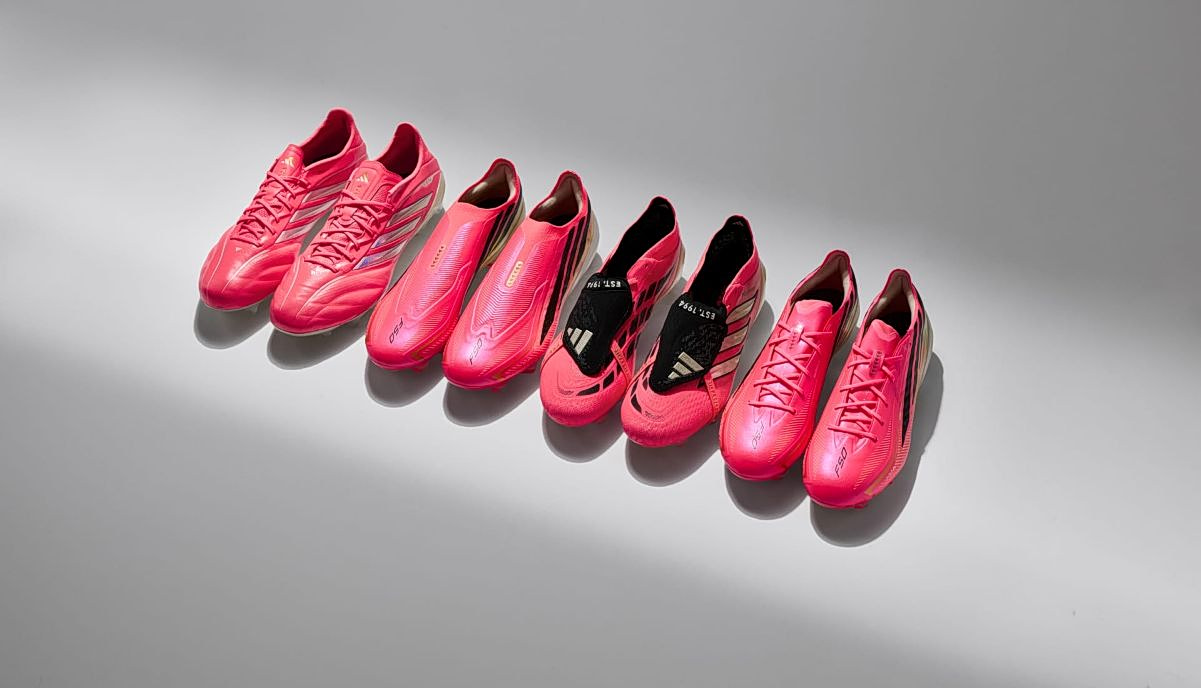
adidas
In reality, such design choices are made long in advance. The development cycle for elite football boots can begin up to two years before release, as designers attempt to anticipate future cultural and visual trends.
For this reason, sportswear companies often consult forecasting agencies such as WGSN, which in 2024 identified “Electric Fuchsia” as one of the defining colours expected for summer 2026. The shade was described as a neon tone with a digital edge, sitting between pink and purple.
Whether or not that forecast directly shaped design decisions, it reflects a broader shift in fashion and consumer culture. Football, once firmly separated from fashion, is now deeply intertwined with it.
Modern players are more receptive than previous generations to bold design choices, and boots have become a form of on-pitch self-expression. A vivid pink pair, in particular, functions as a statement of visibility and intent.
Visibility is also a key factor. Against the green backdrop of the pitch, hot pink offers maximum contrast, standing out clearly on broadcast footage, in slow-motion replays and under stadium lighting.
According to Nike executive Odinga Nimako, the choice reflects both aesthetic and psychological considerations. He explains that players and consumers alike are drawn to colours that project confidence, and that pink has long since moved beyond outdated stereotypes to become a mainstream, globally accepted choice. The company also emphasises that its testing process prioritises on-pitch visibility, where the colour consistently stood out as one of the most visually dominant.