In Munich, Bavarian identity meets Greek history and classical architecture. The admiration of Ludwig I of Bavaria for ancient Greece, along with the appointment of his son Otto as the first king of modern Greece, forged historical and cultural ties that endure to this day. Through iconic monuments, museums, and historic sites, one can understand why Munich is often called “the Athens on the Isar.”
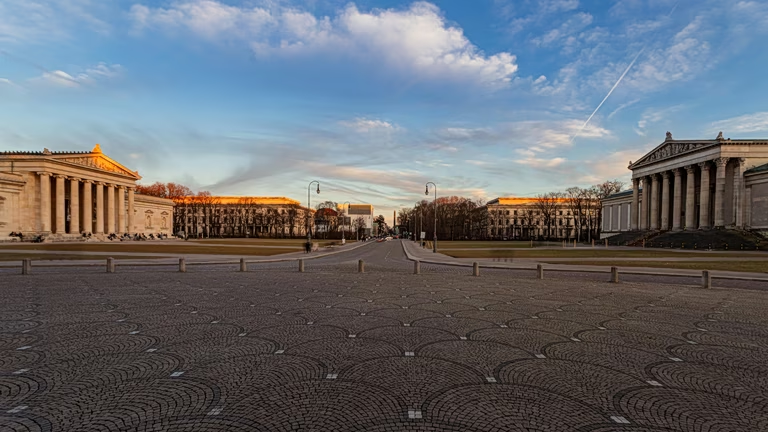
Königsplatz – The King’s Square
Königsplatz is a defining example of Bavarian neoclassicism inspired by ancient Greece. Architect Leo von Klenze adopted Greek architectural styles, creating a space reminiscent of an Athenian urban landscape. The monuments around the square follow classical models, expressing Ludwig I’s admiration for Greek culture. Its design stands as a lasting tribute to the aesthetics, thought, and intellectual radiance of ancient Greece.
Propylaea
The Propylaea of Munich is an impressive neoclassical monument dominating Königsplatz. Built in 1862 by Leo von Klenze, it was intended to honor Greek independence and highlight the friendship between Germany and Greece. It was later dedicated to the Bavarians who fought in the Greek War of Independence.
The monument is not only a symbol of philhellenism but also a reminder of the shared history and interaction between the two peoples. Its architecture is inspired by the Acropolis of Athens, featuring Doric columns and reliefs depicting scenes from the Greek War of Independence. Inside, the names of Greek revolutionary heroes are inscribed in Greek.
Originally serving as the western gate of the city, the Propylaea later became a commemorative monument. Notably, its inauguration coincided with the return of Otto and Amalia of Oldenburg to Bavaria after their expulsion from Greece. Despite this, both Ludwig I and Otto insisted on proceeding with the inauguration to honor the Greek struggle against Ottoman rule—an act reflecting their genuine admiration for Greece.
Today, the Propylaea stands primarily as a monument of historical and symbolic significance.
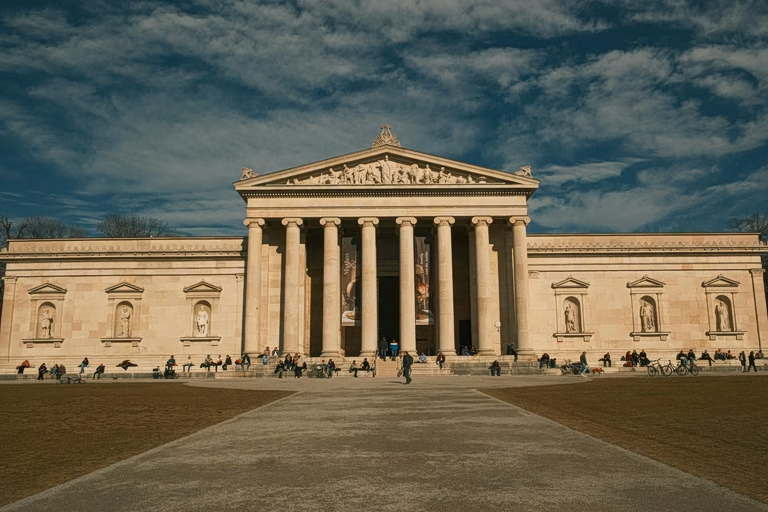
Glyptothek
The Glyptothek, also located at Königsplatz, is a remarkable museum showcasing Greek and Roman art. It was built in the 19th century at the command of Ludwig I, who had a deep passion for ancient art and had amassed an impressive private collection from a young age.
To share these masterpieces with the world, he founded the museum and donated his entire collection. Designed by Leo von Klenze, the building resembles an ancient temple.
One of its most important collections is the “Aeginetans,” originating from the Temple of Aphaia on the island of Aegina. In the 19th century, Ludwig sent a team of architects and archaeologists to Greece, where they discovered the temple and transported significant sculptures and architectural fragments to Munich.
Today, visitors can admire works from four major periods—Archaic, Classical, Greek, and Roman imperial—either as originals or Roman copies.
Staatliche Antikensammlungen – State Collection of Antiquities
The Staatliche Antikensammlungen is also located on Königsplatz, directly opposite the Glyptothek, forming a unique archaeological ensemble in the heart of Munich. Designed by Georg Friedrich Ziebland and built between 1838 and 1848 under Ludwig I, it follows a neoclassical style inspired by ancient Greek and Roman architecture.
Its façade features Corinthian columns reminiscent of ancient temples, while its interior consists of large exhibition halls suited for displaying pottery, small artifacts, and metalwork.
The museum was created to house the valuable collections of Bavarian monarchs, especially Ludwig I. Today, it functions not only as an exhibition space but as a dynamic cultural institution promoting education, research, and knowledge of antiquity. It remains one of Germany’s most important centers for the study of classical antiquity.
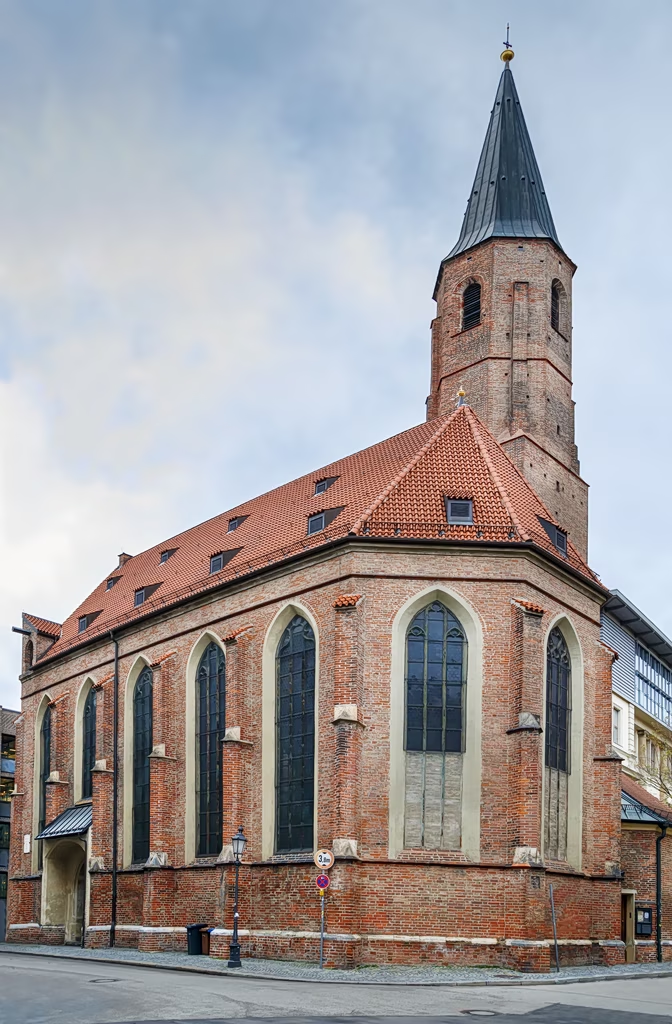
Salvatorkirche – Church of the Transfiguration of the Saviour
The Salvatorkirche is a historic church of great importance to Munich’s Greek Orthodox community. Located near Marienplatz, it was built in 1494 in late Gothic style and originally served as a cemetery church for the Frauenkirche.
In 1828, Ludwig I granted the church to the Greek community to meet the religious needs of Greeks living in Munich—many of whom were children of heroes of the Greek War of Independence who had come to study.
Although the original architect is unknown, Leo von Klenze oversaw its renovation, designing the iconostasis and adapting the building for Orthodox worship. The exterior was restored in Gothic style, with Baroque elements removed.
Since 1829, the church has functioned as an Orthodox place of worship, while also hosting cultural events and serving as a key reference point for Greeks in the city.
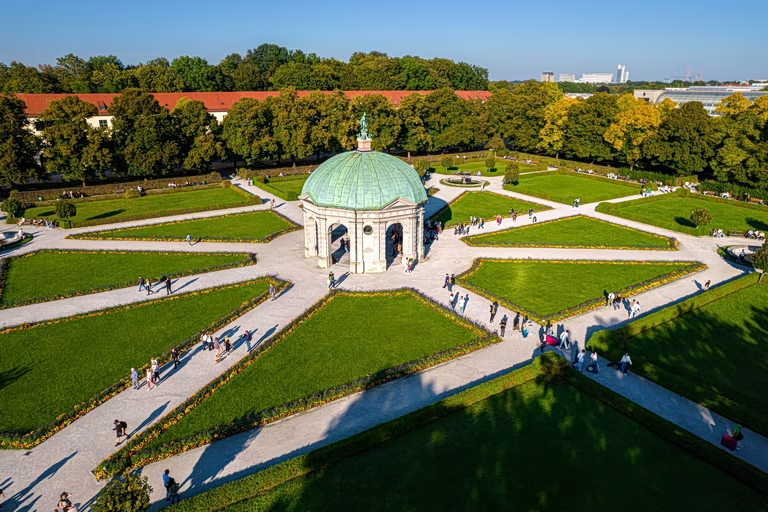
Hofgarten
The Hofgarten, created in 1613 by Maximilian I of Bavaria, is one of Munich’s oldest gardens. Located between the royal residence and the English Garden, it was originally designed as a royal garden for the Bavarian court, following an Italian Renaissance style with symmetrical paths and fountains.
Its connection to Greece lies in the central pavilion, a circular temple inspired by classical Greek architecture and dedicated to Artemis. It once served as a resting place for the king after hunting excursions and is now used as a concert venue. The surrounding arcades feature frescoes depicting scenes from the life of King Otto.
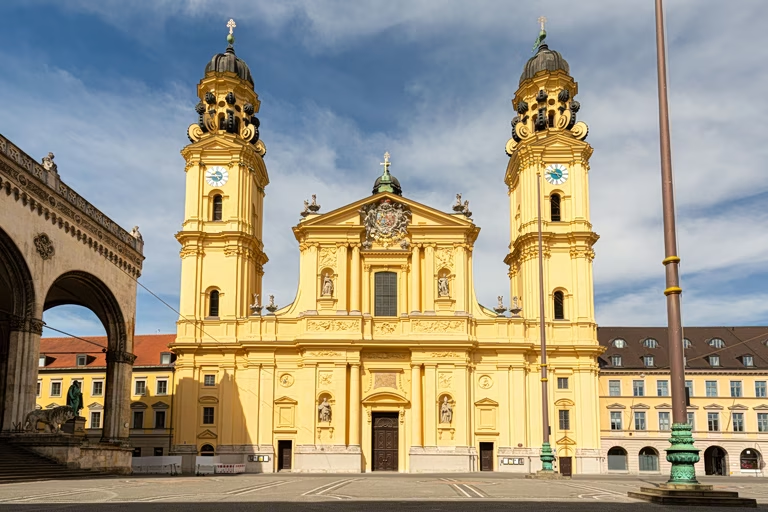
Theatinerkirche – Theatine Church
The Theatinerkirche is a prominent church near Odeonsplatz in central Munich. Built between 1663 and 1690 by architect Agostino Barelli, it was the first church in Bavaria constructed in Italian Baroque style.
It was commissioned following the birth of the son of Ferdinand Maria of Bavaria, in fulfillment of a vow made to the Virgin Mary.
Its connection to Greek culture is indirect, tied to the broader philhellenic movement of 19th-century Bavaria. The church houses the tombs of King Otto and Queen Amalia. Notably, Otto was buried wearing the traditional Greek fustanella, in accordance with his wishes.
Ottobrunn
The Ottobrunn History Museum, also known as the Otto King of Greece Museum, is located near Munich and is dedicated to the local history of the area.
Founded in December 1989 through private initiative and local support, it features exhibits on the town’s foundation, development, daily life, and traditions.
Its most remarkable aspect is its dedication to King Otto. The museum displays over 500 exhibits related to 19th-century philhellenism, the Greek War of Independence, and Otto’s 30-year reign.
Otto ascended the throne in 1833 and assumed full power two years later. His reign was marked by political unrest and opposition. Although he sought to modernize Greece and strengthen its economy, his popularity declined over time. Ultimately, in 1862, he was forced to leave Greece.
Munich’s enduring connection to Greece is not merely historical—it is woven into the city’s architecture, institutions, and cultural identity, making its nickname, “Athens on the Isar,” more than justified.