 Μake us preferred on Google
 He left his homeland when the violence in Darfur became impossible to survive. Together with his family, he sought safety across borders, until the renewed outbreak of war in Sudan in 2023 made any thought of going home unthinkable.
Munir Bassi was born in a small village near the town of Kutum, in Sudan’s North Darfur region. In 2018, he and members of his family were forced to flee to Egypt. Five years later, he arrived alone in Greece, landing on the island of Samos. Some family members stayed behind in Egypt; some of his siblings never left Sudan at all.
During the few months he spend at a reception center in Samos, hevolunteered as an interpreter, taught English, and helped support the wider community around him. “It was a very hard decision, to leave everything behind: family, friends, work,” he tells TA NEA. “But in those moments, what matters most is life itself. Safety.”
Finding Roots on Lesvos
In early 2024, Munir was officially recognized as a refugee. What followed was something closer to a calling. Through the organization Movement on the Ground, he traveled across Greece — from Arta and Filippiada in the northwest, to Kavala and Thessaloniki in the north, and eventually to Lesvos, the large Aegean island that has become one of the main entry points for refugees crossing from Turkey. There, he coordinated programs supporting volunteers and helping refugees access education.
Lesvos became home. And home, it turned out, came with responsibilities. Last November, when the coastal village of Skala Kallonis was hit by severe flooding, Munir was among those who showed up — hauling furniture out of waterlogged houses, helping neighbors clean up the damage. “I’ve received so much support from the local community and the people on this island,” he says. “Whenever I can, I give back.”
Let’s Have Hope
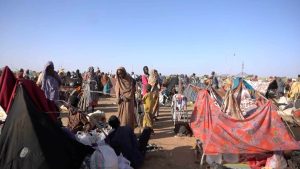
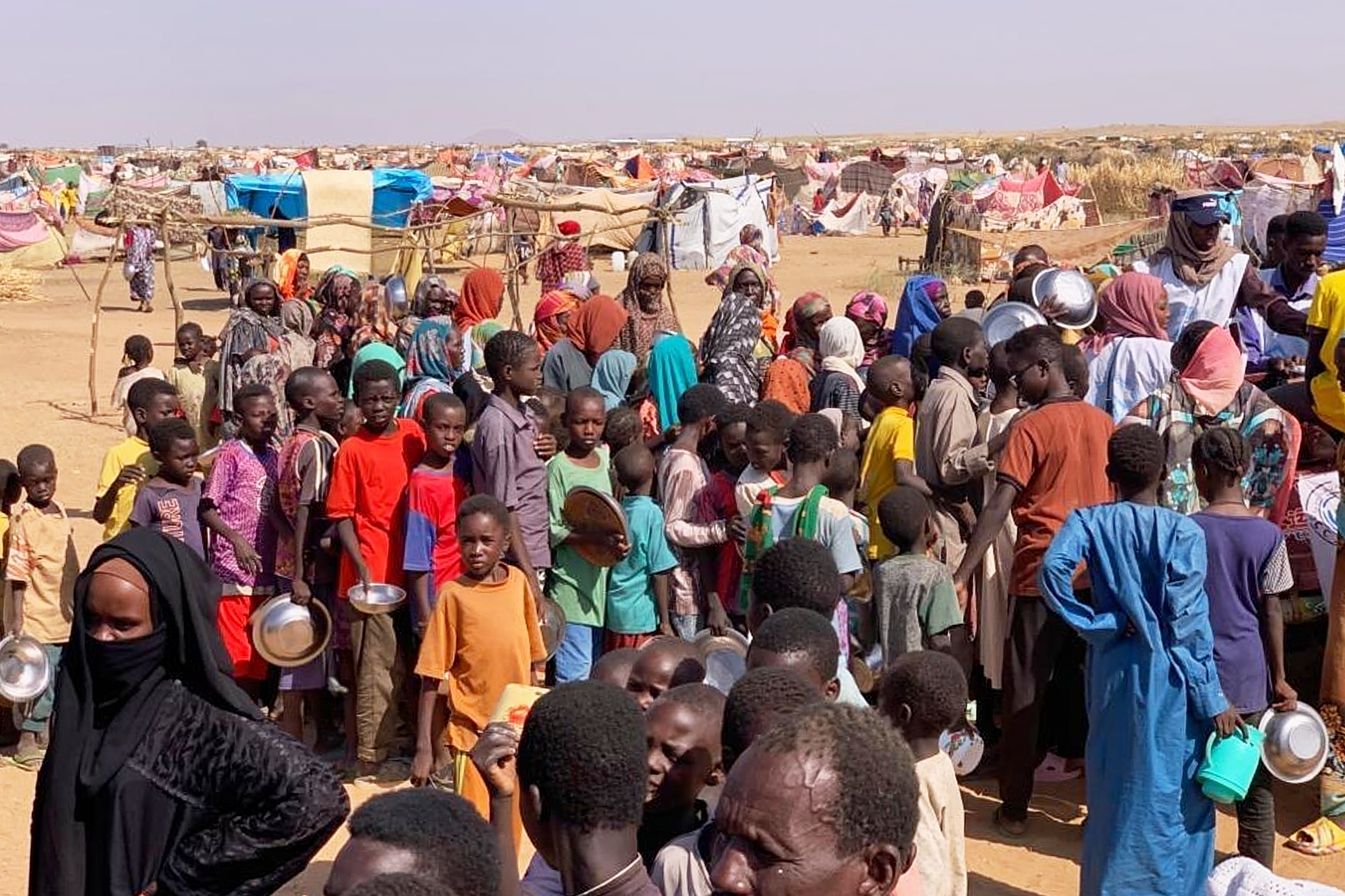
But his mind never fully left Sudan. The image of the displaced , people like him, except stranded inside their own country, living in camps across the war-torn interior, never faded.
Slowly, an idea took shape. In early 2025, Munir launched Let’s Have Hope, an organization built by refugees, for refugees, with direct operations in some of Sudan’s hardest-hit areas. To date, it has reached around 60,000 people. It runs a community kitchen, distributes food and hygiene supplies, and provides protection services, with a particular focus on women and girls. “In these camps you find farmers, traders, vendors, families — people whose lives stopped suddenly because of the war,” he explains. “Their villages were destroyed, or are no longer safe to return to.”
The strategic planning and coordination happen from Lesvos, where Munir works with a small team, preparing operations to be carried out on the ground in Africa. “Our goal is to help these people rebuild their villages — and to support women, especially in Darfur. You know, women in Sudan have dreams, ambitions, they are intelligent. They just need support and guidance to do great things,” he says.
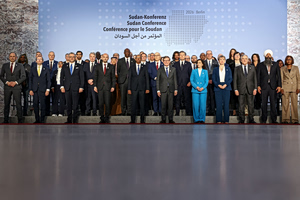
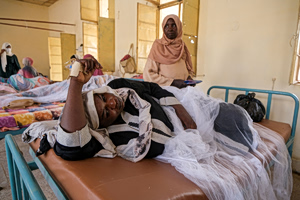
The need for that work has never been greater. Three years into the latest iteration of this conflict, millions of Sudanese have fled to neighboring countries: Chad, South Sudan, Egypt, nations already strained by fragile economies and overstretched border infrastructure. Around seven in ten Sudanese have been pushed into poverty by the war. At least a quarter of the country’s population is estimated to be living on less than the equivalent of €1.70 a day.
“My one wish,” Munir says, “is that soon the people, the small children especially will know peace. And be able to go home safely.”
Source: TA NEA