Athens has always mesmerized travelers with its light, energy and contradictions. It’s hardly surprising. People have lived here continuously for more than 3,500 years, making Athens Europe’s oldest inhabited capital. Across the centuries, philosophers, poets and writers have tried to capture its essence. During his stay in Greece, American novelist Henry Miller perhaps came closest.
“Everything here speaks now, as it did centuries ago, of illumination, of blinding, joyous illumination. Light acquires a transcendental quality: it is not the light of the Mediterranean alone, it is something more, something unfathomable, something holy. Here the light penetrates directly to the soul, opens the doors and windows of the heart…,” he wrote in “The Colossus of Maroussi”.
Much has changed since Miller sat in a Syntagma Square cafe in the late 1930s, sipping a glass of cold water and watching the city unfold around him.
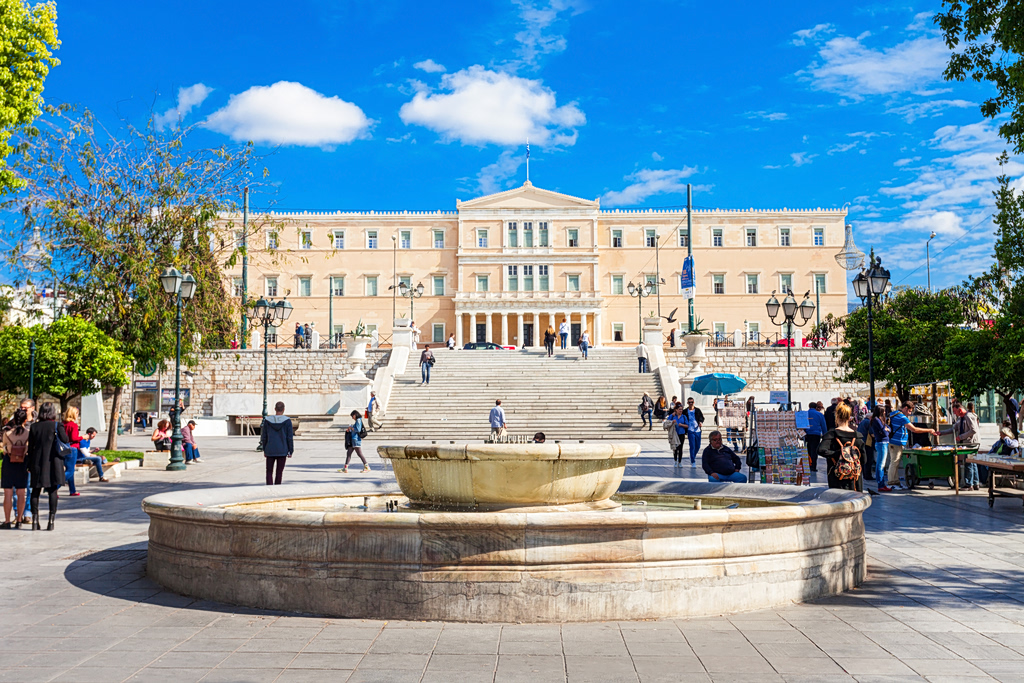
The Hellenic Parliament building on Syntagma Square in Athens, Greece.
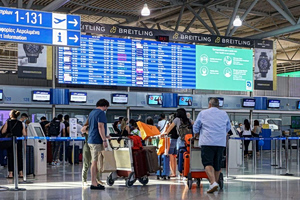
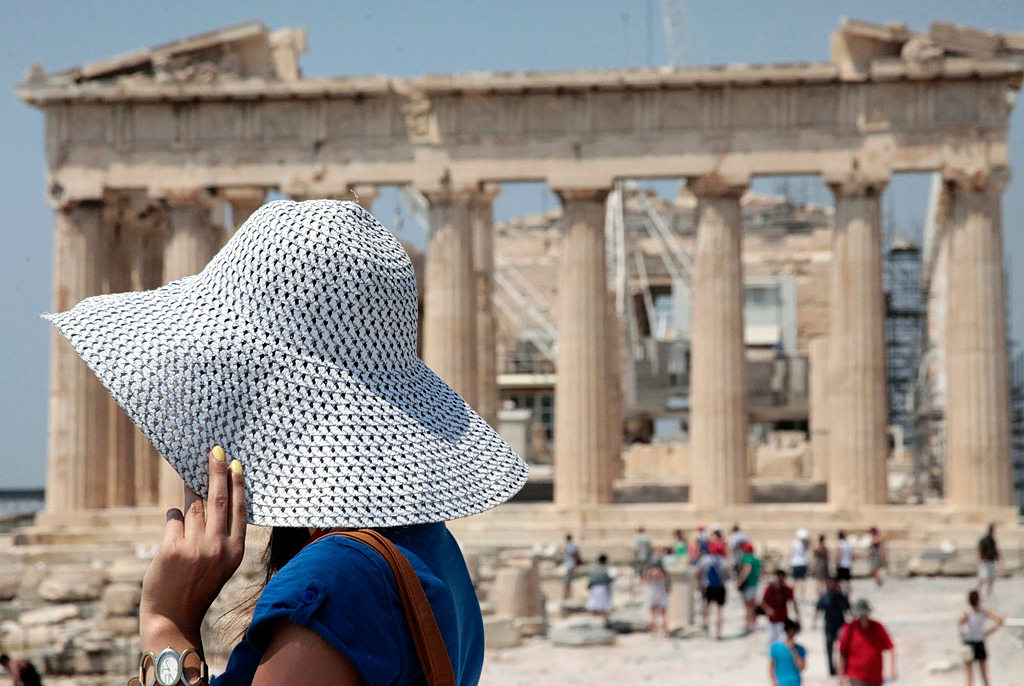
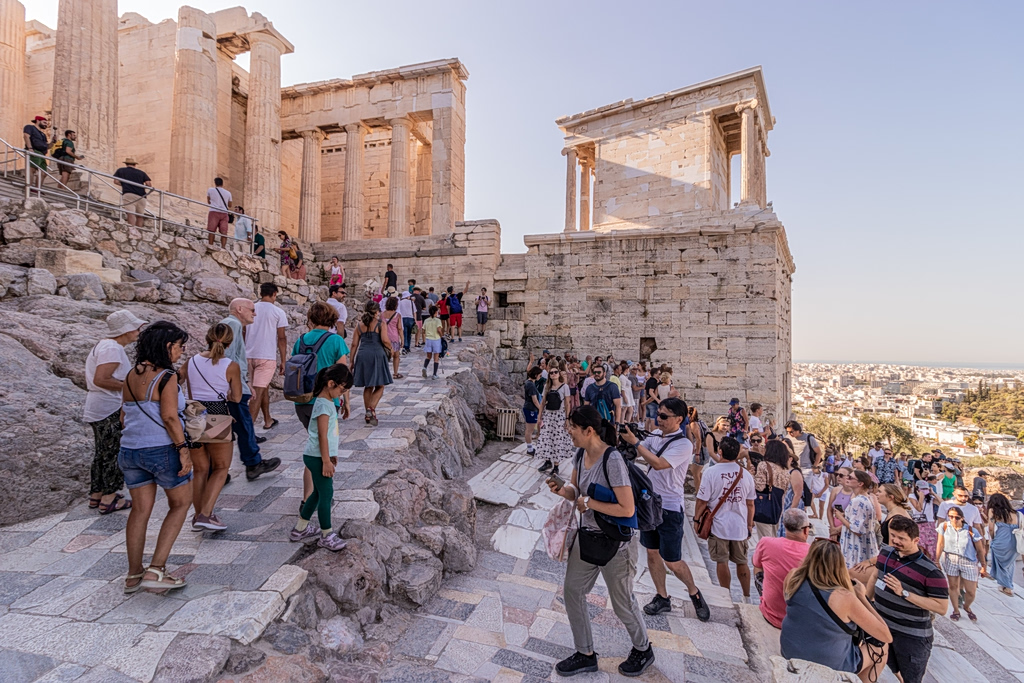
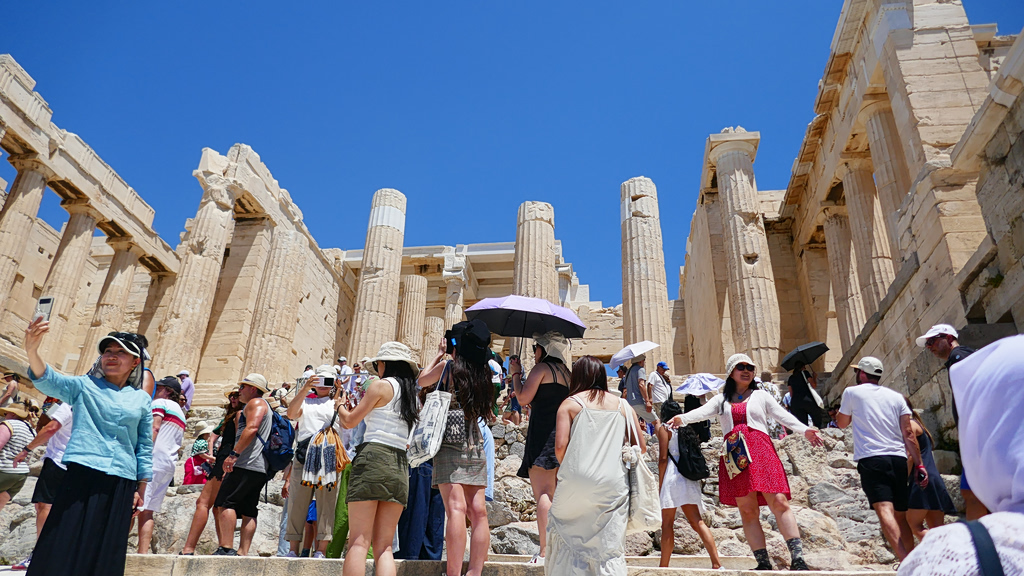
Today, crowds stream through Plaka and Monastiraki, while thousands of travelers patiently wait in long queues to catch a glimpse of the Parthenon. Once a brief stopover on the way to the Greek islands, Athens has justifiably become a destination in its own right.
Over the past decade, the Greek capital has transformed into one of Europe’s fastest-growing city destinations. Visitors who once stayed a single night, just long enough to see the Acropolis, now spend an average of four to five nights. The tourism boom has brought new hotels, a flourishing short-term rental market, rising visitor spending and record revenues.
For Athens Mayor Haris Doukas, this success is worth celebrating. “Athens has evolved from a city break into a year-round international destination,” he says. “That did not happen by chance. The city became more outward-looking. It invested in culture, major events and new experiences in its neighborhoods. Athens became attractive again.”
Yet behind the Greek capital’s tourism success story lies a growing paradox. Athens welcomes millions of visitors every year, but the municipality charged with managing their impact receives only a fraction of the economic benefits tourism generates.
In an interview with TO BHMA International Edition, Doukas argues that while tourism revenues flow largely to the central government, the burden of maintaining the city falls squarely on local authorities and residents. And this, he says, needs to change.
Picking Up the Tab
Last year, Athens welcomed approximately 8.7 million international visitors, with the majority arriving between May and September. At the same time, the wider metropolitan area is home to roughly 3.8 million residents, nearly one-third of Greece’s population. Add students, temporary workers and undocumented residents, and the number may be much higher.
“The truth is that the city bears the burden of tourism without receiving its fair share,” Doukas says. “The majority of revenues go to the central state, while local governments in Greece receive only 2.7% of the state budget. Yet every day, the Municipality of Athens is called on to manage enormous pressures with limited resources.”
This imbalance is particularly evident in the way tourism taxes are distributed. Visitors staying in hotels and tourist accommodation pay the so-called “Resilience Fee”, which in some cases can reach 10 euros per night. The revenues generated from this charge are not returned directly to Athens, however.
“Zero euros come back to the Municipality of Athens,” he tells TO BHMA International Edition. “At the same time, legislation reduced the temporary resident fee from 2% to 0.5%, which means that the municipality ultimately receives less than 0.62 euros per visitor.
For a city hosting millions of tourists each year, he argues, the numbers simply do not add up. Who pays the price?
“The real cost is paid daily by the city and its residents,” Doukas says. “More visitors means greater pressure on cleanliness, infrastructure and public spaces.”
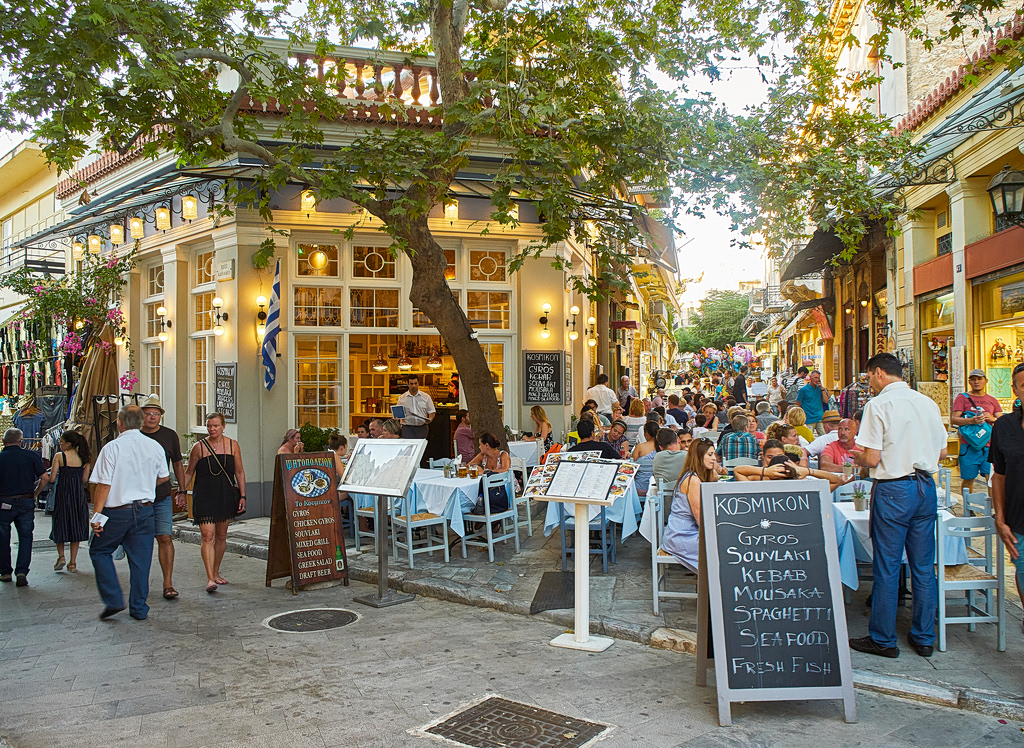
To cope, the municipality has expanded waste collection services in high-traffic areas and invested in digital management systems aimed at improving efficiency. But city officials insist that operational improvements alone are not enough.
Lessons from Barcelona, Venice and Amsterdam
Athens now finds itself confronting challenges that other European cities have grappled with for years: overtourism, housing shortages and growing tensions between visitors and residents. The difference, Doukas argues, is that municipalities elsewhere have far greater powers to intervene.
He points to Barcelona, which plans to eliminate new short-term rental licenses by 2028 and channel tourism revenues into housing policies. Venice has introduced entry fees during peak periods, while Amsterdam imposes a 12.5% charge, Europe’s highest tourist tax, using the proceeds to help offset the costs of mass tourism.
“In Athens,” Doukas says, “the municipality is largely responsible for managing the consequences without having the corresponding tools to shape policy.” This lack of authority has become one of the mayor’s crucial battles.
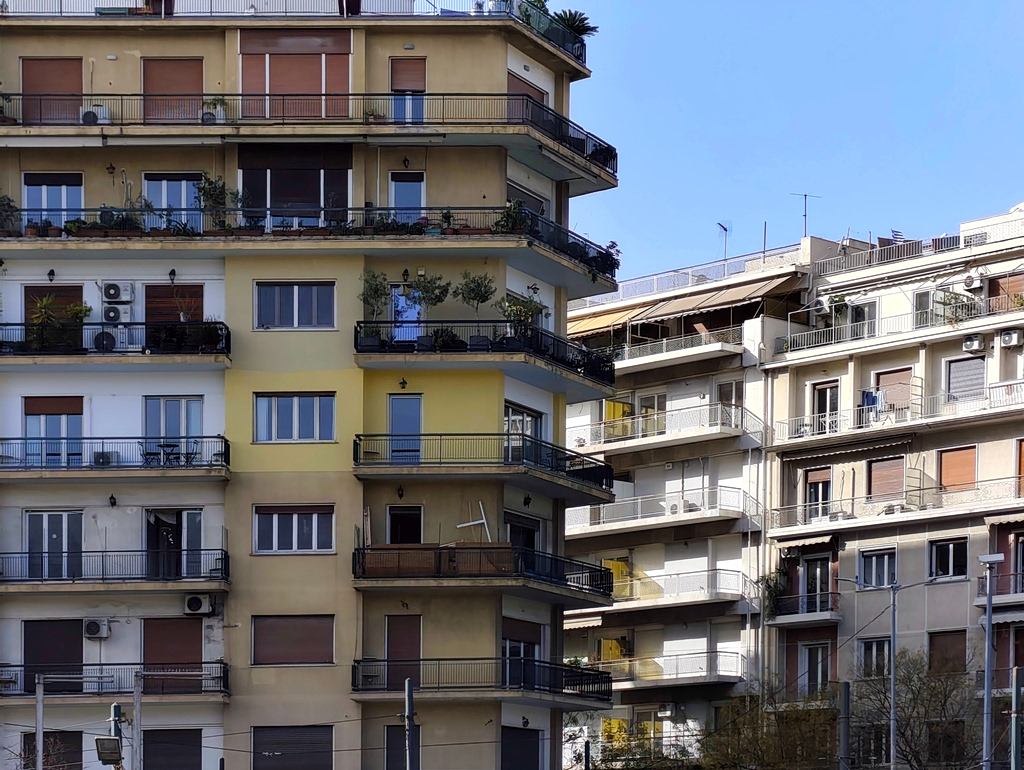
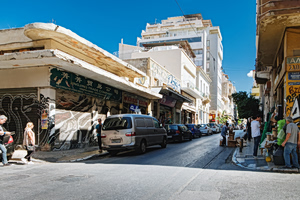
Photo of apartment buildings with balconies in a dense residential neighborhood of downtown Athens, Greece, reflecting everyday urban living.
Housing Crisis Imminent
This is not the first time Athens’ mayor has brought up the issue of granting the municipality more control over tourism policies and taxation. Earlier this year, Doukas warned that Athens “cannot operate as a giant hotel” and called for stricter regulation of both hotel development and short-term rentals. The issue, he says, goes far beyond tourism; it directly affects Athenians’ daily lives.
“In many areas in Athens, rent accounts for more than 70% of a young person’s income,” he says. “The lack of affordable housing has become a social crisis.”
At the same time, the municipality estimates there are roughly 38,000 unelectrified properties – potential homes – within city limits, while entire neighborhoods in the historic center are gradually being reshaped by tourism-related activity.
“We are not Barcelona, not yet,” Doukas says. “But we do need to pay attention now, before the city’s carrying capacity is exceeded.”
The municipality has submitted proposals to the government’s new Special Spatial Planning Framework for Tourism, including designating the historic center and the city’s First Municipal District as saturated zones where new hotel developments and tourism-related projects should be restricted.
Doukas also argues that short-term rentals should face stricter planning regulations. “When an apartment operates as an Airbnb, it functions as a hotel,” he says. “It cannot continue to be treated simply as a residence.”

Airbnb app is seen on a smartphone in this illustration taken, February 27, 2022. REUTERS/Dado Ruvic//File Photo
More specifically, Athens wants a greater role in determining how tourism develops within its boundaries, along with a raft of additional powers. Central government decisions based on the new Special Spatial Planning Framework cannot override local government’s urban planning, he argues.
“Ministries cannot just open the door to new tourist uses without giving oversight to local authorities and then expect them to manage the consequences,” Doukas says. “Cities must have a say in how they develop.”
Priorities: Housing, Flood Protection
The mayor insists that securing a larger share of tourism revenues is about much more than simply balancing municipal budgets. Athens faces substantial and costly long-term challenges, particularly in terms of climate resilience and housing.
“Flood protection alone will require around 100 million euros,” Doukas says. “We currently have only 2 million euros available. This is the reality.”
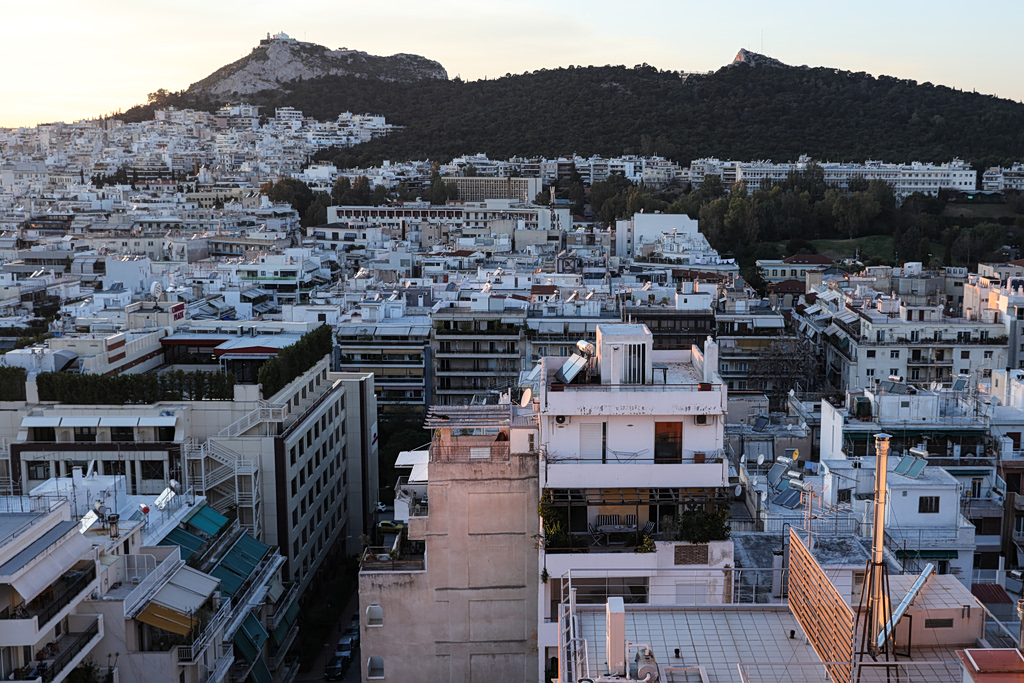
Cityscape of Athens, February, 24, 2020.
He also points to studies conducted through the European “Mayors for Housing” initiative, which suggest that creating 1,000 affordable housing units in Athens could significantly ease pressure on the city’s strained market.
Yet despite public expressions of support from government officials, including Tourism Minister Olga Kefalogianni, who has acknowledged that cities should receive a greater share of tourism revenue, Doukas says little has changed.
“We have not seen the corresponding political will from the government. We need to decide whether we want strong, sustainable cities,” he says, “or municipalities that are simply expected to pick up the tab”.
Creating the Tourism We Want for Athens
For all his concerns, Doukas is clear on one point: Athens wants visitors. Tourism remains one of the city’s great success stories and a vital pillar of the economy. The challenge, he says, is ensuring that success remains sustainable.
To achieve this, there is only one way: all the stakeholders must work together to create the tourism model Athens deserves. The debate over ways of doing this, from tourism taxes and housing regulations to greater municipal autonomy, is likely to intensify as visitor numbers continue to rise. The question facing Athens now is whether the city that attracts millions of visitors each year has the resources and authority to manage the impact.
For Doukas, the answer ultimately lies in building a city that works for both visitors and residents. “Our goal is to improve everyday life in Athens,” he says. “And to do that, we need citizens themselves to play a more active role. If we can achieve that, then we will truly have succeeded.”