 Μake us preferred on Google
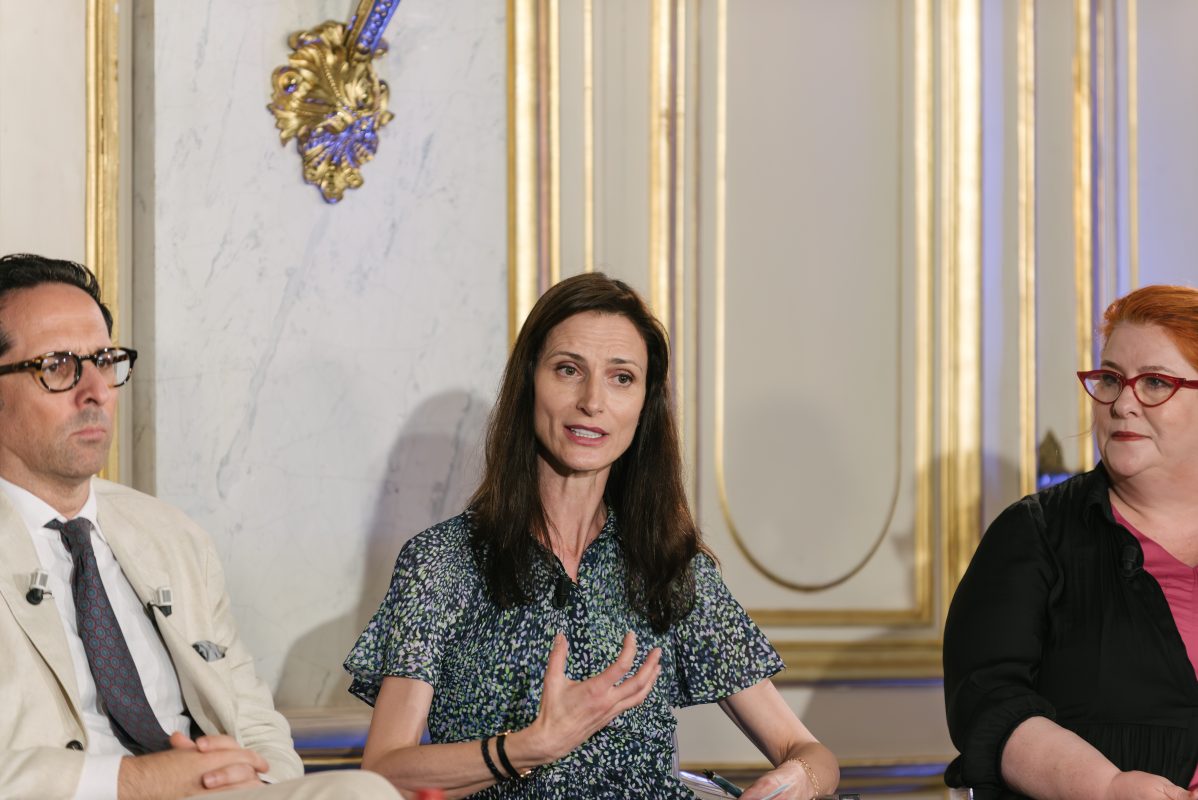
 I met Mariya Gabriel in Paris on the sidelines of the Meliore/Project Syndicate Media and Democracy Summit. She explained to me that UNESCO has developed a strong partnership in Greece with the School of Journalism and Mass Communications of the Aristotle University of Thessaloniki, specifically through the International Training Centre for the Safety of Journalists and Media Professionals (ICSJ). In cooperation with UNESCO, the Centre supports training, research and capacity-building initiatives relating to journalist safety, media freedom and freedom of expression across Southeast Europe and the Eastern Mediterranean.
Looking ahead, UNESCO is partnering with the Voices European Festival of Journalism and Media Freedom and Media and Information Literacy, which will be held in Thessaloniki, Greece, on 26–28 November 2026.
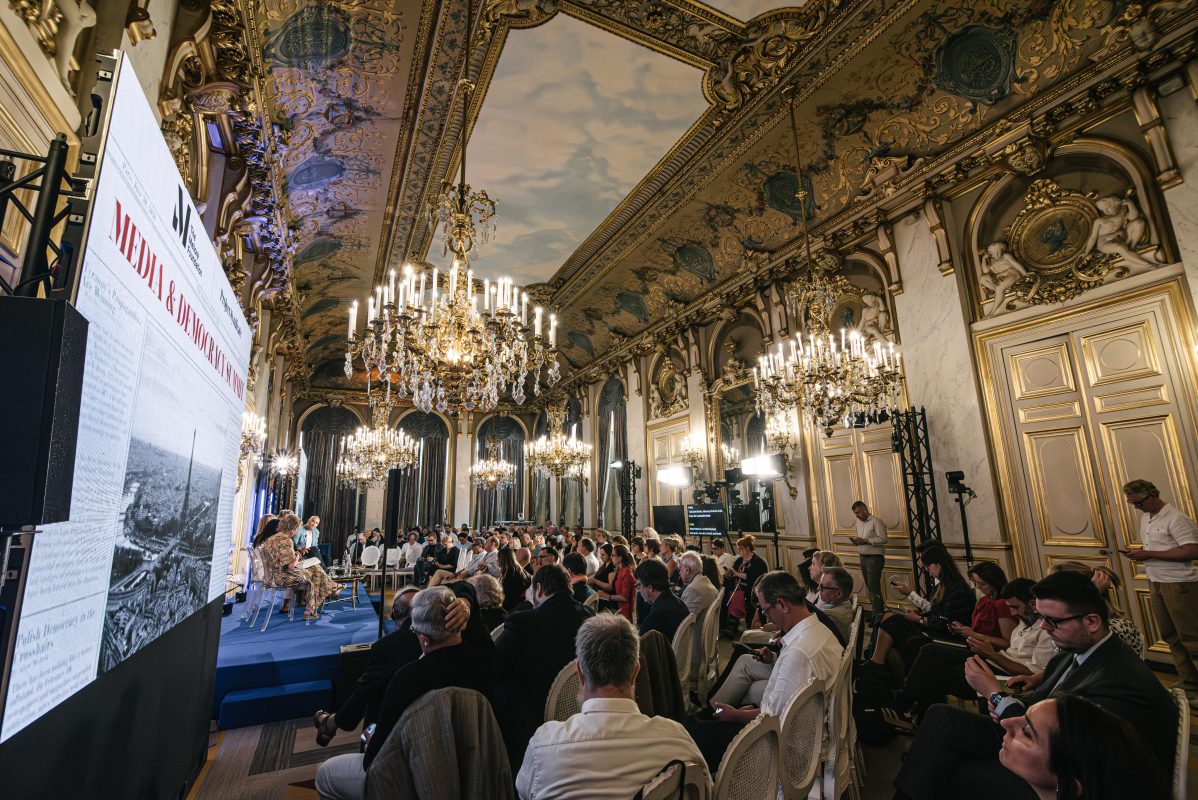
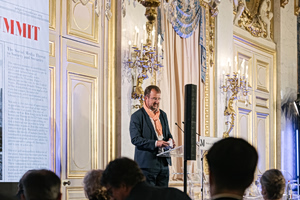
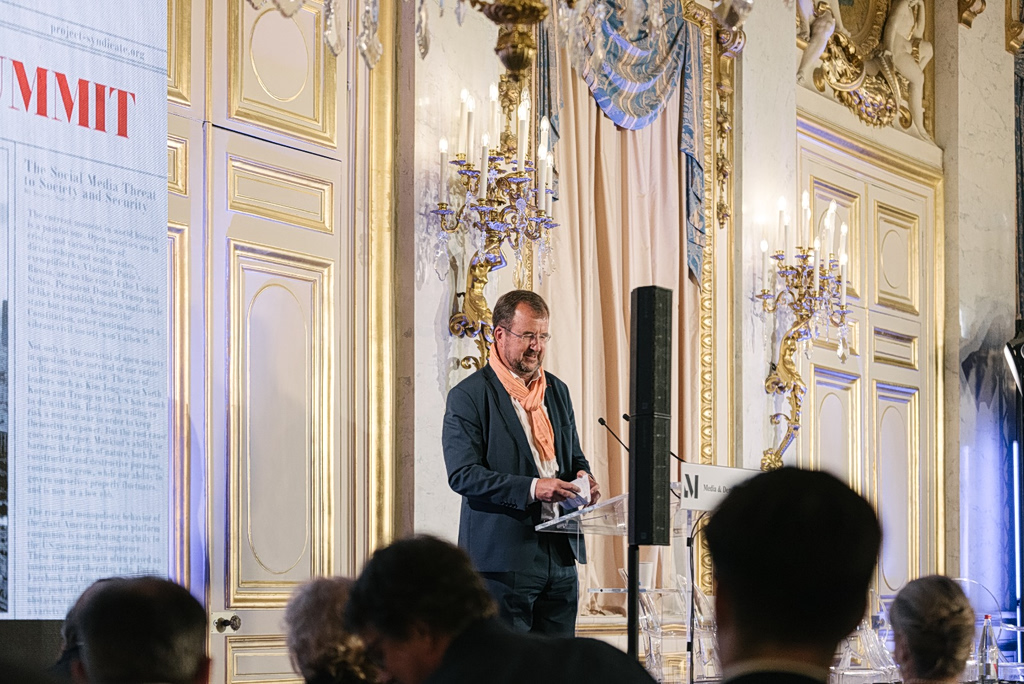
A view of a Meliore/Project Syndicate Media and Democracy Summit session, at the Quai d’Orsay, Paris, France. Photo by Derek Halsey/Alois Perspektiv
How bad are things for journalism these days?
There have been some very alarming developments. The World Trends Report that UNESCO publishes every three years states very clearly that, since 2012, we have suffered a 10% decline in freedom of expression. That has never happened before, not since the two world wars. Second, there has been a 63% increase in media self-censorship. This means people know they aren’t protected, and so do not dare to publish. In addition, an unprecedented number of journalists have been killed. Accompanied by an unprecedented increase in the number of lawsuits filed against journalists. On the other hand, there have also been some very good examples of journalists who ensure that the public has access to the information it needs, which is a public good.
They resist on the ground, they are resilient and they innovate. Journalists work in conflict zones. They work in crisis and emergency situations. And thanks to them and their work, we save lives. So today, more than ever, there is a need to recognize the extraordinary added value of the work journalists do. Protecting journalists means protecting us as a society, as well as our resilience. It ensures we as citizens have access to reliable information, which enables us to participate meaningfully in democratic life. And we need to stay highly, highly mobilized. That is UNESCO’s role.
UNESCO has very strong normative power to establish global frameworks, as well as the convening power to bring governments, journalists, civil society organizations, and media organizations together. But it also has a second, operational function: We are on the ground in Afghanistan, Gaza, Ukraine, and Sudan. We are in Kabul. We protect journalists through the Global Media Defense Fund. We work with them to identify new threats—like online violence, an area in which women journalists face especially severe risks. Here, again, we have seen the numbers rise alarmingly. The percentage of the instances of online violence against women journalists which also have offline consequences has risen from 20 to 40 percent in just five years.
So we need to stay mobilized, and we need to find ways to innovate and provide women journalists with the tools they need to continue doing their work.
But what happens when we start to see these trends in key democracies, too? We’ve seen it happening in the US, but in European countries, as well. How can we stop it?
UNESCO’s function is unique here, too, because we can gather the right people together to discuss possible solutions. Importantly, though, our goal isn’t limited to identifying the new tendencies; it is also to consider how those tendencies can be tackled. A good example here would be the Global Media Defense Fund.
The Fund was created to ensure legal protection for journalists. And in the years it has been in existence, the Fund has helped 11,000 journalists protect themselves legally. And that’s what we need: concrete tools to ensure that journalists—specifically those who are being threatened—have the means, tools and structures they need to continue exercising their profession. That is also the case in Ukraine, with the safe spaces, and with local radio stations and women in Afghanistan.
We have elections coming up in France and in Germany, and we are very much afraid that actors like Russia will try to interfere with these elections using journalism, journalists, and social media. Is there a way to teach people how to read the news, given that younger people increasingly rely on social media?
It’s true: today, more than ever, young people rely on social media to stay informed. That’s why, for us at UNESCO, Media and Information Literacy is so critical: it empowers citizens to think critically, to navigate this complex environment, to question and express doubts, and to make informed choices. That’s why we continue to work very closely with Member States to introduce this literacy into the curriculum. We also have concrete initiatives, like teaching it in schools and universities.
We also look to parents as an important—but widely ignored—link. They spend a lot of time with their children, yet they themselves are often scared and don’t understand how algorithms influence the entire environment, for themselves as well as for their kids. So we published a global guide for parents, which helps them navigate the complex digital world. Our goal is to help re-establish a dialogue between parents and children, and to encourage both to consider how they read, what they retain, how they critique what they read, how they identify vital information, and how they should go about verifying sources.
Another important thing we do at UNESCO is work with content creators, which we are doing more and more. That’s because, while more than ever before, many citizens—and not only young people—receive their information from this ubiquitous group, our analysis shows that 62% of content creators don’t actually verify their sources before sharing. So we need to work with this group, because it’s up to them how much disinformation is out there.
And I definitely think that, globally, we need to keep on increasing our efforts in this direction until we achieve a critical mass of initiatives that perhaps makes Media and Information Literacy mandatory, while expanding the teaching of it beyond schools and universities into urban spaces, with different categories of recipients. That’s what we would like to do.
What will be the biggest challenge for UNESCO in the years ahead?
In one sentence, to remain a platform for dialogue. Without dialogue, we’ll never be able to tackle the challenges, which are growing every day. But if we lose our capacity to talk to each other, to understand each other, if we lose our access to reliable information and can no longer preserve the integrity of the information ecosystem, it will be very difficult to find solutions.