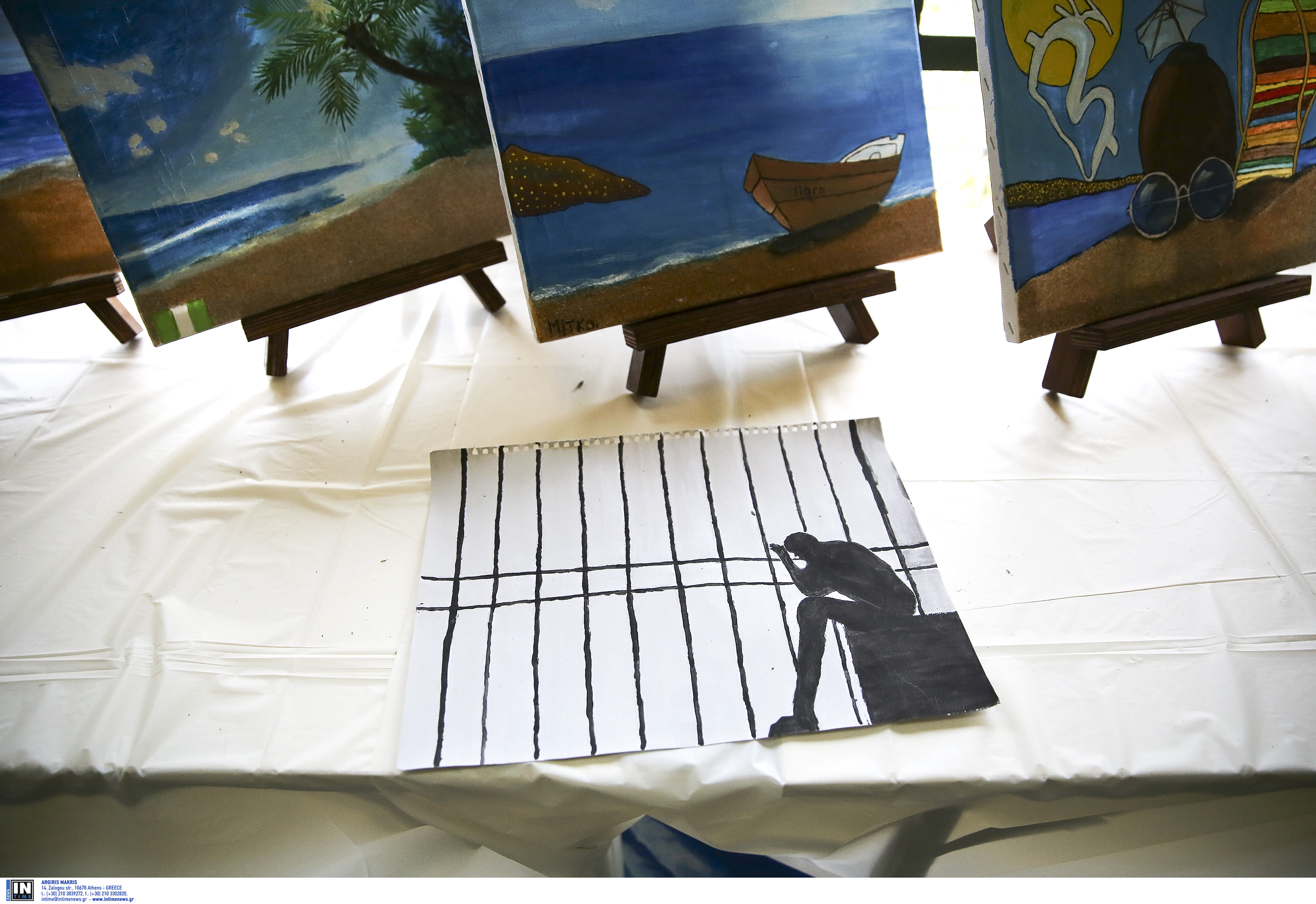
An argument with his father forced him to leave home. With nowhere else to go, he moved in with “friends.” He needed money as he was not financially independent. An acquaintance suggested a way to earn some.
He would travel from Lithuania, where lived, to Turkey. There, he would receive a bag and take it to Italy via Greece. At the final stop, he would earn between €2,500 and €3,000.
“Rokas” agreed.
He did not know exactly what he would be carrying. He did not ask. He simply said yes—the most costly “yes” of his life.
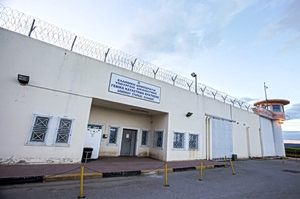
What followed was almost inevitable. He left Turkey with the suitcase, crossed to Chios by boat, where he was arrested. He was held on the island for one week because he was under 21, and then transferred to the youth detention facility in Avlona Prison, north of Athens.
He remained there for about a year while waiting for his trial.
The verdict was severe: 15 years in prison. With good behavior, the sentence could be reduced to nine years.
Rokas watched his life take a dramatic turn. At the time, he was barely 20 years old.
A decision that changed everything
Today he remembers the reasons he refused to give up.
While in prison, he decided to attend classes at the school inside Avlona prison, continue his studies and build a future on solid foundations. He eventually studied at one of Greece’s leading universities and now enjoys the benefits of a stable and successful professional career.
Rokas’s story is not unique.
From 2000 to 2024, around 3,100 students attended the school at Avlona prison. Of them, 45 managed to enter university.
Attendance at the prison school is not mandatory, yet about 90% of inmates participate.
Perhaps the most remarkable detail, according to those who run the program, is that many of these students had hated school before prison and had dropped out entirely.
“Me and the national exams”
Speaking to To Vima years after the ordeal that nearly destroyed his life, Rokas explains the thoughts and decisions that shaped that period.
Immediately after the verdict, he filed an appeal. While waiting for the case to be heard, he decided to focus first on learning Greek properly.
“I didn’t know Greek, so they placed me in the first year of middle school at the prison school,” he recalls. “When I finished the second year of middle school, and since I had already completed school in my own country, they moved me directly to the second year of high school.”
Three years had already passed when his appeal was due to be heard. But the trial was postponed for a year because of a nationwide lawyers’ strike.
“I thought it didn’t matter,” he says. “It meant I had more time to prepare properly for the national university entrance exams.”
Those exams—known in Greece as the Panhellenic examinations, the nationwide system that determines admission to public universities—would prove decisive.
Rokas sat the exams and was admitted to the School of Applied Mathematical and Physical Sciences at National Technical University of Athens (NTUA), one of the country’s most prestigious institutions.
Meanwhile, his appeal was heard. His sentence was reduced to six years.
Because he had consistently followed the prison school program and had already been admitted to university, his sentence was further reduced to four years—which he had already served.
Rokas walked free.
He could finally begin his new life as a university student in Greece.
During this difficult transition back into society, he was supported by Epanodos, a Greek nonprofit organization that helps former prisoners reintegrate into society. The organization acts as a bridge between imprisonment and freedom, offering psychosocial and legal support, career counseling, and practical assistance such as housing and meals to reduce social exclusion.
“No one wanted to solve the problem”
Looking back on his years in prison, Rokas remembers his fellow inmates—mostly young men, many of whom had experienced repeated expulsions or transfers from schools due to “inappropriate” behavior.
“It was the classic case,” he says. “No one at the schools they attended wanted to solve the problem. Everyone wanted to avoid it.”
The same observation is shared by Petros Damianós, Rokas’s teacher and former director of the Avlona prison school.
“Tightening school punishments is not a solution. It makes the situation worse,” Damianós explains.
“With the ministry’s approval, the teachers’ association of the first school decides that when a student becomes too difficult, they will expel him and send him to another school’s yard. And the process repeats.”
After two or three school transfers, he says, the student becomes angry, begins to hate school and ends up on the streets.
“Then the child starts encountering unfamiliar situations—illegal activities, often drugs—and eventually the prosecutor’s office. At some point the case becomes more serious, and the child ends up in prison.”
According to Damianós, every student file that arrived at the prison school showed the same pattern: repeated changes in school environment.
“And I wonder,” he says. “We lost these children. What did society gain?”
Damianós first became involved in prison education in 1994, initially as a volunteer. When the school was officially established in 2000, he became its director and remained in that position until 2024, when he retired.
A common thread
Over the years he encountered many different cases.
Yet almost all of them shared the same common denominator: dysfunctional family environments and repeated school transfers.
“Schools should have been equipped with the right human tools—psychologists and social workers,” Damianós argues. “Because it is in these small school communities that each child’s problem becomes visible. We deserve a better social welfare state.”
He recalls the most emotional moments: graduation ceremonies inside the prison.
“To see dozens of young people, after years in prison, finish school, move forward, tell their personal stories and return to society ‘clean’—that is something unforgettable.”
For Rokas, the journey from a prison cell to a university lecture hall began with a single decision: to return to the classroom.
A decision that ultimately gave him his life back.