John searched for his bank booklet in the drawer where he had always kept his official documents, carefully arranged so nothing would ever get lost. He got dressed, picked up his cane, and made his way slowly to the local branch of his bank. When he arrived, the doors were closed. A younger man waiting outside asked if he had an appointment. An appointment? Moments later, a bank employee opened the door and repeated the question. No appointment, no entry. Baffled, John walked away realizing that, for the first time in 60 years, he no longer had immediate access to his own bank account. His experience is one shared by many older people in Greece, who have suddenly found themselves locked out of life.
From Paper to Passwords
Greece’s push to modernize its public administration began more than a decade ago, but progress accelerated dramatically during the COVID-19 pandemic.
Lockdowns forced the government to rapidly expand the digital infrastructure for banking, healthcare, education, prescriptions, tax returns, pensions, and public services. Systems that would normally take years to implement were rolled out in months, making Greece one of Europe’s fastest public-sector digital reformers.
In this rush toward modernization, however, an uncomfortable reality emerged: thousands of older Greeks are simply not prepared for the new digital world.
“From the very beginning, we made a clear political choice: the digital transformation should include all citizens, without exclusions,” Digital Governance and Artificial Intelligence Minister Dimitris Papastergiou tells TO BHMA International Edition.
Papastergiou points to services such as electronic prescriptions, the MyHealth app, and digital sports tickets as examples of how technology has improved efficiency and everyday convenience. He says usability, regardless of age or digital skills, is a top priority.
For younger, tech-savvy Greeks, the changes have been liberating. No more endless queues. Banking, certificates, and prescriptions can now be handled through smartphones in minutes.
But for many older Greeks, the shift has been far more difficult. Many seniors, particularly in rural villages and isolated islands, either lack digital skills or do not own smartphones at all. Others fear online fraud, scams, and privacy breaches.
“The inability to access the digital environment can become an obstacle to autonomy, service access, and social participation,” Minister for Social Cohesion and Family Affairs Domna Michailidou tells TO BHMA International Edition. “We treat digital exclusion as a modern form of social vulnerability.”
The Cost of Convenience
Earlier this year, the Social Cohesion and Family Affairs Ministry launched “Oloi Digital” (“Everyone Goes Digital”), a free digital literacy program offering 70 hours of hands-on training for citizens over 65 and people with disabilities.
“Participants learn things that are directly related to their daily lives: how to make digital appointments and electronic transactions, communicate safely, and navigate the internet with greater confidence,” Michailidou explains.
However, she goes on to note that digital empowerment cannot be limited to a short theoretical seminar. “For seniors unfamiliar with technology, practical guidance, repetition, and trust are essential.”
The lessons take place at “Digital Empowerment Hubs”, which have been set up in KAPI (Greece’s state-run day centers for the elderly), Friendship Clubs, and other municipal venues. This too plays an important role in building trust, she adds.

Lost in Transition
In countries like the United States, the move toward digital consumer and public services unfolded gradually over a period of roughly 20 years, or a generation. In Greece, the brunt of this transformation occurred almost three decades later over a period of just five years. In this time, bank tellers began to disappear, in their place automatic teller machines were installed, bank branches were shut down, and most banking services went online.
Exacerbating the situation, the lack of in-person customer service has intensified feelings of exclusion among older citizens.
At 67, Christina, a former pharmaceutical executive with a master’s degree, admits she struggles to keep up.
“Even I can’t always understand how to use the new technologies, especially for things like banking or pension applications,” she says.
She has no social media accounts by choice and only uses Viber. “That’s more than enough for me.” Christina has no children to assist her, and worries about losing her independence.
“If you want to remain independent today, you either need someone to do these things for you, or you slowly drop out of society,” she says. “Even booking a theater ticket or calling a taxi now requires digital literacy.”
“Our generation went from physical telephones to FaceTime in one lifetime,” she adds. “It’s simply too much to absorb.”
Smartphone Fears
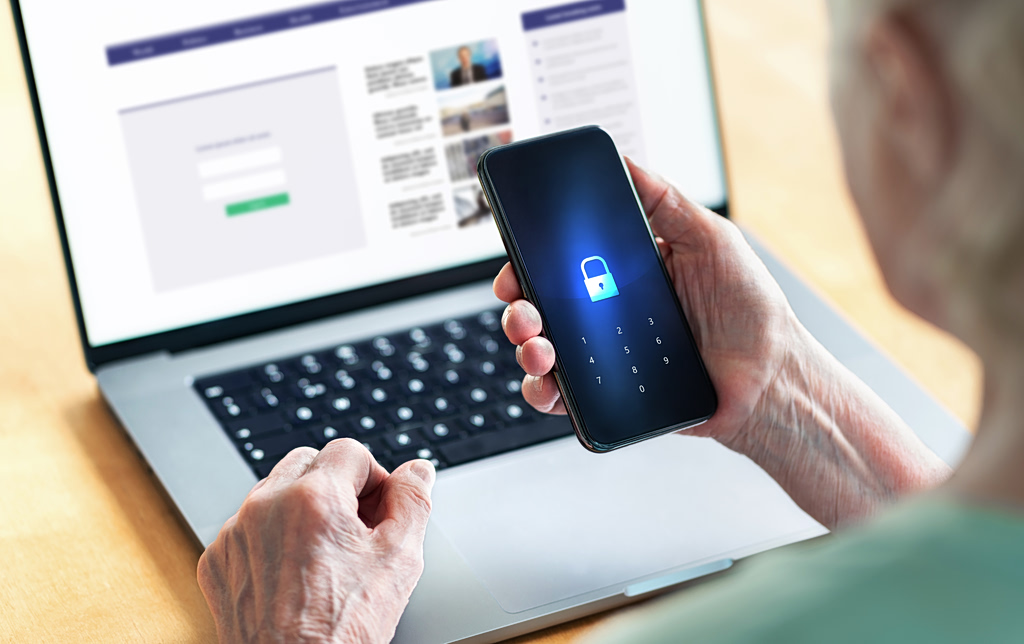
Although 95% of the population in Greece uses a smartphone, according to the International Telecommunication Union, data from the Hellenic Statistical Authority (ELSTAT) shows that older demographics, particularly those aged 65 and above, still rely heavily on traditional mobile phones with physical keypads. Many say touchscreens feel confusing and intimidating. Others fear mistakes that can lead to scams, privacy breaches, and banking fraud.
The issue takes on even greater urgency in the light of the country’s demographics. Greece has one of the oldest populations in Europe, with roughly 23% of its citizens aged 65 or older—around 2.4 million people. This means that ensuring access to essential services is crucial.
In Limbo
“I still request paper prescriptions,” says 78-year-old Yiota. “I don’t understand this paperless prescription system. I want to see what the doctor prescribes and hand it to the pharmacist.”
Still, despite her mother’s resistance, her daughter registered her on Greece’s electronic prescription platform, one of the country’s earliest digital healthcare reforms aimed at reducing misuse and streamlining medical records.
“I don’t understand it,” Yiota says. “Everything goes through my daughter now, which means double the trouble.”
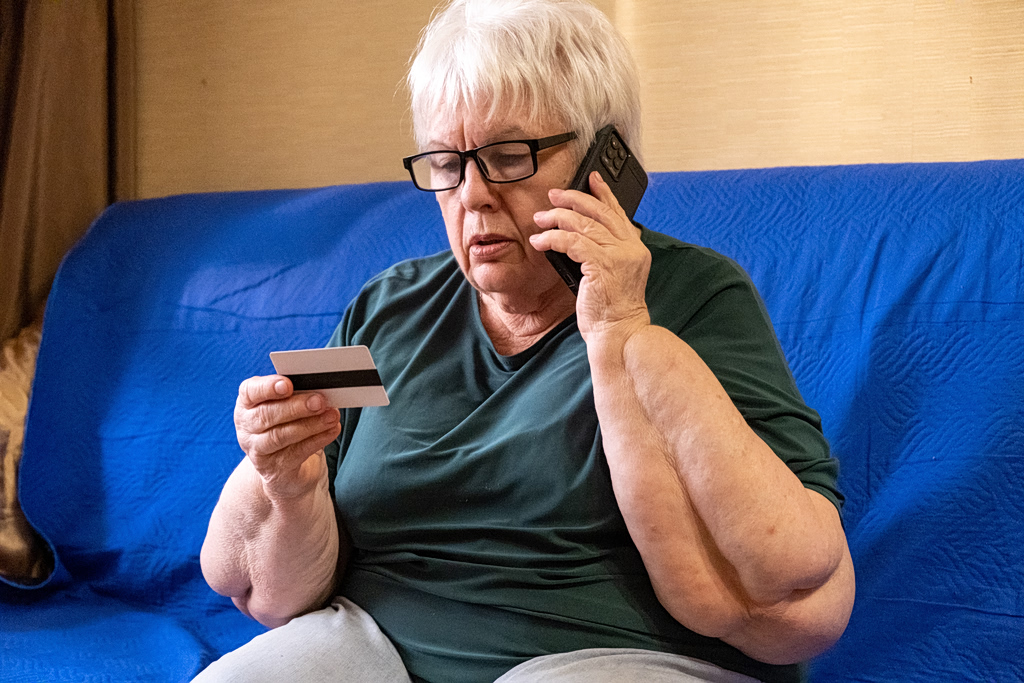
Paul, 86, is very frustrated with the digital transition. He feels he is becoming a burden on his son and grandchildren. “In order to get the best deal for my electricity program, I had to understand the plans on offer. To do that, I had to set up an account with the provider. I don’t have the patience or knowhow to do this, so I asked my grandson for help. I’ve ended up feeling ashamed and left out,” he says.
“If I didn’t have them, I don’t know what I would have done. Everyone says things are easier now, but to me everything feels more and more incomprehensible.”
Stergiou argues that “digital transformation is not just about technology. It’s an ongoing process aimed at building citizens’ trust, simplifying procedures, and improving everyday life, but it takes time.”
As an example, he points to the digital ticket app in the Gov.gr Wallet. “At first, some were quick to say, ‘There’s no way grandparents will be able to use this,’” he says. “Now, those same people see their grandparents in the stands using it to attend matches safely.”
By Proxy
Across Greece, many older citizens now rely on so-called proxy users— children, neighbors, municipal employees, or even local cafe owners—to complete online tasks on their behalf. In villages and on small islands, local coffee shops often function as informal digital help desks.
“We recognize that the digital transition needs human support,” Michailidou says. “When citizens seek help issuing a document, using e-prescriptions, or completing a digital procedure, they are not simply requesting technical assistance. They are seeking access to a service, a benefit, or a right.”
When many older people have difficulty using a digital service, the first person they turn to is often not a technician, but a person they trust, she adds.
To ensure broad access to digital services, Papastergiou says Citizen Service Centers (KEPs) are being strengthened so they can continue serving as physical one-stop hubs for the public.
“Physical presence and support remain essential, especially for those who need guidance,” he says. “That is how we ensure the transition happens on terms of equality and safety.”
Left Out or Moving Forward?
Not all seniors view the digital transition negatively. Nikos, 70, a retired bank employee, says digitization has improved everyday life.
“It was difficult at first, as all new things are,” he says. “But now I feel relieved not having to stand in endless lines.” He points to easier access to pension records, tax forms, and social security documentation. “I still have cardboard cards with stamps from my working years.”
Many like Nikos have made a conscious decision to adapt instead of being left out.
To ease the transition, government officials say efforts are underway to simplify sign-in procedures, improve accessibility standards, expand rural support services, and preserve alternative service channels for vulnerable groups.
Still, questions remain.
What happens when citizens cannot navigate the system? What are the consequences of missed digital deadlines, delayed healthcare access, or misunderstood online procedures?
Michailidou acknowledges that digital education alone is not always enough.
“For some people, especially those living alone or facing cognitive difficulties, more personalized support is necessary,” she says. “This is where consistent, face-to-face support from social services and community care structures is needed. The program acts as a support tool, helping more citizens gain autonomy in their digital transactions.”
The next time John visits the bank, he will have hopefully learned how to book an appointment. And he may be lucky enough to have someone on hand to show him which button to press or where to enter the code. But for many older Greeks, the deeper fear is not learning a new technology. It is the humbling realization that the world around them is no longer designed with them in mind.
One thing is certain: Greece’s digital revolution has made everyday life easier for millions of people. But as the country races toward a fully online future, it also faces a difficult question: how do you modernize a society without leaving part of it behind?