If you want to understand a core dilemma of the modern Greek state, look no further than the yellow-and-blue Hellenic Post mailbox located in the almost every village square. The Hellenic Post (ELTA) dates back to Sept. 24, 1828, when Greece’s first governor, Ioannis Kapodistrias, signed a resolution establishing regular postal transport Greece.
From the start, the Hellenic Post was tasked with the mission of bounding a war-scarred, geographically scattered nation together, with the first offices established in Argos, Tripoli, Epidaurus, Aegina and Syria and mail services provided on foot and via cavalry. Over the next 196 years, Hellenic Post would play a vital role in the country’s development, through 475 branches and 471 post offices. Like many of the world’s postal services, that’s how ELTA became Greece’s rare “love brand”- familiar, trusted, and woven into the nation’s cultural identity. This unique placement in Greece’s history is the same reason why so much of the public is in uproar over Hellenic Post closures.
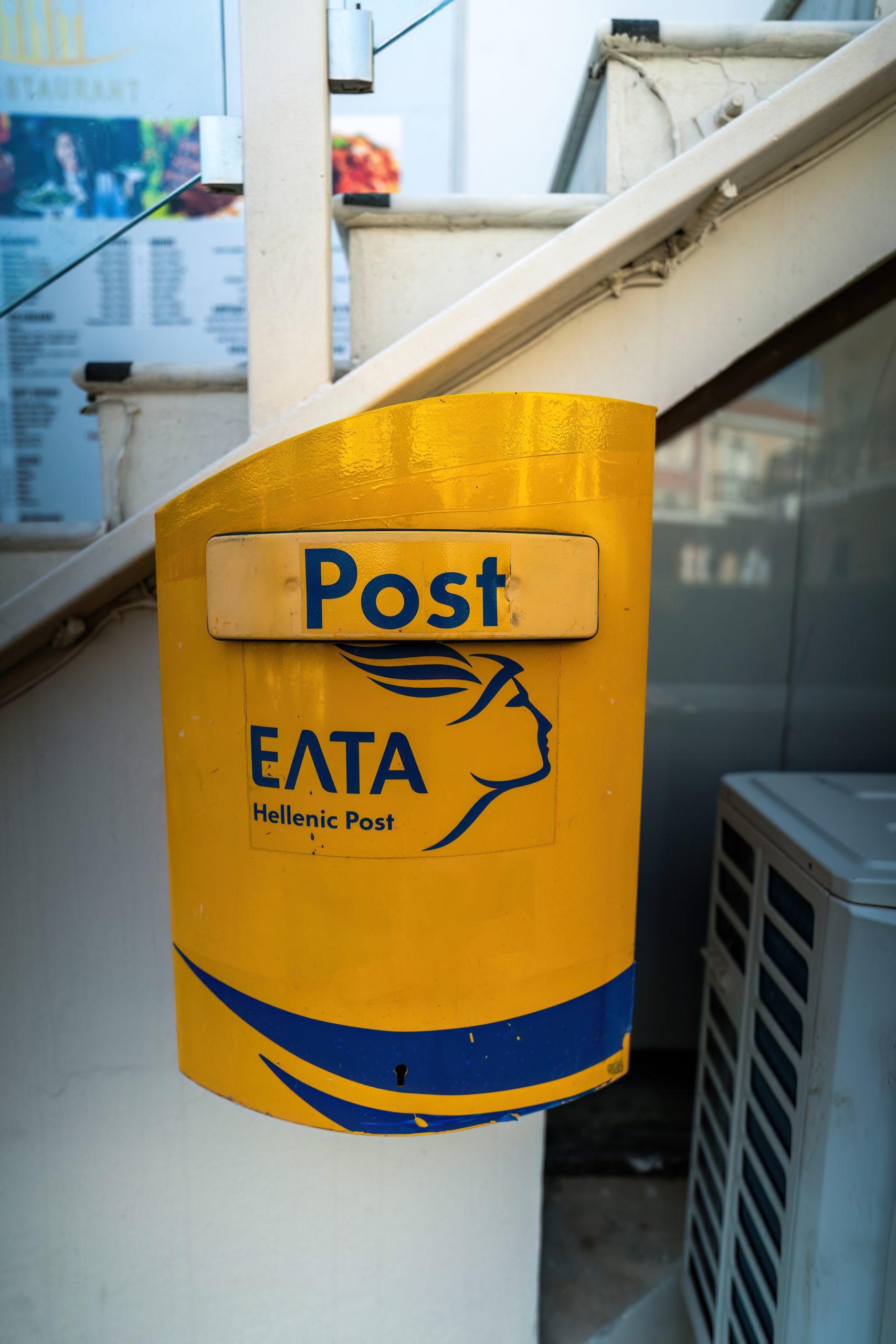
Vintage postbox in the island of Zakynthos.
Today, Hellenic Post is wholly owned by Greece’s sovereign wealth holding company, the Hellenic Corporation of Assets and Participations (known as the Growthfund), a fund tasked with the “modernization of State-Owned Enterprises, maximizing the value of public assets, ensuring the delivery of enhanced services to citizens/consumers, and contributing to the support of the national economy.” ELTA’s latest efforts to ensure the organization’s financial stability have reignited a familiar dilemma faced by postal services around the world: the struggle to balance efficiency and cost cutting measures with public interest, brand loyalty and national identity.
More than a mail carrier
For generations, the local post office was an island’s connection to the mainland. Postal service employees delivered pensions, benefits and bills, and branches served as payment counters in places where other banks closed or never existed through ELTA’s banking services. In that role, ELTA employed thousands across the archipelago and the interior. Moreover, beyond its practical and economic role, each ELTA branch has long served as a symbol of the Greek state’s steadfast presence at its outermost borders, with every post office embodying a quiet expression of “national interest.”
Even now, as more of ELTA’s services migrate online, pensions are delivered to homes, and electronic bill payment becomes part of daily life, the brand’s recognition and emotional equity remain unusually strong.
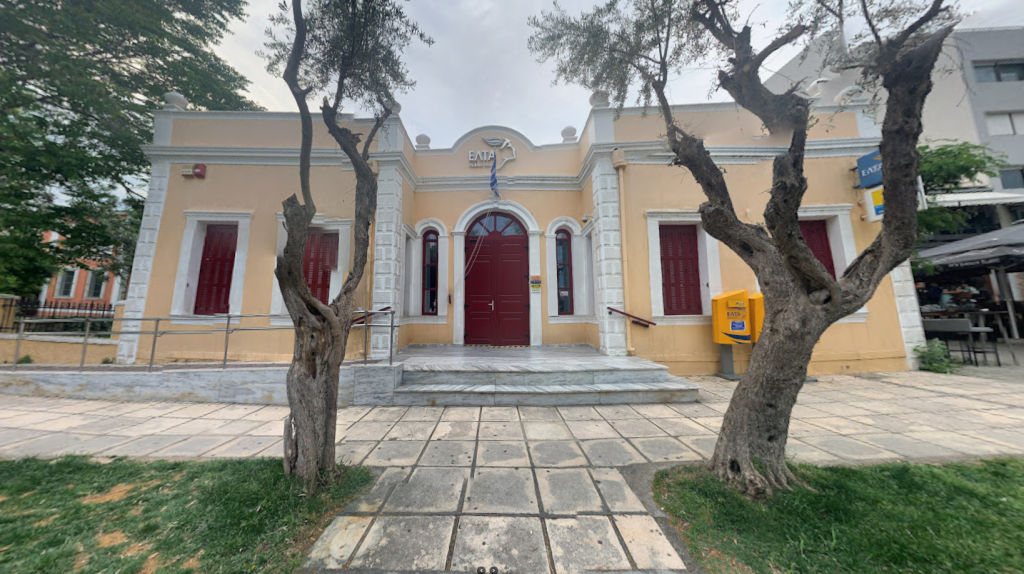
An image of the Hellenic Post on Greece’s northeast border, located in the city of Alexandroupoli.
Bleeding money, shrinking fast
Yet the nostalgia that surrounds ELTA no longer matches its business reality. According to a European Commission study on Europe’s postal services, the Greek market handled more than 620 million letters in 2003. By 2023, that figure had fallen to about 225 million, according to the national regulator EETT, reflecting a drop of nearly two-thirds in two decades, mirroring Europe’s wider decline in traditional mail. Now, ELTA management says 92% of postal deliveries and 90% of parcel shipments are handled directly by home delivery, making the support of such a wide network of branches unsustainable.
The shift in how people “communicate” has hit the bottom line hard. ELTA’s 2024 financial statements show group revenue of €249.1 million (up 2 percent from 2023) but continued losses, with an after-tax deficit of about €8 million.
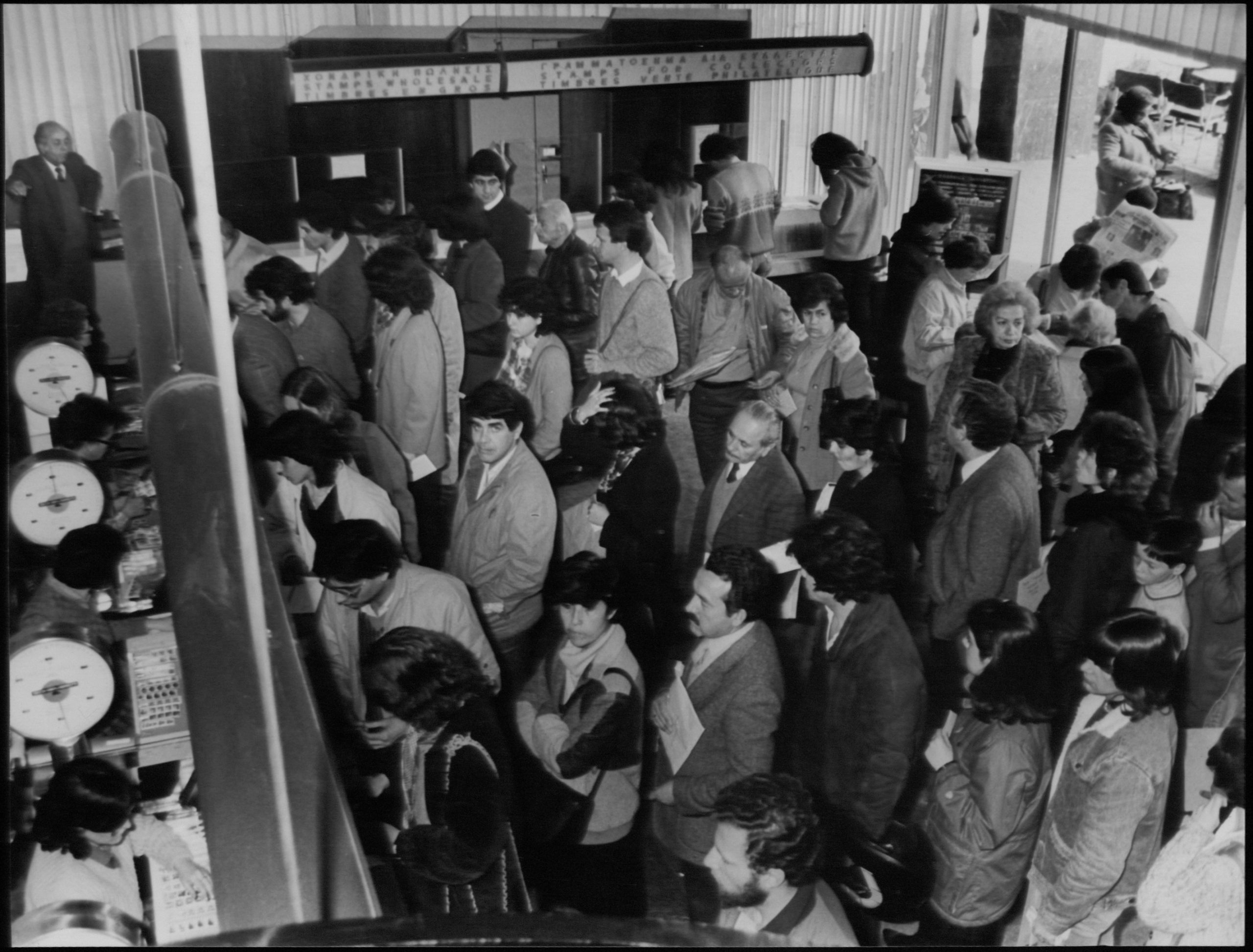
To stem the red ink, the company has been cutting costs for years. At the end of 2016, ELTA employed 7,186 people. A 2021 voluntary-exit program targeted 2,000 departures, and by December 31, 2024, the group’s headcount had dropped to 3,159, which is less than half the 2016 level.
Keeping ELTA afloat has required repeated state intervention. In December 2020, the Greek government provided a €100 million capital injection and booked €149 million in back compensation for the company’s Universal Service Obligation (USO) covering 2013–2018; payments meant to offset the cost of maintaining postal coverage in even the most remote islands and mountain villages. A Value-Added Tax exemption on all ELTA services was also introduced. Of the funds, totaling nearly €249 million, around €145 million went to fund the voluntary redundancy scheme.
The support measures triggered a European Commission investigation into possible state aid (Case SA.57538) and whether or not the measures constitute unfair support, which distorts the market. The case is still pending.
Despite its chronic losses, ELTA remains responsible for Greece’s nationwide postal network- a significant yet costly public duty with limitations to developing economies of scales on account of Greece’s geography. Other cost-cutting measures involve ELTA’s divestment in other loss-making non-core business activities, such as in energy, and a shift in focus to its high demand courier services.
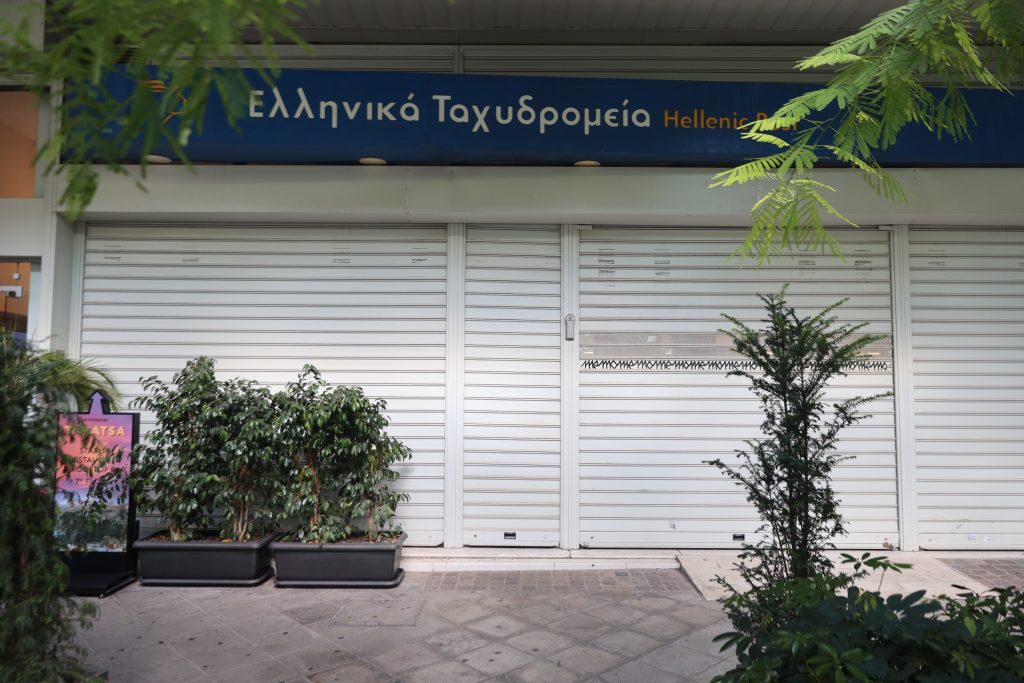
A snapshot from a Hellenic Post (ELTA) branch on Mitropoleos Street in Athens, which suspended operations on Monday, November 3, 2025. In total, 42% of ELTA branches nationwide have closed in an effort to stem years of financial losses reflected in the company’s balance sheets. ELTA has been under the umbrella of the Hellenic Corporation of Assets and Participations (Growthfund) since the years of Greece’s bailout programs.
(Photo: Giannis Panagopoulos / Eurokinissi)
Hellenic Post closures touch a nerve
This autumn, ELTA moved from “spreadsheets to streets” to further cut operational costs through the closure of physical branches- a plan long in the works. ELTA management’s aim is to suspend operations at 204 of 456 branches (roughly 40% of the network), on account of “minimal commercial activity” and the need to secure viability. The plan has ignited a political firestorm and accusations by the Greek government that ELTA management have mishandled communications around the closures. In the wake of the turmoil, the CEO of ELTA has resigned and been replaced by interim leadership.
ELTA insists “no Greek will be left without a postman,” pointing to an expanded “ELTA-at-home” model and a mobile, digitally equipped delivery force, but it does not seem to be enough to appease the masses.
The company says the reconfigured model leverages around 1,400 post service employees, 500 ELTA partners and 400 ELTA Courier couriers, outfitted with PDAs and POS for doorstep transactions, pivoting away from costly counter service to last-mile, on-the-go help.

An image of Hellenic Post stamps, honoring the Greek Resistance, groups that resisted the Axis occupation of Greece in 1941-1944. Special series of Greek stamps have been issued throughout the history of the Hellenic Post, commemorating culturally and historically significant events and persons.
Why Greece’s “love brand” is so hard to reform
Despite ELTA’s semi-autonomy from the Greek state through its ownership by the Growthfund, each shuttered branch is viewed as an existential loss. ELTA has defended the move, noting that 70% of the branches slated for closure are in the Attica region, with others in Thessaloniki, Patras, Rhodes, Ioannina, and Crete. The public is angered by the lack of advance notice, while older citizens, still relying on ELTA for banking and pension services, feel abandoned.

Post office bicycle in the old town of Rhodes, Greece.
The heart of the matter lies deeper. The news comes at a time when many of Greece’s regions are already struggling with socio-economic inequalities, aging and depopulation, poor critical infrastructure, and mounting pressures from migration and climate change. Adding to the tension, several political factions continue to denounce what they view as the ongoing “selling of the crown jewels” through privatizations and outsourcing of public services- grievances that date back to the bailout era.
Politically, there’s little room for error. Although New Democracy, still leads in the polls, it has been slowly losing support under the weight of five and a half years in power, scandals, and persistent economic strain. In response to the backlash, a government spokesman emphasized that only 10% of citizens now use physical post offices, yet these absorb more than half of ELTA’s operating costs, with each branch costing about €150,000 per year. Despite efforts to contain the fallout, ruling-party MPs are frustrated, opposition parties are capitalizing on the unrest, and a €30 million shortfall has turned a management decision into yet another national headache.
Meanwhile, ELTA remains a victim of its own success as a “love brand.” Its rich history is slowing the transformation it urgently needs while testing whether the company can modernize and turn profitable without becoming irrelevant, irrevocably damaging its brand, and eroding the public trust it has earned over generations.