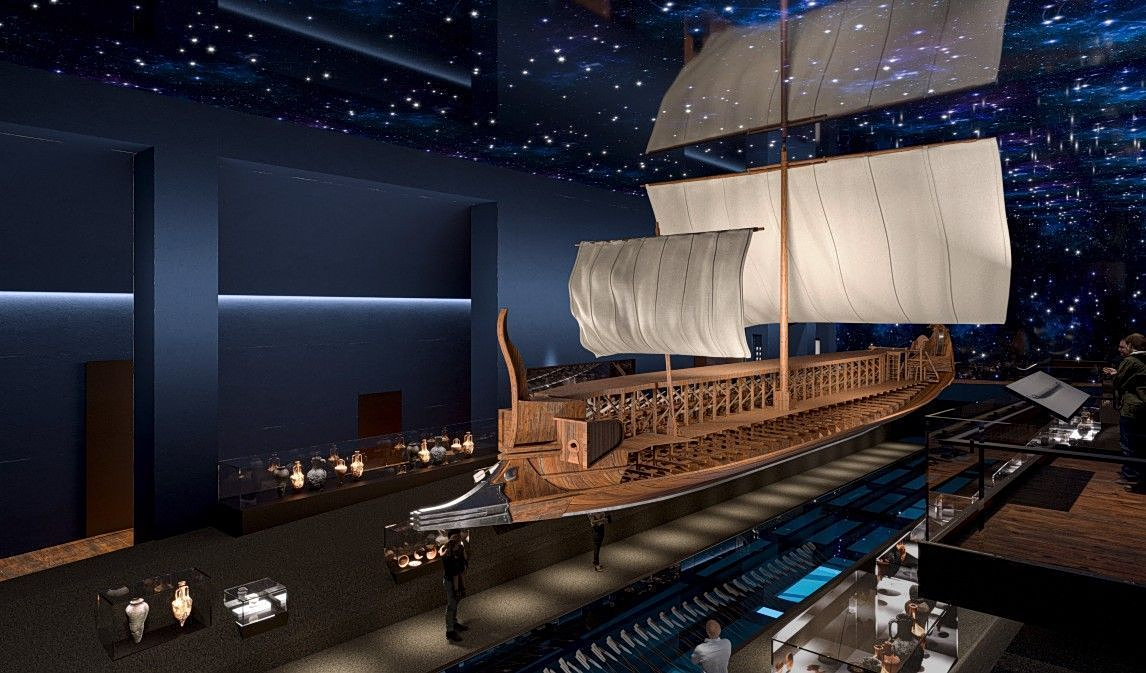

All of us have at some point in our lives been captivated by the tales of Atlantis, pirates, ancient shipwrecks laden with amphorae of wine and honey, and treasures that ended up hidden somewhere in the depths of the sea.
For the first time in Greece, these stories will come to life through the incredible exhibits set to go on display at the Piraeus Museum of Underwater Antiquities, scheduled to open in 2026 in the country’s largest port.
Together with the port’s iconic grain silo, the museum will transform Piraeus’ industrial coastline into a global attraction. This is the first museum in Greece, and one of only a few worldwide, dedicated exclusively to underwater archaeology.
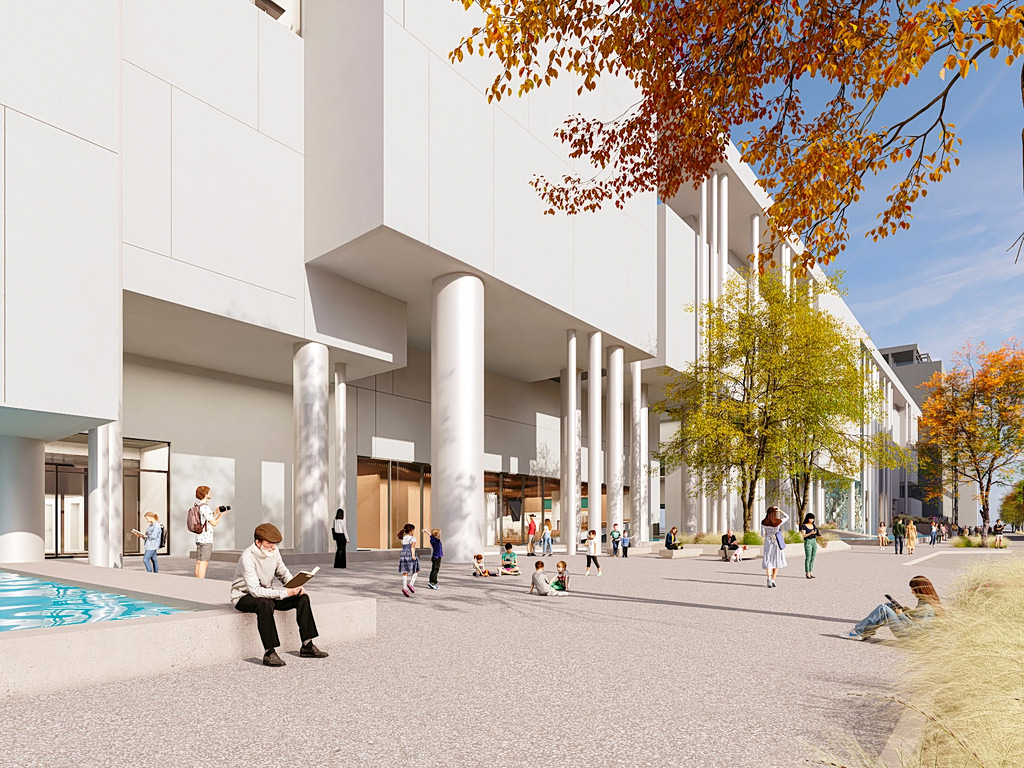
Mock image of the first museum in Greece, and one of only a few worldwide, dedicated exclusively to underwater archaeology. Image: Tsolakis Architects
TO BHMA International Edition spoke with George Tsolakis, supervising architect and head of Tsolakis & Partners, the firm behind the new museum, which is poised to become a Piraeus landmark.
“The Piraeus Museum of Underwater Antiquities was a challenge on many levels,” admits Tsolakis. The first and most difficult issue was integrating this new cultural function into the operational system of the country’s largest port,” he tells TO BHMA International Edition.
Equally challenging, he adds, was balancing the design relationship between the new structure and the historic Silo, whose imposing presence defines the Piraeus skyline.
Recreating the Underwater Experience
“Our goal was to honor the port’s history, highlight its significance, and bring out the memory embedded in its form, especially the iconic clock that has watched over the port since 1936,” he explains.
To achieve this, the museum’s design draws on a powerful metaphor: the underwater experience itself, which serves as a spatial ‘translation’ of the submerged world and its transitions from light to darkness.
“A distinct horizontal line defines the sea level,” Tsolakis explains. “Beneath it, the museum’s exhibition spaces unfold like time capsules hosting the underwater antiquities in a composition balanced between land and sea.”
More than 3,000 years of Greek maritime history come to life through the thousands of finds brought to light during hundreds of underwater expeditions in Greek waters.
Covering an area of 26,380m², the Piraeus Museum of Underwater Antiquities will host both temporary and permanent exhibitions. In addition to its uniquely-designed exhibition halls, it will also include an amphitheater, a library, restoration labs, study areas, shops, and seminar spaces.
Exhibition themes will explore maritime trade, shipping routes, piracy and travel, highlighting Greece’s millennia-long bond with the sea.
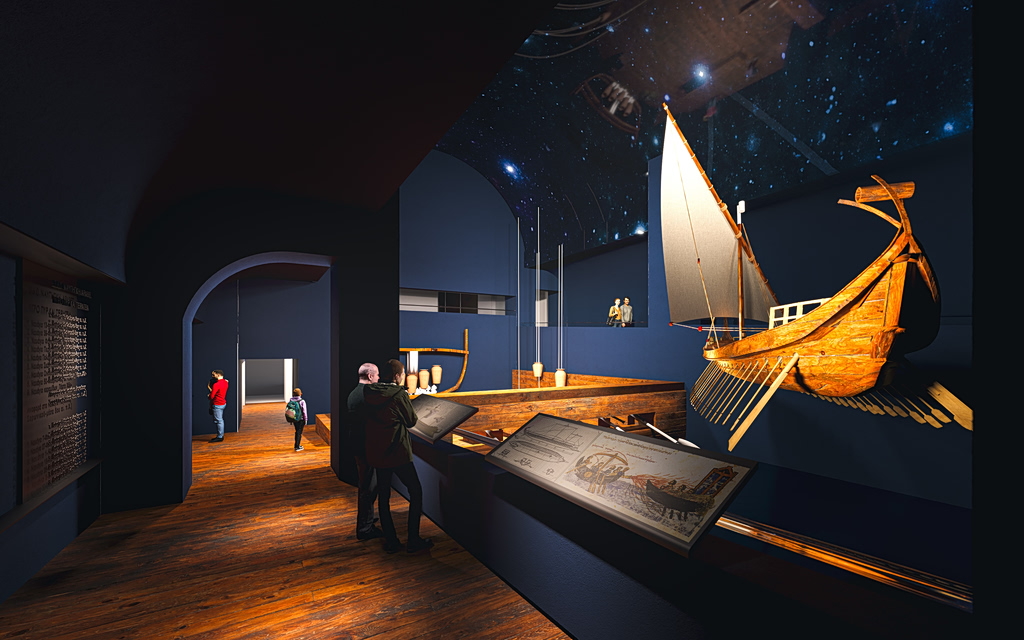
A mock image of the Piraeus Museum of Underwater Antiquities experience. Image: Tsolakis Architects
Beyond its displays, the museum will also serve as a center for raising awareness about the impact of climate change on the sea, marine ecosystems, and cultural heritage.
Interactive digital exhibits will invite visitors to “dive” into shipwrecks and explore the effects of rising sea temperatures and pollution.
Accessibility is a top priority, says Tsolakis: “From ramps and elevators to tactile exhibits and multi-sensory information panels, the museum is designed to be inclusive on every level,” he tells TO BHMA International Edition.
New Lease on Life for Piraeus’ Iconic Silo
At the heart of the project lies the revitalization of the historic 1934 Silo and the restoration of its clock tower. Once used to store bulk grain arriving at the port, the Silo will now symbolize the cultural rebirth of the waterfront.
“Piraeus is central to our design. Our intervention within the Silo, while keeping its outer shell unchanged, is aimed at preserving the memory and character of the building and at highlighting Greece’s maritime tradition and Piraeus’ role as the country’s largest port and point of connection for trade, travel, and culture both now and in the past.”
He acknowledges that preserving the Silo’s exterior while transforming its interior into a museum was a “significant construction challenge”.
“The Silo was built as a dense, functional machine for processing and storing grain. The museum, in contrast, requires open, flowing spaces that accommodate both exhibits and visitors. This meant dismantling and reinforcing the structure simultaneously.”
Given the technical challenges of constructing foundations under water and suspending replicas of ancient ships inside, the new museum stands out as an impressive feat of modern engineering.
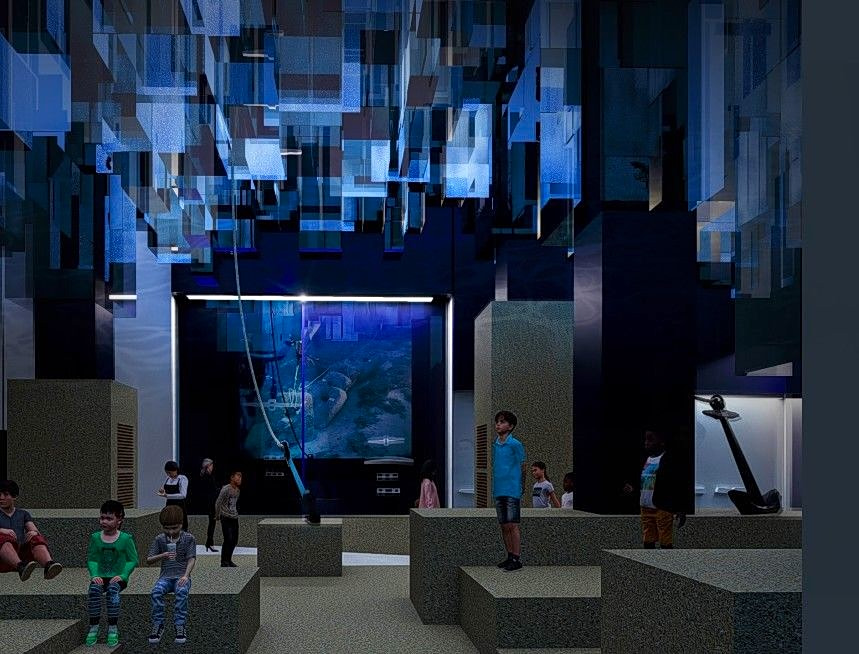
The architects overseeing the ambitious project have designed the museum to recreate the underwater experience. Image: Greek Culture Ministry
Connecting Past and Present
One of the museum’s most striking design features are the preserved conveyor belt and its suction hoppers, remnants of the Silo’s original machinery. These will form part of an exhibition space that explores the industrial history of the port and its evolution over time.
Walking the length of the conveyor belt, “visitors will learn about the port’s evolution while viewing it directly through a large opening, a visual bridge between Piraeus’ ancient and modern roles as a hub of navigation and trade”. This creates a visual dialogue between the past and the present; a dual perspective that captures the spirit of Piraeus.
Greek Maritime History in a Time Capsule
The museum has been designed to take visitors on a journey into the depths of the sea, where these treasures lie protected for centuries.
A horizontal slab representing the sea’s surface will extend across the space, with the exhibits positioned as if lying under the seabed. The museum building will extend to the very edge of the dock, reinforcing its maritime theme and establishing the new institution as a major landmark visible from every part of the port.
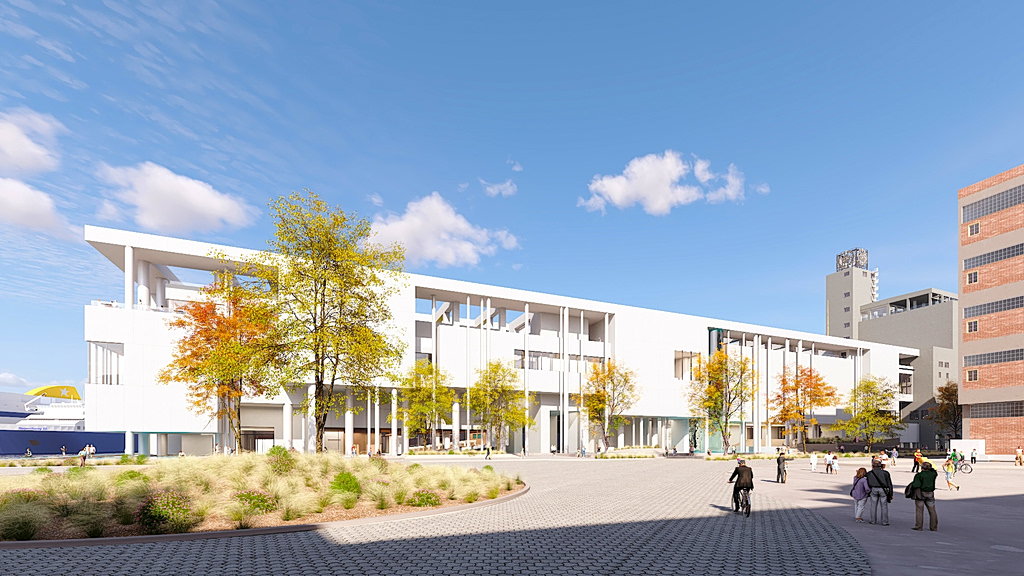
Image: Tsolakis Architects
To achieve this immersive experience, visitors are gradually drawn into an underwater world through visuals, sound, and lighting. Gentle slopes and pauses throughout the space evoke the sensation of descending below the surface before slowly returning to the light. Outside, open plazas and viewing decks invite them to gaze out over the sea, a reminder that history is not buried, but ever-present.
The elongated design of the main building allows for seamless visitor flow. Shaped like a ship and surrounded by real vessels, it will carry its own symbolic “cargo”: Greece’s maritime legacy, from ancient triremes to modern ferries.
The overall goal, Tsolakis explains, is to evoke a sense of fluidity and connection, very much like the seabed itself.
One of a Kind

Image: Tsolakis Architects
For Tsolakis, what makes the Piraeus Museum of Underwater Antiquities truly unique is the way it bridges past and present, placing history at the heart of Greece’s busiest maritime hub.
The building, he says, was designed with sustainability and climate resilience in mind, using methods that blend naturally with the port environment. Its porous façade and elevated museum spaces provide shaded, comfortable areas while reducing heat from the sun. Surrounding water tanks help regulate the local microclimate by lowering temperatures, and the sea breeze is enhanced through solar chimneys–vertical openings that release hot air and promote natural cooling. Together, these features create an environmentally-friendly and energy-efficient building without relying on mechanical systems.
The Cultural Coast of Piraeus
The Silo’s transformation is part of the Cultural Coast of Piraeus plan, a large-scale redevelopment project approved by the Greek Culture Ministry in 2015 and endorsed by the Piraeus Port Authority.
The plan envisions transforming Piraeus into a vibrant cultural hub that complements its role as a maritime and travel gateway. In addition to the Museum of Underwater Antiquities, the vision of the Cultural Coast includes the creation of thematic museums dedicated to archaeology, immigration, and ancient Greek technology, along with outdoor leisure spaces.
Greek Prime Minister Kyriakos Mitsotakis visited the site earlier this year, confirming that the project will be completed in 2026. He acknowledged that the museum has been a long time coming, especially for a country, a people, and a culture so deeply identified with the sea.
With a budget of 93 million euros, funded through the EU Recovery and Resilience Facility, the museum is among the largest cultural projects currently underway in Greece.
Tsolakis and his team have undertaken not only the architectural design which includes 3D visualizations, but also the museum’s structural, mechanical, and acoustical engineering.
“A vision that has spanned decades is now entering its final stage of realization. The development of Greece, from prehistory to the present day, has always been deeply intertwined with the sea, with shipping, and with seafaring. The establishment of the National Museum of Underwater Antiquities seeks to showcase the enduring grandeur of Greek civilization through treasures recovered from the depths. It will highlight the unbroken continuity and timeless depth of our history in a space dedicated exclusively to underwater antiquities,” said Greek Culture Ministry Lina Mendoni.
“The unique wealth of the Greek seas is finally finding its home,” she added.