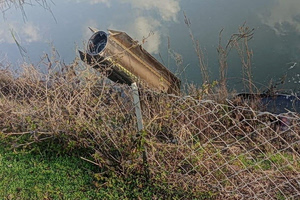
In a time of conflict and war, destruction on all levels, senseless loss of life and visionless leaders, a show comes to Athens that seeks to shake us out of our collective slumber.
Fires, floods, genetic manipulation, cloning, chilling scientific experiments, and industrial-scale factory farming are taking a devastating toll on our planet, pushing countless animal species toward extinction. These are the very creatures that have nourished us, clothed us, entertained us, supported our daily lives, fought alongside us in wars, and contributed to the development of life-saving medicines.
Yet how often do we pause to consider the impact of human activity on animal life?
As wildfires ravage Greece and conflicts rage in the Middle East, “Why Look at Animals?” A Case for the Rights of Non-Human Lives” arrives as a powerful wakeup call. This expansive mixed-media exhibition features more than 200 works by 60 international artists and spans seven floors of the National Museum of Contemporary Art (EMST) in Athens.
TO BHMA International Edition spoke with curator and EMST Artistic Director Katerina Gregos about the urgent message behind the show and its profound relevance today.
Relevant Today More than Ever
The largest exhibition to date at EMST draws inspiration from John Berger’s 1977 essay collection Why Look at Animals?, which explores the changing relationship between humans and animals over time. Berger observed that animals were once central to human life; they shared our space. But with the rise of industrialization, they were gradually pushed out of human awareness. In our lives today, animals mostly exist in zoos, circuses, as forms of entertainment, or as anonymous products on supermarket shelves.
“I found it bizarre that animals were rarely featured in art shows,” says Gregos, who is widely known for the sociopolitical focus of her projects. “Humans are the only species that destroy their own environment, so for me it was time to shift the conversation away from an anthropocentric perspective toward a broader focus on the rights of animals and nature.”
“It’s a conversation that’s long overdue,” she adds.
Gregos spent over a decade developing the show. Her aim was to revisit and expand on Berger’s arguments, which she believes are more relevant today than ever. The timing was key: assembling the complex puzzle of ideas and artworks took years, as did finding the right moment when audiences would be ready to engage with such a challenging and potentially sensitive topic.
The public response suggests she succeeded. More than 10,000 people have visited the exhibition each week–an exceptional turnout for a contemporary art museum in Greece.
Gregos attributes this engagement to a growing sense of urgency: there is a need to radically change our ways, if we hope to secure a future for ourselves and generations to come.
“Art cannot directly shift policy,” she tells TO BHMA International Edition, “but it can change the way people think and it can shine a light on urgent issues often sidelined by political or commercial interests.”
First Step: Respect
“Why Look at Animals?” acknowledges all forms of life. If it can spark public interest and foster open dialogue, that alone marks a critical first step toward shifting understanding and, ultimately, policy.
To help accelerate this shift in awareness, the exhibition aims to bring the widespread suffering of animals into full view. “It seeks to expose how animals are denied the right to live their lives naturally,” explains Gregos.
Through a powerful selection of artworks, the show uncovers the many forms of violent exploitation and commodification of animals which began in the 19th-century with colonialism and industrialization, and now range from modern-day factory farming, animal testing, and scientific experimentation to space exploration and genetic engineering. In all these arenas, animals are made to suffer in the name of so-called human progress.
A central theme of the exhibition is the destruction of natural habitats driven by extractive industries and by industrial agriculture, which turn animals into the silent, invisible victims of human activity.
A new moral framework is now necessary, says Gregos. “We cannot speak about climate change without including animals and nature.”
“There is historical evidence and scientific research clearly showing that animals are sentient, intelligent beings. If we truly consider ourselves a civilized society, we can no longer justify treating them violently, as if they were mere objects.”

Tiziana Pers, Saut dans le vide (still), 2016. Courtesy of the artist.
Open the Discussion
To be honest, Why Look at Animals? is both deeply unsettling and profoundly moving. Though the artworks confront viewers with harsh truths, the animals portrayed also seem to convey a sense of forgiveness; an invitation to reflect and change. As visitors leave the exhibition, a glowing neon sign delivers a final, haunting message: “Don’t forget the world that’s coming.”
“If visitors leave with a desire to talk about the issues and questions raised, that’s already a meaningful outcome,” says Gregos. “The goal is to raise awareness of our wrongdoings toward animals—and if the exhibition changes how even a few people think about them, or shifts behavior, even slightly, that alone is a success. When someone walks away with new knowledge and carries it into their daily life, then the exhibition has truly done its job.”
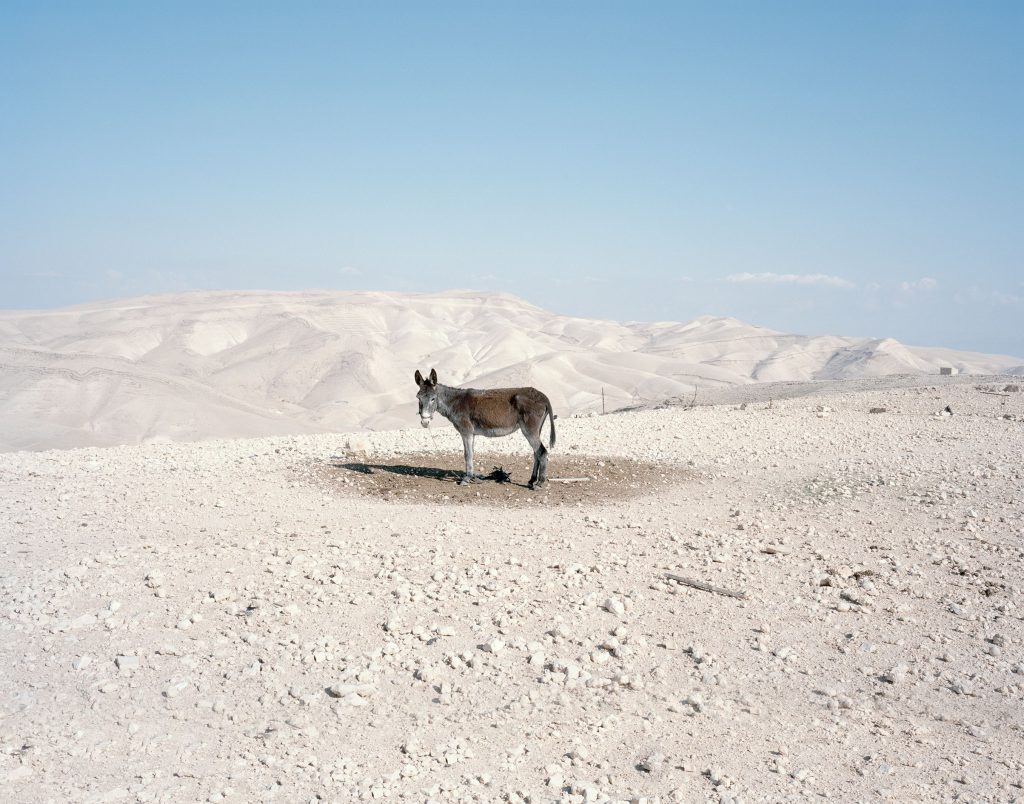
Paris Petridis, Bethlehem. Courtesy of the artist.
The Case of Animals in Greece
Much has been said and written about animal welfare in Greece. From the use of mules on Santorini to the outright abuse and neglect of dogs and cats on Crete and elsewhere, Greece sadly has a very poor track record when it comes to respecting animal life. Things are changing, however.
I asked Gregos whether she believes Greek society is finally ready to embrace the idea of animals as sentient beings with rights equal, or at least comparable, to those of humans. And whether she sees signs of cultural readiness.
“Greeks are facing many challenges, with climate change one of the most pressing,” she says. “In Greece, we have not fully appreciated or protected our extraordinary natural beauty and biodiversity. This is partly because we transitioned rapidly from poverty to consumerism. After the financial crisis, it’s understandable that economic recovery and development became the national focus; Greeks suffered greatly during that period.”
But Gregos warns that reality is catching up with us. “Just look at the increase in forest fires. We must soon face the fact that if we don’t protect our environment, we leave ourselves dangerously exposed, not just ecologically, but economically. For example, we risk losing the very tourists who come here to enjoy Greece’s natural beauty,” she tells TO BHMA International Edition.
At the same time, she notes that tourism is “part of the problem”, which means that sustainable forms of development will need to be prioritized going forward.
From her experience, society is more ready to embrace new forms of thinking as opposed to governments, which are always slower to react in these cases. To achieve a greater awareness that will lead to shifts in mentalities and actions, education is key, she notes, primarily of young children.
“Environmental awareness and developing an ecological conscience should be an integral part of the national curriculum. A central theme of the exhibition is stewardship: how we, as humans, care for the earth and all who inhabit it. The idea is simple,” she says. “We are all responsible for the preservation and protection of our planet.”
* “Why Look at Animals? A Case for the Rights of Non-Human Lives” is on at EMST through to February 15, 2026. For details and visiting hours, visit the official website. EMST is a pet-friendly museum.